Top Realtors in Texas: 10 Proven Leaders Transforming the 2026 Market
Top realtors in Texas combine local market knowledge, negotiation skill, and client trust to guide smarter home buying and selling decisions.

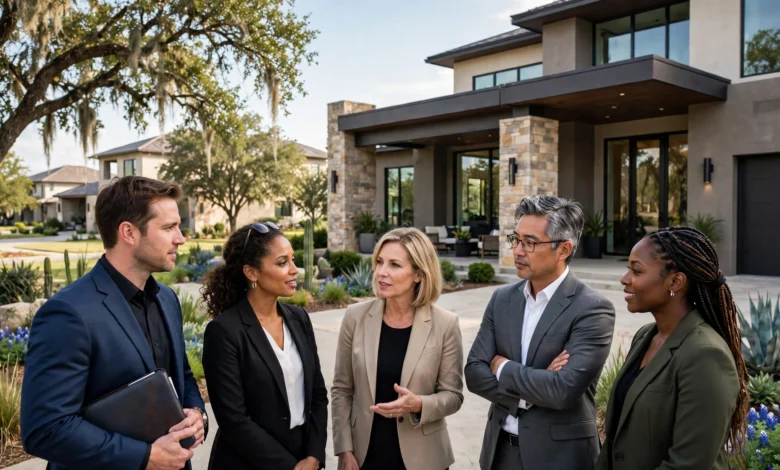
Top realtors in Texas are having a moment. Between record population growth, a steady stream of relocations from higher-cost states, and a housing market that shifts by the month, buyers and sellers across the state need more than a name on a yard sign. They need someone who actually knows the neighborhood, understands financing in today’s rate environment, and can negotiate without blinking. That’s the real value a strong Texas Realtor brings to the table.
This guide walks through what separates the best real estate agents in Texas from the rest, breaks down the state’s major markets, and explains the traits worth checking before you sign with anyone. Whether you’re buying your first home in Fort Worth, selling a ranch outside Austin, or relocating a family to Houston for a new job, the right agent changes the outcome. We’ll also cover practical steps for vetting a Texas real estate agent, questions to ask before hiring one, and how the state’s booming metro areas each demand a slightly different kind of expertise.
Texas isn’t one market. It’s several, and each one rewards a different kind of specialist.
What Makes Someone a Top Realtor in Texas
Not every licensed agent operates at the same level. A handful of qualities consistently separate top realtors in Texas from agents who simply hold a license and hope for referrals.


Deep Local Market Knowledge
A great agent can tell you, off the top of their head, what’s happening on a specific street, not just a general zip code. They track school district boundaries, upcoming zoning changes, flood zone maps, and which subdivisions are seeing bidding wars versus price cuts. This kind of granular knowledge is something you can’t get from a national app or a quick online search.
Strong Negotiation Skills
Whether representing a buyer or a seller, negotiation is where an agent earns their commission. Top real estate agents in Texas know how to structure offers that win in competitive situations, and how to hold firm on price and terms when representing a seller. This includes handling repair requests, appraisal gaps, and contingency timelines without losing the deal.
A Track Record of Closed Transactions
Sales history matters more than marketing. An agent who has closed dozens of deals in your target area over the past year understands current buyer behavior, realistic pricing, and how long homes are actually sitting on the market, not just the average that gets quoted in press releases.
Clear, Responsive Communication
Home buying and selling move fast, especially in competitive Texas metros. The best agents respond quickly, explain paperwork in plain language, and keep clients updated at every stage instead of going quiet between showings.
Verified Licensing and Good Standing
Every practicing agent should hold an active license through the state. You can confirm this directly through the Texas Real Estate Commission, which maintains public licensing records and handles any complaints filed against agents or brokers.
Texas Real Estate Market Overview for 2026
Understanding the broader Texas real estate market helps explain why the state produces so many high-performing agents. A few forces are shaping conditions this year:
- No state income tax, which continues to draw remote workers, retirees, and businesses relocating from higher-tax states
- Strong job growth concentrated in tech, healthcare, energy, and logistics hubs across the major metros
- New construction supply that has helped keep some markets more balanced than coastal states
- Population growth outpacing most of the country, adding steady demand across nearly every price point
- Affordability, which, while rising, still compares favorably to California, New York, and much of the Northeast
These factors mean agents in Texas aren’t just selling homes. They’re helping people navigate relocation logistics, school comparisons, and, increasingly, multiple competing offers in desirable neighborhoods.
Top Texas Markets and What Realtors There Specialize In
Texas is enormous, and the skill set that works in one city doesn’t always translate to another. Here’s a breakdown of the state’s major markets and what the top real estate agents in each one tend to focus on.
Houston
Houston is Texas’s largest and most diverse market, spanning energy corridor executives, sprawling suburban family neighborhoods, and a dense urban core. Agents here often specialize by submarket, since a Realtor working The Heights operates very differently from one focused on Katy or Sugar Land. Flood zone awareness is a bigger factor in Houston than almost anywhere else in the state, so working with someone who understands drainage history and past storm impact is worth prioritizing.
Dallas-Fort Worth
DFW is really two connected but distinct markets. Dallas leans toward corporate relocations, luxury high-rises, and established close-in neighborhoods, while Fort Worth has a more traditional, family-oriented feel with strong new construction growth in surrounding suburbs like Frisco, McKinney, and Prosper. Top realtors in this region typically build relationships with corporate relocation departments and understand commute patterns across the metroplex’s sprawling footprint.
Austin
Austin’s market has cooled somewhat from its pandemic-era frenzy but remains one of the most competitive in the state, driven by tech employment and a steady influx of out-of-state buyers. Agents here need sharp pricing instincts, since values can vary significantly block by block, and strong knowledge of the city’s ongoing new construction pipeline in suburbs like Cedar Park, Round Rock, and Leander.
San Antonio
San Antonio offers some of the most affordable major-metro housing in the state, which continues to attract first-time buyers and military families connected to the area’s several bases. Realtors here often develop expertise in VA loans and military relocation timelines, alongside strong knowledge of historic districts and newer master-planned communities on the city’s outskirts.
San Marcos, Waco, and the I-35 Corridor
Smaller cities along the I-35 corridor between Austin and San Antonio are seeing some of the fastest growth rates in the state, as buyers priced out of the two larger metros look for value nearby. Agents in these areas tend to work closely with builders, since new construction makes up a larger share of available inventory than in more established markets.
How to Find and Vet a Top Realtor in Texas
Finding a great agent takes more effort than picking whoever ranks first in a search result. Here’s a practical approach.
- Ask for a list of recent closed sales in your specific neighborhood, not just the broader city, and confirm the numbers match public records.
- Read verified reviews across multiple platforms rather than relying on testimonials posted on the agent’s own website.
- Interview at least two or three agents before committing, and ask each one the same set of questions so you can compare answers directly.
- Confirm active licensing through the Texas Real Estate Commission’s public lookup tool.
- Ask about their pricing strategy for your specific home or target neighborhood, and listen for specifics rather than general reassurance.
- Clarify communication expectations upfront, including how often you’ll hear from them and their preferred method of contact.
- Understand their negotiation approach, particularly how they’ve handled multiple-offer situations or appraisal gaps in the past year.
Questions Worth Asking Before You Hire
- How many transactions have you closed in this specific area in the last twelve months?
- What’s your strategy if the home doesn’t sell within the first thirty days?
- Can you walk me through a recent deal that didn’t go smoothly, and how you handled it?
- Do you work primarily with buyers, sellers, or both, and does that change your approach?
- Who handles communication when you’re unavailable, showings included?
Buyer’s Agents vs. Listing Agents in Texas
It helps to understand the distinction before choosing who to work with.
Buyer’s agents represent your interests when purchasing a home. They help identify listings that fit your criteria, schedule showings, prepare offers, and negotiate on your behalf. In most cases, the seller covers the buyer’s agent commission as part of the transaction, though this has become more negotiable following recent industry-wide changes to commission structures.
Listing agents, sometimes called seller’s agents, represent the homeowner selling the property. Their job includes pricing strategy, marketing, staging advice, coordinating showings, and negotiating offers in the seller’s favor.
Some agents work exclusively as buyer’s agents or listing specialists, while others handle both sides depending on the transaction. Neither approach is inherently better, but it’s worth asking which side an agent primarily represents, since it shapes how they’ll advocate for you.
The Role of Technology in Today’s Texas Real Estate Market
Modern Texas realtors increasingly rely on tools that didn’t exist a decade ago, including virtual tours, drone photography for larger properties, and predictive pricing tools that help set competitive listing prices faster. That said, technology supplements expertise. It doesn’t replace it. The agents seeing the most consistent success combine these tools with in-person market knowledge and long-standing relationships with local lenders, inspectors, and title companies.
According to the National Association of Realtors, most home buyers still begin their search online but rely heavily on their agent’s guidance once they’ve narrowed down a property, underscoring that digital tools and personal expertise now work together rather than competing.
Red Flags to Watch For
Not every agent operates with the same standards. A few warning signs worth taking seriously:
- Pressure to make an offer or sign a listing agreement before you’ve had time to think it through
- Vague answers when asked about recent sales or current market conditions
- Poor communication during the interview process, which often predicts how they’ll communicate once you’re under contract
- Reluctance to provide references from recent clients
- Overpricing a listing just to win your business, followed by repeated price cuts later
Final Thoughts on Choosing the Right Agent
The best Texas realtors share a few common traits: they know their market cold, they communicate clearly, and they negotiate hard without losing sight of what their client actually needs. Whether you’re buying in a competitive Austin suburb or selling a longtime family home in San Antonio, taking the time to interview a few agents and check their track record pays off far more than picking the first name that shows up in a search.
Conclusion
Texas’s real estate market is too large and too varied for a one-size-fits-all approach to finding representation. The strongest agents in the state combine hyperlocal knowledge, sharp negotiation skills, verified transaction history, and clear communication, and those traits look different depending on whether you’re working in Houston, Dallas-Fort Worth, Austin, San Antonio, or one of the fast-growing communities along the I-35 corridor. Taking the time to interview multiple agents, check licensing through the Texas Real Estate Commission, and ask specific questions about recent sales will consistently lead to a better outcome than choosing based on marketing alone. In a market moving as quickly as Texas, the right realtor isn’t a convenience. It’s the difference between a smooth transaction and a costly mistake.