Atlanta Neighborhoods for Every Budget: 9 Proven Picks in Georgia’s Smartest Property Guide
Atlanta neighborhoods for every budget, from starter condos to luxury estates. A practical Georgia property guide for buyers at any price point.


Atlanta neighborhoods cover more ground, price-wise, than almost any other city in the Southeast. On one street you’ll find a renovated bungalow pushing past a million dollars, and twenty minutes south you’ll find a solid three-bedroom home for a third of that price. That range is exactly what makes house hunting here confusing. A lot of Atlanta guides just list the “best” areas without ever mentioning what they cost or who they actually fit.
This guide takes a different approach. Instead of ranking neighborhoods by hype, it groups them by what you’ll actually spend, from entry-level buyers working with under $300,000 to luxury shoppers who want Buckhead’s biggest lots. Along the way, we’ll walk through the trade-offs that matter most in Georgia’s capital: whether you’re inside or outside the Perimeter, how close you are to the BeltLine, what your commute looks like, and how school districts shift from block to block.
Whether you’re relocating for a job, buying your first home, or just trying to figure out where your money goes furthest, this Georgia property guide should give you a realistic starting point. We’ll cover nine areas across four budget tiers, plus a quick framework at the end for narrowing your own search. No fluff, just what each neighborhood actually delivers for the price.
What to Know Before You Pick an Atlanta Neighborhood
Before diving into specific areas, it helps to understand a few things that shape almost every property decision in metro Atlanta.

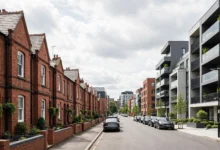
ITP vs. OTP. Locals split the city into “Inside the Perimeter” (ITP) and “Outside the Perimeter” (OTP), referring to Interstate 285, which loops around the city’s core. ITP neighborhoods tend to be denser, older, and pricier, with better walkability and closer access to downtown employers. OTP areas generally offer more square footage and lower prices, though you’ll likely need a car for daily errands.
The BeltLine effect. The Atlanta BeltLine is a multi-use trail circling the city’s core, connecting dozens of neighborhoods by foot and bike path. Homes near a BeltLine access point tend to carry a price premium over comparable homes just a few blocks away, and that gap has held steady as more of the trail opens to the public. You can check current trail segments and expansion plans directly through the Atlanta BeltLine Partnership.
Transit matters more than people expect. MARTA’s rail and bus network reaches many of the neighborhoods on this list, and proximity to a station is a real factor in both resale value and day-to-day convenience, especially for buyers who’d rather skip a second car payment. Details on current rail lines and service maps are available through MARTA.
School zones change block by block. Unlike a lot of metro areas where school quality tracks fairly evenly with a whole district, Georgia’s school assignments in and around Atlanta can shift dramatically within a mile or two. If schools are a priority, verify the exact zoned school for any specific address before you fall in love with a listing.
With that groundwork in place, here’s how the Atlanta neighborhoods break down by what you’ll actually pay.
Budget-Friendly Atlanta Neighborhoods (Under $300,000)
If you’re working with a tighter budget, you’ll mostly be looking outside the city’s core or in a handful of intown pockets that haven’t caught up to the citywide price surge yet. These affordable Atlanta neighborhoods trade some walkability and shorter commutes for real savings.
South Fulton County (Fairburn, Union City, College Park)
South Fulton County remains one of the more consistent value plays in the metro. Median home prices in this corridor typically land in the low-to-mid $200,000s, and the area benefits from proximity to Hartsfield-Jackson Atlanta International Airport, which keeps rental demand steady for anyone thinking about resale or investment down the road. Expect a car-dependent lifestyle, older housing stock mixed with newer subdivisions, and a longer commute into downtown or Midtown during peak hours.
Good for: first-time buyers, airport-area workers, and anyone prioritizing square footage over walkability.
Ashview Heights and the West End
Just southwest of downtown, Ashview Heights and the broader West End area offer some of the lowest housing costs still inside the city limits. The area has decent MARTA bus coverage and a growing number of restored historic homes near the Westside Trail of the BeltLine. It’s a neighborhood in transition, so buyers should do their homework on specific blocks, but the combination of transit access and intown pricing is hard to match at this price point.
Good for: buyers who want to stay inside city limits without paying intown premiums.
Stonecrest and South DeKalb
Stonecrest, further out toward the eastern edge of the metro, consistently ranks among the most affordable incorporated cities in the region. Home prices here can run well below the metro median, and the area offers larger lots and newer construction than you’ll typically find closer to the core. It’s a longer commute into Atlanta proper, but for buyers prioritizing space and price over proximity, it’s worth a look.
Good for: families needing more bedrooms and yard space on a tight budget, buyers comfortable with a longer daily commute.
Mid-Range Atlanta Neighborhoods ($350,000–$550,000)
This is where most Atlanta neighborhoods buyers actually land, and it’s also the most crowded and competitive tier of the market. These areas sit inside or near the Perimeter and deliver a real mix of walkability, character, and community feel.
Candler Park
Candler Park offers one of the better value propositions among intown neighborhoods. You get tree-lined streets, a genuine sense of community, and BeltLine and park proximity, without paying the premium attached to neighboring Virginia-Highland or Morningside. Median home prices tend to sit in the low-to-mid $500,000s, with rents noticeably below what you’d pay a few blocks north.
Good for: budget-conscious buyers who still want a walkable, established intown neighborhood.
East Atlanta Village and Ormewood Park
East Atlanta Village has built a reputation as one of the more eclectic corners of the city, with a lively local restaurant and music scene layered over affordable bungalows and cottages. Neighboring Ormewood Park leans a bit quieter and more family-oriented, with new construction mixed in among historic homes and easy BeltLine access via the Southside Trail. Both areas remain more attainable than comparable intown spots closer to Midtown.
Good for: young professionals who want personality and nightlife, families wanting a walkable, low-key alternative nearby.
Old Fourth Ward
Old Fourth Ward has been one of the city’s clearest growth stories over the past decade. Anchored by Ponce City Market and running directly along the BeltLine’s Eastside Trail, it blends historic rowhouses with newer loft conversions and condo developments. Prices have climbed as the area’s popularity has grown, but it still offers more accessible entry points than Inman Park or Virginia-Highland for buyers who want that same walkable, BeltLine-adjacent lifestyle.
Good for: buyers who want maximum walkability and nightlife without Midtown or Buckhead pricing.
Reynoldstown and Kirkwood
Reynoldstown sits along the BeltLine’s eastern stretch and has quietly become one of the better opportunities for buyers who want in-town access without paying Inman Park prices. Kirkwood, just to the east, offers a similar mix of historic homes, strong community events, and a shorter commute than most suburban options, with pricing that still sits below the city’s most saturated intown pockets.
Good for: buyers watching for appreciation potential as BeltLine infrastructure expands into these areas.
Upper-Mid Atlanta Neighborhoods ($550,000–$800,000)
Once you move into this range, you’re paying for established character, top-tier walkability, and, in several cases, some of the strongest school ratings in the city.
Virginia-Highland
Virginia-Highland regularly shows up near the top of “best Atlanta neighborhoods” lists, and it earns the spot. Historic bungalows line pedestrian-friendly streets, retail and dining cluster along Virginia Avenue, and Piedmont Park sits just around the corner. Strong schools and consistent community engagement keep demand high, which shows up directly in pricing. Homes here routinely trade at a premium over nearby Candler Park or Kirkwood for a similar footprint.
Good for: buyers prioritizing walkability, established charm, and top school access.
Morningside-Lenox Park
Morningside-Lenox Park pairs quiet, tree-canopied streets with some of the city’s better-performing public schools, making it a consistent favorite among families who want an intown location without sacrificing a suburban feel. Bungalow-style homes dominate the housing stock, and proximity to both Midtown and Buckhead employers keeps commute times short for most residents.
Good for: families who want top schools without leaving the city.
Decatur
Technically its own city rather than an Atlanta neighborhood, Decatur functions like one of the metro’s most desirable intown pockets. It consistently posts some of the lowest crime indicators near the urban core, and its school system draws buyers who might otherwise look further out. A walkable downtown square, strong farmers market culture, and an easy MARTA connection round out the appeal. Expect to pay for it: Decatur regularly commands some of the highest per-square-foot prices in the metro outside of Buckhead.
Good for: families prioritizing schools and safety who still want walkability and community.
Luxury Atlanta Neighborhoods ($800,000 and Up)
At the top of the market, a handful of Atlanta neighborhoods consistently dominate the luxury conversation, each with its own version of upscale living.
Buckhead
Buckhead is Atlanta’s clearest answer to a luxury district. Upscale shopping at Lenox Square and Phipps Plaza, a dense concentration of estate homes, and some of the city’s top private and public schools make it the default choice for executives and high-net-worth buyers. It’s also large and varied enough that you’ll find everything from high-rise luxury condos to sprawling multi-acre properties, depending on which pocket you target.
Good for: buyers who want size, prestige, and top-tier amenities in one package.
Ansley Park and Druid Hills
Ansley Park sits just west of Piedmont Park and offers a quieter, architecturally distinct alternative to Buckhead, with winding streets and large early-20th-century homes on generous lots. Druid Hills, designed in part by the same landscape architecture firm behind Central Park, delivers a similar historic prestige with a strong concentration of high-value properties near Emory University and the CDC.
Good for: buyers who want historic architecture and mature landscaping over new construction.
Sandy Springs
Just north of the Perimeter, Sandy Springs functions as an upscale suburban alternative to intown luxury living. Home prices consistently run above the metro average, supported by the Fulton County School System’s top-rated campuses and a walkable town center at City Springs. It requires more driving than intown options, but MARTA connections into downtown keep commuters connected without a full suburban commute.
Good for: luxury buyers who want more land and a quieter pace without leaving strong schools and amenities behind.
Atlanta Neighborhoods by Lifestyle: A Quick Reference
If budget isn’t your only filter, here’s a fast breakdown of where different priorities tend to point:
- Best for walkability: Midtown, Old Fourth Ward, Atlantic Station
- Best for families and schools: Decatur, Morningside-Lenox Park, Virginia-Highland
- Best for nightlife and character: East Atlanta Village, Cabbagetown, Little Five Points
- Best for luxury and prestige: Buckhead, Ansley Park, Druid Hills
- Best for long-term appreciation: Reynoldstown, Summerhill, West End
- Best for investors and rental yield: South Fulton County, Stonecrest, South DeKalb
How to Match Your Budget to the Right Atlanta Neighborhood
Narrowing down the right area doesn’t have to be complicated. Here’s a simple process worth running through before you start touring homes:
- Set a real number, not an aspirational one. Get pre-approved first so you know your actual range, including estimated property taxes, which vary by county and can meaningfully change your monthly payment.
- Decide how much you actually need a car. If you’d rather skip a second vehicle, narrow your search to neighborhoods with strong MARTA or BeltLine access rather than assuming any intown zip code will work.
- Rank your non-negotiables. Schools, commute time, walkability, and yard space rarely all show up together at a given price point, so figure out which two matter most.
- Check the specific block, not just the neighborhood name. Prices, school zones, and even safety can shift within a few streets in Atlanta, so treat neighborhood names as a starting point, not a guarantee.
- Factor in first-time buyer programs if they apply. Georgia’s down payment assistance options can meaningfully change what’s within reach, particularly in the mid-range and budget-friendly tiers covered above.
Conclusion
Choosing among Atlanta neighborhoods really comes down to being honest about your budget and what you’re willing to trade for it. Buyers with $300,000 or less will find real value in South Fulton County, the West End, and Stonecrest, while mid-range budgets open up walkable, character-rich options like Candler Park, East Atlanta Village, and Old Fourth Ward. Once you cross into the upper-mid tier, Virginia-Highland, Morningside-Lenox Park, and Decatur deliver strong schools and established charm, and at the luxury end, Buckhead, Ansley Park, and Sandy Springs offer the space and prestige high-end buyers expect. Every one of these areas has its own personality, and no single neighborhood is right for everyone. Use your budget as the first filter, your daily commute and lifestyle needs as the second, and you’ll land somewhere in metro Atlanta that actually fits.