Philadelphia Realtors: 8 Trusted Brokerages Serving the City and the Red Flags to Avoid
Philadelphia realtors range from national brands to local firms. Here are 8 trusted brokerages, how commissions work, and the scams buyers should spot.

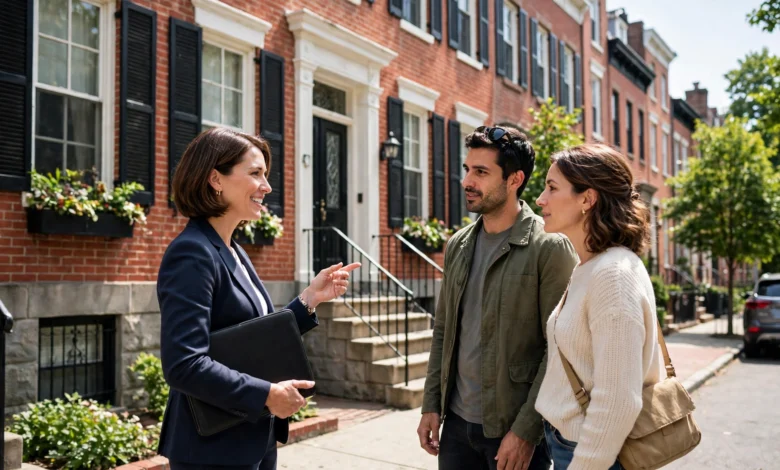
Philadelphia realtors work in one of the most varied housing markets on the East Coast. In a single afternoon, an agent might show a Center City condo, a Fishtown rowhouse with a roof deck and a stone twin in Chestnut Hill. Each neighborhood has its own prices, quirks and history, and a good agent knows the difference between a block that is rising and one that only looks like it is.
Picking the right agent matters more than many buyers and sellers think. Your agent helps set the price, negotiates repairs, spots problems in the paperwork and keeps the deal on track. A careless or dishonest one can cost you thousands, or worse.
That last part is not hypothetical. Philadelphia has a long-running deed theft problem, with the District Attorney’s Office charging people who forged documents to steal dozens of homes. Wire fraud targets buyers at closing. And the national lawsuits over agent commissions changed how buyers pay their agents in 2024.
This guide covers what makes a strong real estate agent in Philadelphia, eight well-established brokerages serving the city, how commissions work under the new rules and the real scams to watch for. It does not rank individual agents or promise any one firm is right for you. Instead, it gives you the facts and a checklist so you can choose with confidence.


What Makes the Best Philadelphia Realtors Stand Out
The best realtors in Philadelphia are not always the ones with the biggest billboards. Sales volume tells you someone is busy, but not whether they are a good fit for you. Here is what actually matters.
A valid Pennsylvania license
Every agent who helps you buy or sell must hold an active license from the Pennsylvania Real Estate Commission, and must work under a licensed broker. You can check any license for free through the state’s online licensing system (PALS). It shows whether the license is active and whether there has been any disciplinary action.
One small note on wording: “Realtor” is a trademark of the National Association of Realtors. Only agents who are members of NAR, and agree to its Code of Ethics, can use it. Many good agents are Realtors, but the title alone does not guarantee quality.
Real neighborhood knowledge
Philadelphia is a city of neighborhoods. Prices, property taxes, flood risk, parking and school options can change from one block to the next. Strong Philadelphia realtors can explain things like:
- How the city’s property assessments affect your tax bill
- Which areas qualify for tax abatements on new construction or major renovation
- Common rowhouse issues such as shared party walls, old roofs and basement water
- How quickly homes are selling in a specific zip code right now
A track record you can verify
Ask for recent sales in your price range and neighborhood. Lists like Philadelphia Magazine’s Top Real Estate Producers use Bright MLS data, which makes them more reliable than paid “best agent” badges. Online reviews help too, as long as you read the detailed ones rather than just the star rating.
Clear communication and honest advice
The best buyer’s agent will tell you when a house is overpriced or when an inspection finding is serious. The best listing agent will give you a realistic price, not just the highest number to win your business. If an agent only tells you what you want to hear, be careful.
8 Trusted Brokerages Where Philadelphia Realtors Work
Most Philadelphia realtors work under one of a handful of large brokerages or a respected local firm. The brokerage matters because it supervises agents, handles escrow money and sets training and compliance standards. But the individual agent matters most, so treat this as a starting point, not a ranking. Brokerage ownership and offices change, so confirm current details directly.
1. Berkshire Hathaway HomeServices Fox & Roach
Fox & Roach is one of the largest residential Philadelphia real estate brokerage names, with offices across the city, the suburbs, the Main Line and South Jersey. Several of its city teams appear in RealTrends’ verified rankings, including condo-focused groups in Center City.
Best for: buyers and sellers who want a large regional network and strong suburban coverage.
2. Keller Williams
Keller Williams operates through independently run franchise offices, and several serve Philadelphia. Some of the city’s highest-volume teams, including Center City condo specialists, work under Keller Williams offices according to RealTrends data.
Best for: clients who want a team-based approach with agents who specialize in particular neighborhoods or property types.
3. Compass
Compass is a national, technology-focused brokerage that has recruited established teams across the Philadelphia area. It is known for marketing tools and programs that help sellers prepare homes before listing.
Best for: sellers in higher price ranges who want polished marketing.
4. Coldwell Banker Realty
Coldwell Banker is one of the oldest national real estate brands and has offices serving Philadelphia and its suburbs. Its size gives agents access to relocation networks, which helps when you are moving in or out of the region.
Best for: relocating buyers and sellers who value a familiar national brand.
5. RE/MAX
RE/MAX offices are independently owned franchises, and several operate in and around the city, including RE/MAX Affiliates in Philadelphia. RE/MAX agents tend to be experienced, since the model attracts agents with an existing client base.
Best for: clients who want a seasoned individual agent.
6. Elfant Wissahickon Realtors
Elfant Wissahickon is a locally owned brokerage with deep roots in Northwest Philadelphia, including Chestnut Hill and Mount Airy, and a presence elsewhere in the city. Local independents often know micro-markets better than national brands.
Best for: buyers and sellers focused on Northwest Philadelphia neighborhoods.
7. The Real Brokerage and eXp Realty
These cloud-based brokerages have fewer physical offices and give agents a larger share of each commission. Several productive Philadelphia teams have moved to these models in recent years, including teams recognized in RealTrends data.
Best for: clients who care more about the specific team than the brand on the sign.
8. Redfin
Redfin uses salaried agents and typically charges sellers a lower listing fee than traditional brokerages. Discount brokerages in Philadelphia averaged listing fees of around 1.3% in mid-2026, compared with a higher traditional rate.
Best for: cost-conscious sellers in straightforward markets, and buyers comfortable with a more process-driven experience.
Comparing Philadelphia Realtors by Brokerage Type
The type of brokerage shapes how Philadelphia realtors work with you. This quick comparison shows the trade-offs.
| Brokerage | Model | Local focus | Typical strength | Possible drawback |
|---|---|---|---|---|
| BHHS Fox & Roach | Large regional brand | City, suburbs, Main Line, South Jersey | Wide network | Quality varies by agent |
| Keller Williams | Franchise offices | Several city offices | Specialist teams | You may work with a junior team member |
| Compass | National, tech-focused | Higher-end city and suburbs | Seller marketing | Often geared to pricier homes |
| Coldwell Banker Realty | National brand | City and suburbs | Relocation support | Less neighborhood-specific |
| RE/MAX | Independent franchises | Varies by office | Experienced agents | Service differs by office |
| Elfant Wissahickon | Local independent | Northwest Philadelphia | Micro-market knowledge | Smaller footprint |
| Real Brokerage / eXp | Cloud-based | Depends on team | Agent-driven teams | Less in-person office support |
| Redfin | Salaried agents, lower fees | City-wide | Lower listing fees | Less personalized service |
How Philadelphia Realtors Get Paid After the Commission Lawsuits
For decades, sellers usually paid a total commission of around 5% to 6%, split between their own agent and the buyer’s agent. Many buyers never realized their agent’s pay was coming out of the seller’s proceeds, or that rates were negotiable. That system ended up in court.
The lawsuit that changed the rules
In October 2023, a federal jury in Missouri found that the National Association of Realtors and several large brokerages had conspired to keep commissions high, awarding home sellers about $1.8 billion in damages. NAR then agreed to a settlement of around $418 million in March 2024 and changed its rules. Many large brokerages settled separately.
What changed in August 2024
- Written buyer agreements are now required. Before touring a home with an agent, buyers sign a buyer agreement that spells out what the agent will be paid.
- No commission offers on the MLS. Listing agents can no longer advertise buyer agent pay on the multiple listing service, such as Bright MLS.
- Everything is negotiable. Sellers can still offer to cover the buyer’s agent fee, but it is a negotiation, not an automatic split.
What it means in Philadelphia today
Total realtor commission in Philadelphia averaged around 5.8% of the sale price in mid-2026, according to one market analysis, while discount listing fees averaged about 1.3%. Those are averages, not rules. Before you sign anything:
- Ask exactly how much the agent will be paid and who will pay it.
- Ask what happens if a seller does not cover your agent’s fee.
- Compare at least two or three agents’ terms.
- Read the length of the agreement and how to end it early.
Any agent who is vague about their pay, or tells you a rate is fixed by law, is giving you a reason to keep looking.
The Reality Check: Real Estate Fraud Philadelphia Realtors Must Watch For
Most Philadelphia realtors are honest professionals. But the city has a serious history of real estate crime, and buyers and sellers should know what it looks like.
Deed theft: Philadelphia’s “house stealing” problem
Deed fraud happens when someone forges a deed to transfer a property into their name, then sells or mortgages it. It often targets homes owned by elderly residents or people who have died without a clear will. District Attorney Larry Krasner has called house stealing a “mini epidemic” in the city.
Real cases show how it works:
- 2019: Prosecutors charged a Point Breeze man with 47 counts of forgery and related crimes for filing bogus deeds, including for properties whose owners had died. The city’s Records Department logged 136 deed fraud complaints the year before, almost double the previous year.
- 2021: Five people were charged over illegal transfers of about a dozen properties in North and West Philadelphia, and a separate defendant was accused of stealing 14 houses and two lots across neighborhoods like West Oak Lane, Logan and Mount Airy.
- 2022: Eight people were charged in a ring accused of fraudulently transferring 17 homes and lots, then reselling them to unsuspecting buyers for close to $1 million.
- 2025: A Germantown notary public was charged with 31 counts each of conspiracy, corrupt organizations, theft and other offenses over a scheme that allegedly transferred 21 properties by forging the names of deceased and living owners. The Philadelphia District Attorney’s announcement of the notary deed theft charges describes how the scheme was uncovered.
The twist in that last case matters. A notary is supposed to be a safeguard against fraud. Professionals in a real estate deal can be part of the problem, which is why buyers need independent checks. WHYY’s reporting on Philadelphia deed theft rings gives more background on why lower-income neighborhoods are hit hardest.
How a good agent helps: insists on a full title search and title insurance, questions sellers who cannot be reached in person, and flags deals that seem too cheap or too rushed.
Wire fraud at closing
In wire fraud schemes, criminals hack or spoof emails from an agent, title company or lawyer and send fake wiring instructions just before closing. Buyers send their down payment to the scammer, and the money is often gone within hours. Always confirm wiring instructions by phone, using a number you already know, never one from the email.
Fair housing violations
The Fair Housing Act bans discrimination by race, religion, national origin, sex, disability or family status. In 2019, a three-year Newsday undercover investigation on Long Island found evidence that agents steered testers of color away from certain neighborhoods and treated them differently. It led to state hearings, fines and new training requirements. Fair housing problems happen everywhere, including Pennsylvania, and steering buyers based on who they are is illegal.
License discipline
The Pennsylvania Real Estate Commission regularly disciplines agents for things like mishandling deposit money, misrepresentation and practicing without an active license. Checking an agent’s record before you hire them takes a few minutes.
How to Vet Philadelphia Realtors Before You Sign
A little homework up front can save you a lot of trouble later. Use this process with any agent, whether they come from a big brand or a referral.
Step-by-step checklist
- Verify the license. Look the agent up on Pennsylvania’s licensing system (PALS) and confirm the license is active with no serious disciplinary history.
- Interview at least three agents. Compare their knowledge, their honesty about your budget or price, and how well they listen.
- Ask for recent local sales. Request addresses or examples from the last 12 months in your neighborhood and price range.
- Read the buyer or listing agreement carefully. Check the fee, the length of the contract and how to cancel.
- Call past clients. A good agent will happily put you in touch with a few.
- Check how they handle money. Earnest money should go into a brokerage escrow account or a title company, never to an agent’s personal account.
- Plan for title protection. Make sure your deal includes a full title search and title insurance from a reputable company.
- Insist on a home inspection. Philadelphia’s older housing stock often hides roof, sewer line and foundation issues. A home inspection is not optional.
Questions worth asking
- How many clients are you working with right now?
- Which neighborhoods do you know best, and which do you rarely work in?
- How will you be paid, and who pays you?
- Have you ever had a complaint filed with the Real Estate Commission?
- How do you protect clients from wire fraud at closing?
- Will I work with you directly or with someone else on your team?
Red flags to walk away from
- Pressure to sign an agreement before you have even talked about fees
- Steering you toward or away from neighborhoods based on who lives there
- Encouraging you to skip an inspection or title insurance to “win” a deal
- Recommending a lender, inspector or title company while hiding a financial relationship
- Asking you to wire money based on an email alone
Pennsylvania requires agents to disclose certain business relationships, so if an agent recommends a service provider, ask directly whether they benefit from the referral.
Conclusion
The best Philadelphia realtors combine a valid Pennsylvania license, real neighborhood knowledge, a verifiable sales record and the honesty to give you bad news, and you can find them at large brokerages like Berkshire Hathaway HomeServices Fox & Roach, Keller Williams, Compass, Coldwell Banker Realty and RE/MAX, at local firms like Elfant Wissahickon, at cloud-based brokerages such as The Real Brokerage and eXp Realty, or through lower-fee options like Redfin, but the individual agent matters more than the logo, especially now that the 2024 commission settlement requires written buyer agreements and makes every fee negotiable, while Philadelphia’s history of deed theft rings, a notary charged in 2025 with helping steal 21 homes, wire fraud at closing and fair housing violations elsewhere show why buyers and sellers should verify licenses, interview several agents, insist on title insurance and inspections, confirm wiring instructions by phone and walk away from anyone who pressures them or hides how they are paid.