Rome Real Estate Agents: 8 Elite Experts for Stunning Historic Properties in 2026
Rome real estate agents who know historic palazzi, listed buildings and centro storico rules. Compare 8 top agencies and how to pick the right one.

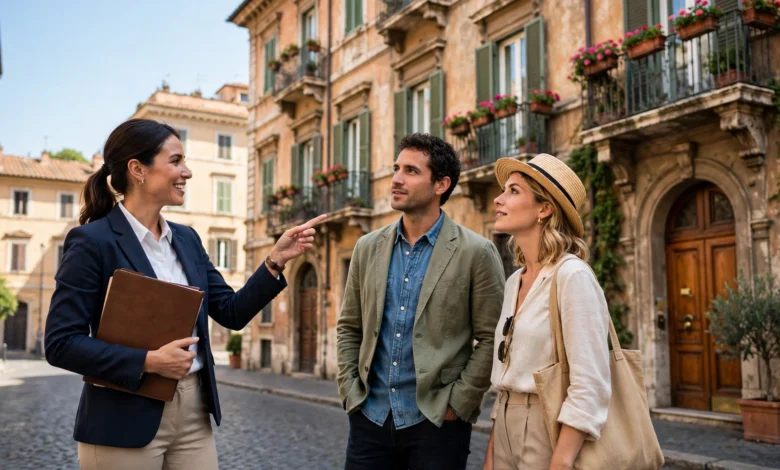
Rome real estate agents who handle historic properties do a very different job from agents selling new apartments in the suburbs. A frescoed piano nobile near Piazza Navona, a top-floor flat with a terrace looking at Saint Peter’s dome, or a converted convent in Trastevere all come with layers of history, and layers of paperwork to match.
Buying in the centro storico means dealing with protected buildings, strict renovation rules, old cadastral records that may not match what is actually built, and condominium arrangements that can go back centuries. The wrong agent can miss a problem that costs you months of delay or tens of thousands of euros. The right one spots it before you sign anything.
That is why choosing an agent is one of the most important decisions in any historic property purchase in Rome. You want someone who knows the neighborhoods street by street, has relationships with owners who never list publicly, and understands how heritage protections affect what you can and cannot change.
This guide covers eight of the most respected luxury real estate agencies in Rome for historic homes, from international brands to local boutique specialists. You will also find a practical checklist for choosing an agent, the questions worth asking, and a clear walk through the Italian buying process. Whether you are relocating, buying a second home, or investing, this article will help you start the search with the right people beside you.


Why Historic Properties in Rome Need Specialist Real Estate Agents
The historic center of Rome is a UNESCO World Heritage Site, and much of it is covered by layers of protection. That makes historic homes in Rome some of the most desirable property in Europe, and some of the most complicated to buy. A general agent can show you a nice flat. A specialist can tell you whether you will actually be allowed to enjoy it the way you imagine.
Listed Buildings and the State’s Right of First Refusal
Some buildings in Rome are formally listed as cultural assets under Italy’s heritage code, the Codice dei Beni Culturali e del Paesaggio. When a listed property is sold, the Ministry of Culture can have a right of pre-emption, known as prelazione, which lets the state buy the property at the agreed price within a set period after it is notified of the sale. In practice the state rarely uses this right for private homes, but the sale has to be structured around it, and the deed is conditional until the period ends.
An experienced agent will flag this early so it does not surprise you at the notary’s office.
Renovation Limits
If you dream of knocking down walls, adding a mezzanine, or replacing old windows, be careful. In protected buildings, many changes need approval from the Soprintendenza, the local heritage authority. Frescoes, coffered ceilings, original floors, and facades are often off-limits. A specialist agent knows which properties have more flexibility and can introduce you to architects who work with the authorities every day.
Paperwork That Does Not Match Reality
Older Roman properties often have cadastral records and planning files that do not match the current layout. A bathroom added decades ago, a terrace that was enclosed, or a room that was split in two can all create problems. In Italy, the property’s layout must match the cadastral plans at the time of sale, so any mismatch has to be fixed first. Good agents check this before a property ever reaches you.
Off-Market Opportunities
Many of the best luxury properties in Rome never appear on public portals. Old Roman families, foundations, and long-term owners prefer discreet sales. The top real estate agents in Rome have built these relationships over years, and much of their best inventory is shared privately with qualified buyers.
Neighborhood Knowledge
Rome’s historic districts each have their own character. A good agent can explain the difference between living near Campo de’ Fiori and living on a quiet street in Monti, or why one side of a street in Trastevere is noisier at night than the other. Here are the areas that most often come up in historic property searches:
- Centro Storico: the heart of the city around the Pantheon, Piazza Navona, and Campo de’ Fiori, with Renaissance and Baroque palazzi
- Tridente: the elegant streets around Piazza di Spagna and Via del Babuino, popular with international buyers
- Trastevere: medieval lanes, ivy-covered buildings, and a lively social scene across the Tiber
- Monti: one of the oldest neighborhoods, close to the Forum, with a creative village feel
- Aventino: quiet, green, and residential, with villas and gardens on one of the seven hills
- Prati: late 19th-century buildings with large apartments near the Vatican
8 Top Rome Real Estate Agents for Historic Properties
The agencies below were chosen because they actively market prestige and period homes in Rome, have offices or teams based in the city, and serve international as well as Italian buyers. This is not a paid ranking, and the order is not a score. The right fit depends on your budget, the area you want, and how you like to work.
1. Italy Sotheby’s International Realty
Italy Sotheby’s International Realty is one of the most recognized names in luxury real estate in Rome. It brings a global network of buyers and a strong marketing reach, which matters if you are selling a significant historic home or looking for one that is only offered discreetly.
What stands out:
- A large international client base, useful for buyers relocating from abroad
- Polished marketing for high-value palazzo apartments and penthouses
- Agents who regularly handle properties in the centro storico, Aventino, and Parioli
Best for buyers at the top end of the market who want a familiar global brand.
2. Engel & Völkers Rome
Engel & Völkers runs a flagship office on Corso Vittorio Emanuele II, right in the historic center, and covers areas including the centro storico, Prati, Parioli, Monti, and Trastevere, according to the Engel & Völkers Rome office page. Its team works in English and Italian, and it lists residential, investment, and luxury homes.
What stands out:
- A central location and a large team split across different areas of the city
- A wide inventory, from period apartments to villas outside the center
- Off-market and discreet sales for sellers who prefer not to advertise
Best for buyers who want broad choice and a team that covers several neighborhoods at once.
3. Lionard Luxury Real Estate
Lionard is an Italian luxury agency with an office on Via del Corso. It is especially known for historic estates: castles, palazzi, villas, and other heritage buildings across Italy, including around Rome.
What stands out:
- Deep experience with unusual and large historic properties for sale in Rome and its countryside
- A portfolio that includes castles and noble residences, not just apartments
- Strong appeal for buyers looking for a statement property or a heritage investment
Best for buyers seeking something rare, such as a full palazzo, a castle in the hills, or a villa with grounds.
4. Christie’s International Real Estate in Rome
Christie’s International Real Estate operates in Italy through affiliate firms, with a Rome presence that markets high-end homes in the capital. The Christie’s name has long ties to art and collecting, which suits buyers drawn to properties with artistic and architectural value.
What stands out:
- Connection to an international luxury network
- Experience with prestigious villas and period residences in central Italy
- A buyer base that appreciates art, design, and heritage
Best for buyers who value a curated, art-minded approach.
5. Coldwell Banker in Rome
Coldwell Banker has several franchise offices in Rome, including CB Mignanelli Real Estate, named after the piazza next to the Spanish Steps. Franchise offices are locally owned, so you get a recognizable brand paired with local knowledge.
What stands out:
- Offices close to the Tridente and other central areas
- A mix of luxury and mid-to-upper market properties
- Access to a wider international referral network
Best for buyers who want a well-known brand at a broader range of price points.
6. Santandrea Luxury Houses
Santandrea is the luxury division of the Italian Gabetti group and has a Rome office focused on prestige homes. As an Italian-owned network, it has strong local roots and a good understanding of how Roman families buy and sell.
What stands out:
- Italian ownership and long experience in the domestic luxury market
- Listings of elegant apartments, penthouses, and villas in central Rome
- Familiarity with the legal and technical side of Italian sales
Best for buyers who want an Italian network with deep local relationships.
7. Boutique Centro Storico Specialists
Some of the best Rome property agents are small, independent firms that work only in the historic center. Agencies such as Prodigy Real Estate focus on sales and rentals inside the old city and often know individual buildings, porters, and owners personally.
What stands out:
- Hyper-local knowledge of specific streets and buildings
- More personal service and direct access to the owner of the business
- Access to listings that never reach big portals
Best for buyers who know exactly which neighborhood they want and value close attention.
8. Independent Buyer’s Agents
In Italy, a regular agent often works for both sides of a deal and may collect a fee from each. A buyer’s agent in Rome, sometimes called a property finder, works only for you. They search across all agencies, negotiate on your behalf, and coordinate surveyors, architects, and the notary.
What stands out:
- Fully on your side of the negotiation
- Useful if you live abroad and cannot attend many viewings
- Help managing technical checks on older buildings
Best for international buyers who want one trusted person managing the whole search.
Quick Comparison Table
| Agency | Type | Strongest area | Best for |
|---|---|---|---|
| Italy Sotheby’s International Realty | Global luxury brand | Top-end palazzo apartments, penthouses | International luxury buyers |
| Engel & Völkers Rome | Global brand, large local team | Centro storico, Prati, Parioli, Monti, Trastevere | Wide choice across neighborhoods |
| Lionard Luxury Real Estate | Italian luxury specialist | Palazzi, castles, villas | Rare heritage properties |
| Christie’s International Real Estate | Global brand via affiliate | Prestigious villas and residences | Art and design-minded buyers |
| Coldwell Banker (e.g. CB Mignanelli) | Franchise offices | Tridente and central areas | Broader price range |
| Santandrea Luxury Houses | Italian luxury network | Central apartments and penthouses | Local relationships |
| Boutique specialists (e.g. Prodigy) | Independent | Historic center only | Hyper-local knowledge |
| Independent buyer’s agents | Buyer-only advisers | Citywide search | Overseas buyers |
How to Choose the Right Rome Real Estate Agent
Even among the best real estate agents in Rome, the right one for you depends on what you are buying and how you want to work. Use these steps to narrow your shortlist.
Check That the Agent Is Properly Registered
In Italy, real estate agents (agenti immobiliari) must be registered with the local Chamber of Commerce and carry professional liability insurance. Ask for the agent’s registration details and check them. A professional will be happy to share this. If someone avoids the question, move on.
Understand How Commission Works
Italian agency fees often work differently from the US or UK. It is common for both the buyer and the seller to pay the agent a commission, frequently in the range of about 2% to 4% plus VAT each, though this varies and is negotiable. Always get the fee in writing before your first viewing, and confirm whether it applies only if you buy that specific property.
Look for Real Historic Property Experience
Ask the agent to show you examples of period homes they have sold recently. Experience with listed buildings, frescoed interiors, and complex condominiums matters far more than a glossy website. Ask how they handled the last property where cadastral records did not match the layout.
Test Their Neighborhood Knowledge
Good Rome realtors can tell you which streets flood with tourists, which buildings have reliable lifts, and how restricted traffic zones (ZTL) affect access and parking. If an agent gives vague answers about the area they are selling in, they probably do not know it well.
Language and Communication
If you do not speak Italian, choose an agent who communicates clearly in your language and explains Italian documents in plain terms. You still need a qualified notary and ideally an independent lawyer, but an agent who can translate the process will save you a lot of stress.
Questions to Ask Before You Commit
- How many historic or listed properties have you sold in the last two years?
- What is your commission, who pays it, and when is it due?
- Do you represent the seller, the buyer, or both in this transaction?
- Have you checked that the property’s layout matches the cadastral and planning records?
- Is the building subject to heritage protection or a state right of pre-emption?
- What major condominium works are planned or already approved?
- Which architects, surveyors, and lawyers do you recommend, and are you paid for referrals?
- Can you show me properties that are not publicly listed?
Red Flags to Watch For
- Pressure to sign a purchase proposal on the first visit
- Reluctance to share registration details or put fees in writing
- Dismissing your questions about permits or cadastral issues as “normal in Rome”
- Asking you to send a deposit directly to them without a clear written agreement
- Listings with prices or photos that do not match what you see on the viewing
The Process of Buying a Historic Property in Rome
Knowing the steps ahead of time makes working with Rome real estate agents much easier. The Italian process is well structured, but it is different from what many foreign buyers expect, and historic buildings add a few extra checks.
Step-by-Step Buying Process
- Get an Italian tax code (codice fiscale). You need one to make an offer, open a bank account, and sign contracts. You can request it through an Italian consulate or a local tax office.
- Define your search and shortlist agents. Decide on neighborhoods, budget, and must-haves such as a terrace, a lift, or original features.
- View properties and ask the hard questions. Use the checklist above to test both the agent and the property.
- Carry out due diligence. Hire an independent surveyor (geometra) or architect to check cadastral and planning conformity, structural condition, and any heritage restrictions.
- Make a written purchase proposal (proposta d’acquisto). This usually comes with a small deposit and becomes binding once the seller accepts it, so read it carefully.
- Sign the preliminary contract (compromesso). This sets the price, completion date, and conditions, and normally includes a larger deposit (caparra confirmatoria). If you back out, you can lose it. If the seller backs out, they usually owe you double.
- Complete the deed (rogito) at the notary. The notary is a public official who checks the title, registers the sale, and collects the purchase taxes.
- Handle the heritage step if the property is listed. For listed buildings, the sale is notified to the Ministry of Culture, which has a set period to exercise its right of pre-emption before ownership is fully settled.
Key Costs to Budget For
- Purchase taxes: when buying from a private seller, registration tax is commonly 2% for a qualifying main home and 9% for other homes, usually calculated on the cadastral value rather than the price. Purchases from a company may involve VAT instead.
- Notary fees: these vary with the property value and complexity.
- Agency commission: typically paid by both buyer and seller, plus VAT.
- Technical and legal advice: surveyor, architect, and independent lawyer fees.
- Renovation contingency: older buildings often need more work than expected, and approvals can take time.
Tax rules change, so confirm current rates with your notary or a tax adviser before you commit.
Living in a UNESCO Site
The Historic Centre of Rome has been on the UNESCO World Heritage List since 1980. You can read the official description on the UNESCO page for the Historic Centre of Rome. This status is part of what makes the area so special, and it is also why planning rules are strict. Ask your agent and architect early about what is realistic for the property you love.
FAQs About Rome Real Estate Agents
Can foreigners buy historic property in Rome?
Yes. Citizens of the EU, and of many other countries with reciprocal agreements with Italy, can buy property in Rome on largely the same terms as Italians. You will need a codice fiscale, and it is wise to confirm your eligibility with a notary or lawyer before you start.
How much do Rome real estate agents charge?
Fees vary, but buyers and sellers commonly each pay a commission of about 2% to 4% plus VAT. Always agree the fee in writing before viewings begin.
Do I need a lawyer if I already have an agent and a notary?
It is strongly recommended. The notary is a neutral public official, and the agent may be working for both sides. An independent lawyer protects only your interests, which is especially valuable for complex historic properties in Rome.
What is the difference between a palazzo apartment and a listed building?
A palazzo apartment is simply a home inside a historic building. A listed building has a formal heritage designation that brings extra rules, including possible state pre-emption and limits on renovation. Many palazzo apartments are in protected areas without being individually listed, so always check.
Which neighborhoods are best for historic homes in Rome?
The centro storico, Tridente, Trastevere, Monti, and Aventino are the most popular areas for historic homes in Rome. Prati is also a strong choice for elegant late 19th-century apartments with more space and easier access.
Can I renovate a historic apartment in Rome?
Usually yes, but within limits. Interior updates such as kitchens and bathrooms are often possible, while changes to protected features, facades, or the structure may need approval from the Soprintendenza. Plan for extra time and use an architect experienced with heritage buildings.
Conclusion
Finding the right Rome real estate agents is the first and most important step toward owning a piece of the Eternal City’s history. Historic homes in the centro storico, Tridente, Trastevere, Monti, and Aventino come with heritage protections, renovation limits, tricky paperwork, and off-market deals that only experienced specialists handle well. Global names like Italy Sotheby’s International Realty, Engel & Völkers, Christie’s, and Coldwell Banker bring international reach, while Lionard, Santandrea, boutique centro storico firms, and independent buyer’s agents offer deep local and heritage expertise. Whichever you choose, check registration, get fees in writing, ask hard questions about cadastral conformity and listed status, and build a team that includes an independent lawyer and a heritage-savvy architect. Do that, and you will be in a strong position to buy a historic property in Rome with confidence rather than surprises.