Arizona Property Guide 2026: 12 Essential Tips for Smart, Stress-Free Desert Living
Arizona property guide for 2026: home prices, heat, water cuts, taxes, insurance and desert upkeep, so buyers know what to expect before moving.

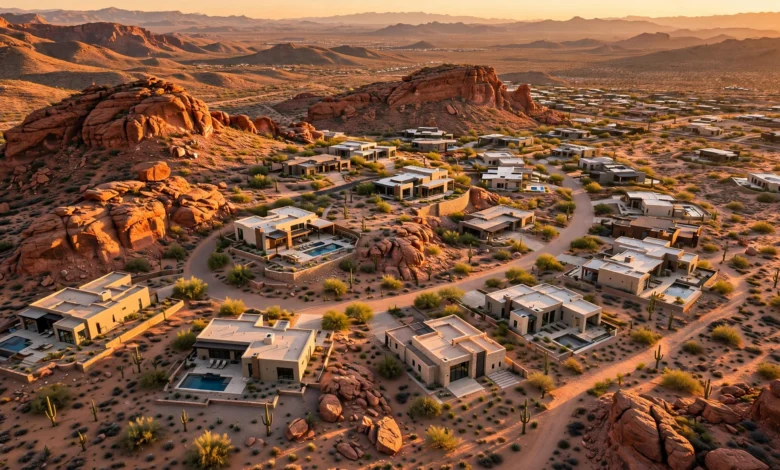
This Arizona property guide starts with a simple truth: buying a home in the desert is different from buying anywhere else. The sunshine, the wide-open views and the mild winters are real. So are the 110-degree afternoons, the monsoon storms and the ongoing conversation about water. People who love living in Arizona usually went in with their eyes open. People who struggle often didn’t.
The good news for buyers is that the market has calmed down. After the bidding wars of the early 2020s, homes are sitting longer, inventory has grown, and buyers in many areas have more room to negotiate. At the same time, 2026 brought a major development that every future homeowner should understand: Arizona is facing its largest cuts yet to Colorado River water, and while taps aren’t expected to run dry, water bills are likely to rise.
This guide walks through what to expect when buying a home in Arizona right now. You’ll see current home prices across the state, how different regions compare, what desert heat really means for a house, how water supply works, and what you’ll pay for property taxes and insurance. We’ll also cover the features that make desert homes unique, from pools and tile roofs to xeriscaped yards, and finish with a practical checklist and a clear list of pros and cons.
Whether you’re relocating from a colder state, buying a winter home or investing in a rental, the goal is the same: to help you make a confident decision based on how desert living actually works, not just how it looks in listing photos.

Why Buyers Still Choose Arizona
Arizona has been one of the most popular relocation destinations in the country for years, and that hasn’t changed much. The reasons are pretty consistent:
- Mild winters. From November through March, much of the state enjoys sunny days in the 60s and 70s.
- Lower property taxes than many states. Arizona’s property tax burden is well below the national average, which we’ll cover in detail below.
- Job growth. The Phoenix area in particular has attracted large employers in tech, manufacturing, healthcare and finance.
- Variety of landscapes. You can live in the low desert, the high desert, or the pine forests of northern Arizona.
- Outdoor lifestyle. Hiking, golf, lakes and national parks are all within easy reach.
Growth continues to spread outward. One local market report notes that Pinal County, south of Phoenix, is now the seventh fastest-growing county in the U.S., driven by households looking for cheaper housing than metro Phoenix.
Arizona Property Guide to Home Prices in 2026
Home prices vary a lot depending on where you look and which data source you use. Here’s a snapshot of the Arizona housing market as of mid to late 2026.
Statewide Numbers
- Median closed sale: Resideline puts Arizona’s median closed sale price at $415,000, based on more than 66,000 closings over the six months to September 2026.
- Average home value: Zillow shows the average Arizona home value at $417,990, down 1.1% over the past year.
- Listing prices: Realtor.com data showed the state’s median listing price at $468,000 in April 2026, down 3.51% from a year earlier.
The different numbers come from different methods. Sale prices, listing prices and estimated values rarely match exactly, so it’s worth comparing a few sources before forming an opinion.
Phoenix Home Prices
Phoenix is the center of the state’s market. Redfin reports that over the three months ending July 2026, Phoenix homes sold for a median of $460,000, up 1.7% from a year earlier, with homes selling in about 55 days on average.
The broader metro is more expensive. As of August 2026, one market report put the Maricopa County median home price at $504,900, up 1% year over year, with homes averaging 73 days on the market.
Price Differences Across Arizona
The gap between markets is large. Among the state’s highest-volume markets, Scottsdale has the highest median closed sale at $878,000, while Tucson has the lowest at $301,000.
| Market | Approximate Median Price | Notes |
|---|---|---|
| Scottsdale | $878,000 | Luxury and resort-style living |
| Maricopa County overall | $504,900 | Includes Phoenix and suburbs |
| Phoenix (city) | $460,000 | Largest market by volume |
| Pinal County | $383,849 | Fast-growing, more affordable |
| Tucson | $301,000 | Lower entry point, slower pace |
Is It a Buyer’s Market?
In many areas, conditions favor buyers more than they did a few years ago. At the start of 2026, Phoenix’s demand-to-supply index sat at 80, which indicates a buyer’s market, while inventory had risen 15% to 20% year over year. In Pinal County, months of supply rose to 4.4 in July 2026, with pending sales and new listings both down from 2025.
That doesn’t mean prices are collapsing. Most data shows them flat to slightly up. But buyers generally have more time and more negotiating power than during the pandemic boom.
Choosing Where to Live in Arizona
Arizona isn’t one climate or one lifestyle. Where you buy shapes almost everything about desert living.
The Phoenix Metro (Valley of the Sun)
The Valley includes Phoenix, Scottsdale, Tempe, Mesa, Chandler, Gilbert, Glendale, Peoria, Surprise, Buckeye and more. It offers the most jobs, amenities and housing options, but also the most intense summer heat.
- East Valley (Chandler, Gilbert, Mesa, Queen Creek): popular with families, good schools, newer communities.
- West Valley (Buckeye, Surprise, Goodyear): newer and often cheaper, with major growth.
- Scottsdale and north Phoenix: higher prices, resort-style amenities, desert views.
Tucson and Southern Arizona
Tucson is smaller, slightly cooler than Phoenix thanks to higher elevation, and generally more affordable. It has a strong university presence and a more relaxed pace.
Northern Arizona
Flagstaff, Sedona and Prescott sit at higher elevations with four seasons. Summers are much milder, but winters bring snow in Flagstaff, and forested areas carry wildfire risk. Sedona’s scenery commands premium prices.
Western Arizona
Yuma, Lake Havasu City and Kingman offer lower prices and a slower lifestyle. Yuma is one of the hottest and sunniest places in the country, while Lake Havasu is built around water recreation.
Desert Living: What the Heat Really Means
No Arizona property guide is complete without an honest talk about heat. It’s the single biggest adjustment for newcomers in the low desert.
How Hot Does It Get?
Phoenix averages about 111 days a year at 100 degrees or hotter, based on the 1991 to 2020 period. Extreme summers push well past that. In 2023, Phoenix set a record with a 31-day streak of highs at or above 110 degrees, and it went on to record 54 days at 110 or higher that year.
2026 has been hot in a different way. ABC15’s data showed Phoenix had its earliest 100-degree day in 20 years on March 18, and the year had the highest average maximum temperature year to date in that period.
What Heat Means for Your Home
Heat isn’t just about comfort. It directly affects the house you buy and what it costs to run:
- Air conditioning is essential. Check the age, size and service history of the AC system. Replacing it can cost thousands of dollars.
- Summer power bills rise sharply. Ask the seller for 12 months of utility bills to see real costs.
- Orientation matters. Homes with big west-facing windows or backyards bake in the afternoon sun.
- Insulation and windows count. Dual-pane, low-E windows and good attic insulation make a noticeable difference.
- Garages get extremely hot. Anything stored there, from electronics to paint, needs to handle high temperatures.
- Roofs and exterior materials age faster. Sun exposure breaks down roofing underlayment, paint and caulk over time.
Living With the Heat
Most longtime residents adapt by shifting their schedules. Outdoor activities happen early in the morning or after sunset in summer. Shade structures, misters and covered patios make outdoor spaces usable for more of the year.
Arizona Water Supply: What Every Buyer Should Know
Water is the most important long-term issue in living in Arizona, and 2026 brought major news.
The 2026 Colorado River Decision
In August 2026, federal officials finalized a new plan for the Colorado River. Under it, Arizona will take a cut of about 30% to its overall Colorado River allocation, while the Central Arizona Project, which delivers water to the Phoenix and Tucson areas, will take a 50% cut. The finalized guidelines reduce Lower Basin deliveries by 1.25 million acre-feet annually in 2027 and 2028, with Arizona accounting for 760,000 acre-feet of that.
Will the Taps Run Dry?
Water officials say no. As one Gilbert water manager put it, Arizona isn’t running out of water, but it is running out of cheap water. Experts say the state can absorb the initial cut largely because it has spent decades banking water underground, though that reserve is finite.
For a clear explanation of how this affects households, NPR’s report on Arizona’s Colorado River cuts is a helpful read. The headline says it well: taps won’t run dry, but water bills will go up.
How Phoenix Gets Its Water
Different cities rely on different sources, which is why water security varies by location. According to the City of Phoenix, about 40% of its drinking water comes from the Colorado River through the Central Arizona Project, about 58% comes from the Salt and Verde rivers, and about 2% comes from groundwater. The city also says it could move to a Stage 2 Water Warning by the end of 2026, which could include requests to reduce water use and potential drought surcharges. You can read the details in the City of Phoenix announcement on Colorado River cuts.
The 100-Year Water Rule and New Construction
Arizona has a rule that affects new subdivisions in its major metro areas. In the Phoenix area, new subdivisions must show the state they have a 100-year water supply. In 2023, the state stopped issuing new 100-year certificates based on groundwater in the Phoenix area, though already-approved homes weren’t affected. A 2026 court ruling has since raised new questions about how that rule applies, and water experts are watching closely.
Questions to Ask Before You Buy
- Who is the water provider? A city utility, a private company or a private well?
- What sources does the provider use? Those relying heavily on Colorado River water face bigger adjustments.
- Is the property on a private well? In rural areas, ask about well depth, recent water levels and nearby usage.
- What are current water bills? Ask for past bills and check for planned rate increases.
- For new builds, does the community have an assured water supply? Ask the builder directly.
Monsoon Season, Dust Storms and Flash Floods
Summer in Arizona isn’t just hot. It’s also stormy. Monsoon season runs roughly from mid-June through September and brings sudden thunderstorms, high winds and heavy rain.
What to Expect
- Dust storms (haboobs): Massive walls of dust can sweep across the desert, cutting visibility and coating everything in dirt.
- Strong winds: Monsoon winds can knock down trees, damage roofs and blow patio furniture into pools.
- Flash floods: Dry washes can fill with fast-moving water in minutes.
- Power outages: Storms can knock out power during the hottest part of the year.
What It Means for Property
- Check the property’s flood zone and whether it sits near a wash.
- Look at roof condition, especially flat roofs, which are common in the desert and need proper drainage.
- Make sure gutters and drainage direct water away from the foundation.
- Consider tree placement, since large trees near the house can become a hazard in high winds.
Arizona Property Taxes: A Real Advantage
Low property taxes are one of the biggest financial perks of buying a home in Arizona.
How Low Are They?
Arizona’s statewide average effective property tax rate is about 0.48% of home value according to the Tax Foundation, roughly half the U.S. average of about 1.0%. Rates vary by county. Census-based estimates put Maricopa County’s effective rate at about 0.44% and Pima County’s at about 0.70%.
How the System Works
Arizona has a few features that keep taxes predictable:
- No state property tax. All property tax is local, set by counties, cities, school districts and special districts.
- A cap on increases. Under Proposition 117, a home’s taxable Limited Property Value can’t rise more than 5% a year, even if its market value jumps much more.
- Low assessment ratio. Residential property is assessed at 10% of its Limited Property Value.
- Homeowner rebate. An automatic state-funded rebate cuts the school district primary tax by 40%, up to $600 a year.
- Senior protection. Homeowners 65 and older may be able to freeze their valuation for three years.
A Quick Example
On a $450,000 home with a 0.48% effective rate, annual property taxes would be roughly $2,160. The same home in a state with a 1.5% effective rate would cost about $6,750 a year in taxes. That difference adds up quickly over time.
Homeowners Insurance in Arizona
Insurance costs are harder to pin down, because estimates vary widely depending on the source and the home.
What the Data Shows
- NerdWallet estimates the average cost at $4,175 a year for a policy with $500,000 in dwelling coverage, about 39% above the national average for the same coverage.
- ValuePenguin, using a different sample, estimates Arizona homeowners insurance is about 7% cheaper than the national average.
- Credit matters a lot. NerdWallet found policyholders with poor credit pay an average of $6,695 a year, about 60% more than those with good credit.
What Drives Arizona Insurance Costs
- Wildfire risk, especially in forested northern Arizona and wildland-urban interface areas.
- Monsoon damage, including wind, hail and water intrusion.
- Rebuilding costs. NerdWallet cites a median rebuilding cost of about $482,748 for Arizona homes.
- Home age and roof condition. Newer homes often get much cheaper quotes.
Tips for Buyers
- Get insurance quotes before your inspection period ends.
- Ask the seller about past claims on the property.
- Compare several insurers, since prices vary sharply between companies.
- In wildfire-prone areas, ask about mitigation discounts.
- Consider flood insurance if the home is near a wash, even if it’s not required.
HOAs and Planned Communities
A large share of Arizona homes, especially in the Phoenix metro, sit in communities with homeowners associations.
What HOAs Typically Cover
- Common area landscaping and parks
- Community pools and fitness centers
- Gated entries and private roads
- Exterior design standards
What to Check Before Buying
- Monthly or quarterly dues, and how much they’ve risen in recent years.
- Special assessments, current or planned.
- Reserve funds, which show whether the HOA can handle major repairs.
- Rules on rentals, solar panels, paint colors, parking and landscaping.
- Master-planned community fees, which can come on top of the regular HOA.
HOAs can protect property values and provide great amenities, but restrictive rules frustrate some owners. Read the documents carefully during your review period.
Features That Make Desert Homes Unique
Desert homes look and function differently from homes in other regions. Here’s what to know about the most common features.
Swimming Pools
Pools are extremely common in the Phoenix area and make summers far more enjoyable. But they come with costs: regular maintenance, chemicals, equipment repairs, higher water use and added insurance liability. Get the pool inspected separately if possible.
Xeriscaping and Desert Landscaping
Xeriscaping uses gravel, rock and drought-tolerant plants instead of grass lawns. It uses far less water and requires less maintenance. With water costs rising, many cities encourage it, and Phoenix specifically asks residents to choose desert-adapted landscaping.
Tile and Flat Roofs
Concrete tile roofs are common and can last decades, but the underlayment beneath them wears out faster in intense heat. Flat roofs are also common and need proper coatings and drainage. Always have the roof inspected.
Stucco Exteriors
Most desert homes use stucco, which handles heat well. Look for large cracks, which can let in water during monsoon storms.
Solar Panels
Arizona’s sunshine makes solar power attractive. If a home has panels, find out whether they’re owned or leased. Leased panels come with contracts that transfer to the buyer and can complicate a sale.
Pests and Health Considerations
- Scorpions are common in many desert neighborhoods. Pest control is a regular expense for many homeowners.
- Termites are active in the desert, so a termite inspection is important.
- Valley fever, a fungal infection spread through desert dust, is common in parts of Arizona. Most people have mild symptoms or none, but it’s worth knowing about.
Budgeting for Desert Homeownership
Here’s a rough look at the ongoing costs new Arizona homeowners should plan for beyond the mortgage:
| Expense | What to Expect |
|---|---|
| Property taxes | Low compared with most states, about 0.44% to 0.70% depending on county |
| Homeowners insurance | Varies widely; get multiple quotes |
| Summer electricity | Much higher than winter due to air conditioning |
| Water | Likely to rise as cities adjust to Colorado River cuts |
| HOA dues | Common in the Phoenix metro |
| Pool maintenance | Ongoing cleaning, chemicals and equipment repairs |
| Pest control | Often needed for scorpions and termites |
| AC servicing | Annual tune-ups recommended |
| Roof maintenance | Underlayment and coatings wear faster in extreme heat |
Your Arizona Home Buying Checklist
Use this list when evaluating any property:
- Review 12 months of utility bills for electricity and water.
- Inspect the AC system, including age, capacity and service records.
- Get a full roof inspection, especially for tile underlayment or flat roof coatings.
- Check the water provider and its sources, or well details for rural homes.
- Look up the flood zone and proximity to washes.
- Get insurance quotes early, before your inspection period ends.
- Order a termite and pest inspection.
- Inspect the pool separately if the home has one.
- Review HOA documents, fees, reserves and rules.
- Confirm solar ownership if panels are installed.
- Visit in summer if you can, or at least in the afternoon, to feel real conditions.
- Compare several neighborhoods, since prices and climate vary a lot across the state.
Pros and Cons of Living in Arizona
Pros
- Mild, sunny winters
- Low property taxes compared with most states
- More negotiating room for buyers than in recent years
- Wide range of home prices and regions
- Strong job growth in the Phoenix area
- Year-round outdoor lifestyle, especially in cooler months
- Beautiful desert, mountain and canyon scenery
Cons
- Extreme summer heat in the low desert
- Rising water costs as Colorado River supplies shrink
- High summer electricity bills
- Monsoon storms, dust and flash flood risk
- Insurance costs that can vary sharply
- HOA rules and fees in many communities
- Wildfire risk in forested northern areas
Frequently Asked Questions About Buying Property in Arizona
Is 2026 a good time to buy a home in Arizona?
Conditions are more balanced than a few years ago. Inventory has grown, homes are staying on the market longer, and buyers in many areas have more negotiating power. Prices are mostly flat to slightly rising.
Is Arizona running out of water?
Officials say taps won’t run dry, even with the new Colorado River cuts. Cities have backup supplies and stored water, but costs are expected to rise, and some cities may ask residents to conserve more.
How much are property taxes in Arizona?
The statewide average effective rate is about 0.48% of home value, roughly half the national average. Rates vary by county and local district.
Where is the cheapest place to buy in Arizona?
Among major markets, Tucson has one of the lowest median prices at around $301,000. Smaller cities like Yuma and Kingman can also be more affordable.
How do people handle the summer heat?
Most residents rely on efficient air conditioning, shift outdoor activities to early mornings or evenings, and use pools, shade structures and covered patios. Choosing a well-insulated home with good orientation helps a lot.
Conclusion
This Arizona property guide comes down to one main idea: desert living is rewarding when you understand what you’re buying into. The 2026 market gives buyers more room to negotiate, with a statewide median closed sale around $415,000, Phoenix near $460,000, and prices ranging from about $301,000 in Tucson to $878,000 in Scottsdale. Property taxes remain a clear advantage at roughly half the national average, but buyers should plan for intense summer heat, high cooling costs, monsoon storms and insurance costs that vary widely by insurer and location. Most importantly, the new Colorado River cuts mean water won’t disappear, but it will cost more, so it pays to know your water provider, its sources and your home’s efficiency before you buy. If you check the AC, roof, utility bills, water supply, flood risk, HOA rules and insurance quotes early, you’ll be in a strong position to enjoy everything Arizona offers, from sunny winters to wide-open desert views.