Amsterdam Canal Homes 2026: Ultimate Price Guide, 7 Hidden Costs and Smart Buying Tips
Amsterdam canal homes cost far more than the city average. See 2026 prices per m², canal-by-canal costs, transfer tax, ground lease and monument upkeep.

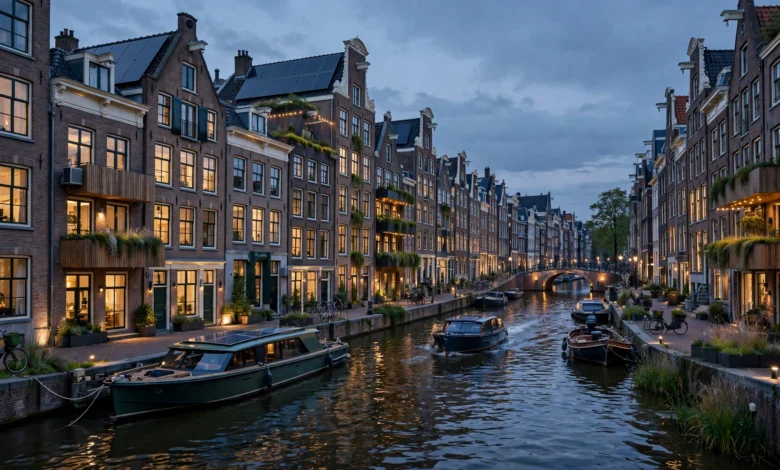
Amsterdam canal homes are some of the most recognisable houses in the world. Tall, narrow, and leaning slightly forward over the water, they line the famous ring of canals that has drawn merchants, artists, and dreamers to the city for four centuries. Owning one is a serious ambition, and for most buyers, a seriously expensive one.
But what does a canal house in Amsterdam actually cost in 2026? The honest answer is “it depends,” and the details matter a lot. A one-bedroom apartment tucked into an old canal house on a quiet side street can cost less than a family home in some suburbs. A full 17th-century merchant’s house on the Herengracht’s Golden Bend can run into eight figures. In between sit split-level flats, renovated warehouses, and houseboats that offer canal views at a very different price point.
The sticker price is only part of the story. Buyers also face transfer tax, ground lease charges, strict monument rules, ageing wooden foundations, and a competitive bidding culture that often pushes prices above asking. Miss any of these, and a dream purchase can turn into a costly lesson.
This Amsterdam property guide breaks it all down. You’ll see current Amsterdam house prices, what canal homes cost canal by canal, the seven hidden costs every buyer should budget for, and practical tips for buying smart in one of Europe’s tightest housing markets.

The Amsterdam Property Market in 2026
Before looking at canal homes specifically, it helps to understand the wider Amsterdam property market. After years of rapid growth, 2026 has been a year of cooling rather than crashing.
Amsterdam House Prices Right Now
NVM figures for the Groot-Amsterdam region put the average transaction price in Q2 2026 at about €577,000, down 0.4% on a year earlier, according to Huisverklikker’s summary of NVM data for Amsterdam. The same source shows Amsterdam’s average price per square metre at roughly €8,239, against about €5,109 nationally. Local NVM agents reported an average transaction price of around €8,392 per m² in the twelve months to September 2026, with the city centre closer to €9,642 per m².
Key trends shaping the market:
- Less overbidding. Buyers still pay above asking on average, but the margin has narrowed, to roughly 6 to 7% in recent local figures.
- More homes for sale. Inventory has risen compared with a year earlier, giving buyers more choice and a little more time.
- Flat prices in the capital. Amsterdam’s growth is lagging behind the national average as affordability limits bite.
- Strong rents. Free-sector rents remain among the highest in the Netherlands, supporting long-term demand for well-located homes.
Why Canal Homes Sit at the Top
The canal belt (Grachtengordel) and the historic centre consistently rank among the most expensive parts of the city. Typical estimates put prices in the Canal Belt, Jordaan, and other central districts at well above the city average per square metre, and exceptional canal-front houses go far higher. Supply is fixed, demand is global, and almost every building is a protected monument. That combination keeps Amsterdam canal house prices at a premium even when the wider market slows.
What Counts as an Amsterdam Canal Home?
Not every home near water is a true canal house. Knowing the different types will help you understand price differences and set realistic expectations.
The Canal Belt and Its History
The main ring of canals was dug in the 17th century during the Dutch Golden Age, when Amsterdam was one of the richest cities in the world. Wealthy merchants built tall, narrow homes with warehouses in the attic and hoisting beams on the gables. Today, the Seventeenth-Century Canal Ring Area of Amsterdam is a UNESCO World Heritage Site, which is a big part of its appeal and its strict rules.
The four main canals of the ring are:
- Singel, the innermost canal, once the city’s medieval moat
- Herengracht, the “Gentlemen’s Canal,” historically the most prestigious
- Keizersgracht, the “Emperor’s Canal,” the widest of the three main canals
- Prinsengracht, the “Prince’s Canal,” the outermost and liveliest
Smaller canals like Brouwersgracht, Reguliersgracht, Leidsegracht, and the canals of the Jordaan add more choice and character.
Types of Canal Homes
- Whole canal houses (grachtenpanden). A complete building, often four to six floors, sometimes with a garden behind. These are the rarest and most expensive.
- Canal house apartments. Most canal houses have been split into flats. You might buy a ground-floor apartment with a garden, a piano nobile (grand first floor) with high ceilings, or a top-floor flat under the beams.
- Converted warehouses. Former storage buildings, especially around Brouwersgracht and the western islands, offer open-plan lofts with canal views.
- Houseboats (woonboten). Living on the water itself. Prices can look lower, but mooring rights and maintenance add complexity.
- Canal-view homes nearby. Homes on side streets with canal views, or in neighbouring areas like De Wallen, Plantage, or the Eastern Docklands, offer the feel at a lower price.
Each type comes with very different costs, which is why two “canal homes” can differ in price by millions.
What Amsterdam Canal Homes Cost in 2026
There’s no official price index just for canal houses, so the figures below are indicative ranges based on 2026 market reports, agent data, and listings. Use them to set expectations, then check recent sold prices for the specific street and building you’re considering.
Canal House Prices by Property Type
| Property type | Typical size | Indicative price range (2026) |
|---|---|---|
| Studio or small flat in a canal house | 35–55 m² | €400,000 to €700,000 |
| Two-bedroom canal apartment | 60–100 m² | €700,000 to €1.4 million |
| Large piano nobile or duplex | 100–200 m² | €1.3 million to €3 million |
| Whole canal house | 250–500 m² | €3 million to €8 million |
| Landmark house on the Golden Bend | 400 m² and up | €8 million and higher |
| Houseboat on a central canal | 60–150 m² | €450,000 to €1.5 million |
These are wide ranges because condition, floor level, light, garden access, and the exact stretch of canal make an enormous difference. A renovated flat with a private garden can sell for far more per square metre than a dated top-floor walk-up in the same building.
Herengracht Prices
The Herengracht is the most prestigious address in the canal belt. Its Golden Bend (Gouden Bocht), between Leidsestraat and Vijzelstraat, has some of the widest and grandest double-fronted mansions in the city. Many are offices, embassies, or museums, so residential supply is tiny. Whole houses here regularly command the highest prices in Amsterdam, often well above the central-district average per square metre. Apartments on quieter stretches of the Herengracht are more attainable but still carry a clear premium.
Keizersgracht Prices
The Keizersgracht is the widest of the main canals, which means more light and broader views. It’s popular with families and international buyers who want large period homes. Prices are close to Herengracht levels, especially for houses with original features and gardens.
Prinsengracht Prices
The Prinsengracht is the longest and liveliest of the main canals, bordering the Jordaan and home to the Anne Frank House and the Westerkerk. It has more apartments and slightly more variety in price. Expect strong demand from buyers who want character and a neighbourhood feel rather than pure prestige. Prices per square metre are typically a little lower than on the Herengracht and Keizersgracht, but still among the highest in the city.
Singel Prices
The Singel is the oldest canal of the ring and runs closest to the busy city centre. It’s home to the floating flower market and plenty of shops and offices. Homes here offer a very central location, though some stretches are busier and noisier. Value varies a lot from one end to the other.
Jordaan and Smaller Canals
The Jordaan canals, such as Egelantiersgracht and Bloemgracht, along with Brouwersgracht and Reguliersgracht, are often described as the most charming in Amsterdam. Homes tend to be smaller and more intimate. Prices per square metre can match or even exceed the main canals on the prettiest stretches, but smaller unit sizes mean lower total prices.
Houseboat Prices
Houseboats in Amsterdam offer canal life with a different cost structure. The boat itself may cost less than a comparable apartment, but the real value often lies in the mooring right (ligplaats), which is tied to a specific location and tightly limited by the city. Buyers also face hull inspections, maintenance, insurance, and sometimes special financing, since not every lender offers houseboat mortgages.
What You Get for Your Money: Quick Examples
- Around €600,000: a compact one-bedroom flat in a canal house, often on an upper floor with steep stairs.
- Around €1 million: a two-bedroom apartment of 80 to 100 m², possibly with canal views from the living room.
- Around €2 million: a large duplex or piano nobile with high ceilings, or a smaller whole house on a side canal.
- €4 million and up: a complete canal house with multiple floors, often needing ongoing restoration.
7 Hidden Costs of Buying Amsterdam Canal Homes
The purchase price is just the starting point. Most Dutch homes are sold kosten koper (k.k.), meaning the buyer pays the transfer costs on top. With canal houses, several extra costs can add up quickly.
1. Transfer Tax (Overdrachtsbelasting)
The biggest upfront extra is transfer tax. In 2026, the rates are:
- 2% if you’ll live in the home as your main residence
- 0% for buyers under 35 purchasing their first home to live in, as long as the value is no more than €555,000
- 8% for homes you won’t live in yourself, such as buy-to-let properties or second homes, down from 10.4% in 2025
The change for investors took effect on 1 January 2026, as explained in this SRA overview of the 2026 Dutch transfer tax rates. On a €1.5 million canal apartment, that’s €30,000 for an owner-occupier and €120,000 for an investor.
Note that the starter exemption rarely helps with canal homes, since most cost more than the €555,000 limit. If the value is even slightly above it, the exemption doesn’t apply at all.
2. Ground Lease (Erfpacht)
Much of Amsterdam’s land is owned by the city and leased to homeowners under a system called erfpacht. Some canal houses in the historic centre sit on privately owned land (eigen grond), but many properties in and around the centre don’t. If a home is on leasehold land, you may owe an annual ground rent (canon) or have bought it off for a set period.
What to check:
- Is the land freehold or leasehold?
- If leasehold, is the ground rent bought off (afgekocht), and until when?
- Has the property switched to the city’s perpetual lease system?
- How will future ground rent be calculated?
Erfpacht terms can significantly affect both your monthly costs and resale value, so have your notary and agent review them carefully.
3. Monument Maintenance and Permits
Most canal houses are listed as national monuments (rijksmonument) or municipal monuments. That status protects their history but limits what you can change. Replacing window frames, altering the façade, changing the roof, or even some interior work may need a permit and must use approved materials and methods.
This means:
- Renovations cost more and take longer than in a modern home.
- Specialist contractors are often required.
- Some subsidies or favourable loans may be available for monument restoration, which can soften the blow.
4. Foundation Repairs
Amsterdam is built on soft, wet ground. Most historic buildings stand on wooden piles driven deep into the soil. If groundwater levels drop or the wood decays, the foundation can weaken, causing tilting, cracks, and sticking doors.
Foundation repair (funderingsherstel) is one of the most expensive risks for canal house owners. Costs can run to tens or even hundreds of thousands of euros per building, usually shared among the owners. Always ask for a foundation report, check the building’s history, and look for signs of uneven floors or cracks in the walls.
5. Owners’ Association (VvE) Fees
If you buy an apartment in a canal house, you’ll join the building’s Vereniging van Eigenaren (VvE), or owners’ association. Monthly contributions cover insurance, maintenance, and a reserve fund for major works. In old buildings, these fees can be high, and a poorly managed VvE with a small reserve can lead to large surprise bills.
Before buying, request:
- The VvE’s annual accounts and current reserve
- A long-term maintenance plan (MJOP)
- Minutes from recent meetings, which often reveal upcoming repairs or disputes
6. Notary, Mortgage, and Advisory Fees
Other one-off costs typically include:
- Notary fees for the transfer and mortgage deeds
- Valuation report required by your lender
- Mortgage advice and arrangement fees
- Building inspection (bouwkundige keuring), especially important for older homes
- Buyer’s agent fees (aankoopmakelaar), often around 1% to 1.5% of the price
Together with transfer tax, owner-occupiers often budget around 5% to 6% of the purchase price for buying costs. For investors paying 8% transfer tax, the total is much higher.
7. Ongoing Taxes, Insurance, and Energy Upgrades
Once you own the home, ongoing costs include:
- Municipal property tax (OZB) and waste and sewage charges, based on the home’s WOZ value
- Buildings and contents insurance, which can be higher for listed buildings
- Energy costs, often steep in tall, draughty canal houses
- Sustainability upgrades like insulation and new glazing, which must respect monument rules
- For houseboats, mooring fees and regular hull inspections
Add these up before you make an offer, not after.
How to Buy a Canal Home in Amsterdam
The Dutch buying process is straightforward once you know the steps, but it moves fast in popular areas like the canal belt.
The Step-by-Step Process
- Get a mortgage assessment. Know your budget before you start viewing. Dutch lenders generally cap borrowing at the home’s market value and base it on your income.
- Hire a buyer’s agent. An aankoopmakelaar knows local prices, monument issues, and bidding tactics. In a competitive market, this often pays for itself.
- View and research. Ask for the property’s documents early: VvE records, erfpacht details, foundation reports, and the energy label.
- Make an offer. Your agent negotiates with the seller’s agent. In busy periods, sellers may ask for best and final bids.
- Sign the provisional contract. Once agreed, a purchase contract is drawn up. Private buyers usually get a short cooling-off period (bedenktijd) of three days.
- Add conditions. Common protective clauses include financing, a building inspection, and sometimes a valuation condition.
- Pay a deposit. Typically around 10% of the price, often covered by a bank guarantee.
- Complete at the notary. The notary handles the transfer deed, mortgage deed, and payment of transfer tax, and registers the sale with the Land Registry (Kadaster).
Can Foreigners Buy Property in Amsterdam?
Yes. There are no restrictions on foreigners buying property in the Netherlands. The main challenge is financing. Dutch banks usually want proof of income and often Dutch residency or a local job. Non-resident buyers may need a larger deposit or a specialist lender.
Rules for Investors and Landlords
Amsterdam has some of the strictest rules in Europe for investors:
- Buy-to-let protection (opkoopbescherming). In many neighbourhoods, homes below a set value threshold can’t be bought to rent out without a permit. Many canal homes sit above that threshold, but check before buying.
- Rent regulation. National rules introduced in 2024 extended rent controls to more mid-range homes, limiting what landlords can charge.
- Holiday rentals. Short-term rentals like Airbnb face strict caps and registration rules, and some central areas have tighter limits. Don’t buy a canal home expecting holiday-let income without checking the current rules.
- Higher transfer tax. Investors pay 8% rather than 2%.
Smart Tips for Buying Amsterdam Canal Homes
- Prioritise structure over decoration. A beautiful kitchen means little if the foundation needs work. Spend money on inspections first.
- Check the floor plan for stairs. Canal houses are famous for steep, narrow staircases. Think about moving furniture, ageing, and children.
- Look at light and orientation. Narrow houses can be dark. South-facing gardens and higher floors often command a premium.
- Study the VvE closely. A healthy reserve fund and clear maintenance plan are worth paying a little more for.
- Compare the square metre price. Use NVM and Kadaster data to check whether an asking price is in line with recent sales.
- Consider the edges of the canal belt. Side canals and neighbouring areas can offer similar charm at lower prices.
- Plan for the long term. Canal homes are rarely quick flips. Buying costs, maintenance, and regulation favour patient owners.
Risks to Weigh Before Buying an Amsterdam Canal House
Price Stagnation
Amsterdam prices have flattened in 2026. Prime canal homes tend to hold value better than average flats, but they’re not immune to slower growth or small corrections.
Repair Bills You Can’t Control
In an apartment, decisions about foundations, roofs, and façades are made by the VvE. If the building needs major work, you’ll pay your share whether you agree with the timing or not.
Tourism and Noise
The canal belt is one of the most visited areas in Europe. Some stretches are peaceful; others are busy with tour boats, crowds, and nightlife. Visit at night and on weekends before you commit.
Climate and Water Levels
Drier summers and changing groundwater levels can put extra pressure on wooden foundations. This is a long-term risk worth discussing with a structural engineer.
Regulatory Change
Tax rates, rental rules, and erfpacht terms have all changed in recent years and may change again. Build some slack into your budget.
This guide is general information and not financial, legal, or tax advice. Speak to a Dutch notary, mortgage adviser, and tax specialist before buying.
Conclusion
Amsterdam canal homes sit at the very top of a market that has cooled but not cracked in 2026, with the city averaging around €8,200 to €8,400 per square metre and the historic centre well above that. What you’ll pay depends heavily on the type of home and the stretch of water. A compact flat in a canal house might cost €400,000 to €700,000, a spacious two-bedroom apartment €700,000 to €1.4 million, and a complete house on the Herengracht, Keizersgracht, or Prinsengracht several million euros or more, while houseboats offer canal life with their own mooring and maintenance questions. Beyond the price tag, buyers need to budget for transfer tax (2% for owner-occupiers, 8% for investors in 2026), possible ground lease charges, monument rules, foundation risks, VvE contributions, and advisory fees, and investors must navigate some of Europe’s strictest rental rules. Do your homework on the building’s structure and finances, use a local buyer’s agent, compare prices per square metre against recent sales, and treat a canal home as a long-term commitment to one of the world’s most remarkable cityscapes.