Philadelphia Historic Neighborhoods: 8 Charming Areas in the Ultimate 2026 Buyer’s Guide
Philadelphia historic neighborhoods offer charm, walkability, and lasting value. Compare 8 areas, preservation rules, and buying costs before you commit.

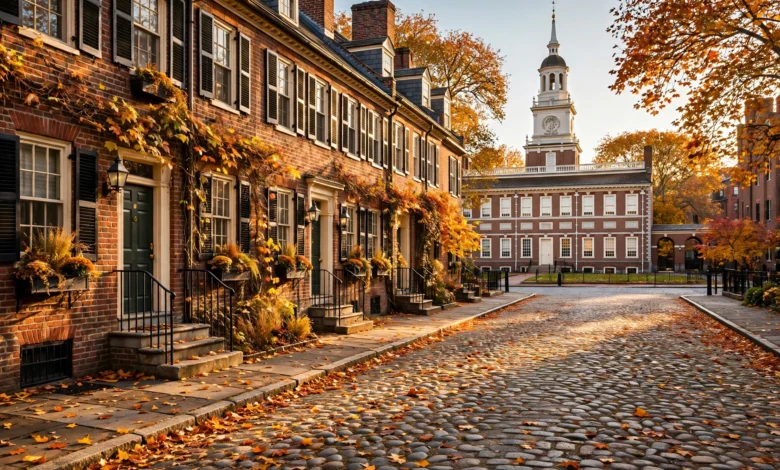
Philadelphia historic neighborhoods are some of the most distinctive places to own property anywhere in the United States. Few cities let you live on a brick street laid out in the 1700s, walk to a modern office tower, and still pay far less than you would in New York, Boston, or Washington. That mix of history, convenience, and relative value is exactly why so many buyers end up looking at older homes in Philadelphia.
But historic property is its own kind of purchase. A 200-year-old rowhome comes with charm you cannot fake, and it also comes with old plumbing, preservation rules, and quirks that a newer house does not have. Prices also vary enormously from one block to the next. A trinity in Queen Village and a Georgian townhouse in Society Hill are both “historic,” but they are very different buys.
This guide is written for people who are seriously thinking about buying, whether you are relocating, upsizing, or investing. It walks through eight of the most popular Philadelphia historic neighborhoods, what each one feels like to live in, the housing styles you will find, and the kind of buyer each area tends to suit. It also covers the practical side: how the Philadelphia Historical Commission works, what you will pay in transfer tax, and what to check before you sign. By the end, you should have a clear sense of which neighborhood fits your budget and your lifestyle.
Why Buy in Philadelphia Historic Neighborhoods?
Philadelphia was the largest city in the American colonies and the nation’s first capital, and a remarkable amount of that early fabric survived. Whole blocks of 18th and 19th century homes are still lived in today. For buyers, that history translates into a few clear advantages.
Walkability and Location
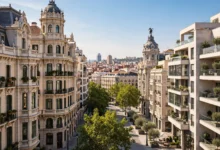
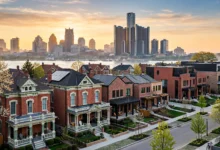
Most Philadelphia historic neighborhoods were built before cars existed, so daily life was designed around walking. Corner stores, cafes, parks, schools, and transit are often a few blocks away. Many of these areas sit in or near Center City, so commutes to downtown offices, hospitals, and universities can be a short walk or bike ride.
Architecture You Cannot Build Today
The housing stock is a big part of the appeal. Depending on the neighborhood, you will find:
- Colonial and Federal-style rowhomes with Flemish bond brick, marble steps, and shuttered windows
- Trinity houses, tiny three-story homes with one room per floor and a winding staircase
- Victorian brownstones and Italianate townhouses with high ceilings and ornate details
- Stone Colonial Revival and Arts and Crafts homes in the northwest neighborhoods
- Converted warehouses and factories turned into lofts and condos
These homes have craftsmanship and materials that would be extremely expensive to replicate, and that scarcity helps support long-term value.
Relative Affordability for a Major City
Compared with other big East Coast cities, Philadelphia is still reasonably priced. Citywide, recent data puts the typical sale price somewhere in the $255,000 to $295,000 range, depending on the source and month. Redfin’s Philadelphia housing market data is a good place to check the latest numbers, since they shift month to month.
That said, the most sought-after Philadelphia historic neighborhoods sell at a large premium over the citywide figure. In prime pockets of Society Hill, Rittenhouse Square, and Chestnut Hill, well-kept historic homes regularly sell for several times the city median. Other historic areas, like Germantown, remain much more affordable.
A Market Snapshot for 2026
Here is what the overall Philadelphia real estate market looks like this year:
- Prices are roughly flat to slightly up. Year-over-year changes have hovered close to zero citywide, with stronger gains in some popular neighborhoods.
- Homes take longer to sell than at the pandemic peak. Buyers generally have more time to inspect, negotiate, and compare.
- Inventory varies by area. Well-priced historic homes in top neighborhoods still move quickly, while overpriced or heavily dated listings can sit.
For buyers, this is a reasonably balanced moment. You may have more room to negotiate than in recent years, especially on homes that need work.
8 Philadelphia Historic Neighborhoods Worth Considering
Each of these Philadelphia historic neighborhoods has its own personality, housing stock, and price point. Here is what to expect from each one.
1. Society Hill
If you picture colonial Philadelphia, you are probably picturing Society Hill. It holds one of the largest collections of original 18th and early 19th century homes in the country, set on quiet, tree-lined streets between Washington Square and the Delaware River.
The neighborhood was in rough shape by the mid-1900s, and a major urban renewal effort in the 1950s and 1960s restored hundreds of historic homes. That same effort brought modern landmarks, including the Society Hill Towers designed by I.M. Pei, which now sit alongside Georgian and Federal townhouses.
- Typical homes: Restored Georgian and Federal-style townhouses, mid-century modern infill, high-rise condos
- Price level: Among the highest of all Philadelphia historic neighborhoods
- Best for: Buyers who want classic architecture, quiet streets, and a short walk to Center City
- Keep in mind: Most of the area is protected by historic designation, so exterior changes need city approval
2. Old City
Old City is where much of the nation’s founding history happened. Independence Hall and the Liberty Bell sit just to the southwest, and Elfreth’s Alley, often called the oldest continuously inhabited residential street in the United States, dates back to the early 1700s.
Today, Old City blends that history with galleries, restaurants, and nightlife. Many former warehouses and factory buildings have been turned into lofts and condos, which gives buyers options that feel very different from a typical rowhome.
- Typical homes: Loft condos in converted industrial buildings, small colonial rowhomes on side streets
- Price level: Mid to upper range, with more variety than Society Hill
- Best for: Buyers who want an urban, lively feel and are fine with condo living
- Keep in mind: Weekend crowds and nightlife noise can be an issue on some blocks, and tourist traffic is heavy in summer
3. Queen Village
Just south of Society Hill, Queen Village is one of the oldest residential areas in the city. It is home to Gloria Dei (Old Swedes’) Church, the oldest church in Pennsylvania, built around 1700. The neighborhood has a relaxed, residential feel with small parks, neighborhood restaurants, and Fabric Row along South 4th Street.
This is the place to find trinity houses, those narrow three-story homes with one room on each floor. Queen Village also has a strong reputation with young families, thanks in part to a well-regarded public elementary school.
- Typical homes: Trinities, renovated rowhomes, some new construction on infill lots
- Price level: Mid to upper range
- Best for: Families and buyers who want a quieter, village-like feel close to Center City
- Keep in mind: Trinities can be very small, with steep, narrow stairs that make moving furniture a challenge
4. Rittenhouse Square
Rittenhouse Square is one of the five original public squares in William Penn’s 1682 plan for the city, and it remains one of the most prestigious addresses in Philadelphia. The square itself is a busy, beautiful park surrounded by high-end apartments, restaurants, and shops.
The side streets are lined with grand Victorian brownstones and 19th century mansions, many of which have been divided into condos. Nearby Fitler Square offers a quieter, more residential version of the same feel.
- Typical homes: Victorian brownstones, converted mansions, luxury high-rise condos
- Price level: Top tier, with some of the highest prices in the city
- Best for: Buyers who want true city living with world-class dining and shopping steps away
- Keep in mind: Parking is scarce and expensive, and condo fees in older converted buildings can be significant
5. Fairmount (Art Museum Area)
Fairmount sits just north of the Benjamin Franklin Parkway, near the Philadelphia Museum of Art and the edge of Fairmount Park. It is also home to Eastern State Penitentiary, the 1829 prison that is now a museum and one of the city’s most unusual landmarks.
Among Philadelphia historic neighborhoods, Fairmount stands out for its mix of city convenience and outdoor access. You can be on the Schuylkill River Trail or Kelly Drive in minutes, and the main commercial strips have a strong local, neighborhood feel.
- Typical homes: Victorian and Italianate rowhomes, larger brownstones, some condo conversions
- Price level: Upper-middle to high
- Best for: Active buyers who love parks, running, and biking, plus easy access to Center City
- Keep in mind: Popular streets see heavy competition when well-renovated homes come to market
6. Spring Garden
Spring Garden sits just east of Fairmount and offers many of the same advantages at somewhat lower prices. Its streets are lined with grand Victorian brownstones and Italianate rowhomes, many protected within the Spring Garden Historic District.
Because many of the large homes here were split into apartments over the years, buyers can find both full single-family brownstones and smaller condo units. That makes Spring Garden one of the more flexible Philadelphia historic neighborhoods for first-time buyers and investors.
- Typical homes: Large Victorian brownstones, multi-unit conversions, condos
- Price level: Mid to upper-middle
- Best for: Buyers who want grand architecture without Rittenhouse prices, or investors looking at multi-unit buildings
- Keep in mind: Converted buildings vary a lot in quality, so inspections matter even more here
7. Chestnut Hill
In the city’s far northwest corner, Chestnut Hill feels more like a small town than a big city neighborhood. Its main street, Germantown Avenue, is paved with Belgian block and lined with independent shops, restaurants, and cafes. Morris Arboretum and the Wissahickon Valley section of Fairmount Park are close by.
Homes here are larger and often detached, many built from local Wissahickon schist stone in Colonial Revival, Tudor, and Arts and Crafts styles. Two regional rail lines connect the neighborhood to Center City.
- Typical homes: Stone single-family homes, twins, and some carriage houses on larger lots
- Price level: Upper range, especially for larger detached homes
- Best for: Buyers who want space, yards, and a suburban feel while staying within city limits
- Keep in mind: You will likely want a car, and big old stone houses come with big old-house maintenance costs
8. Germantown
Germantown is one of the most historically significant Philadelphia historic neighborhoods, and one of the most affordable. Founded in 1683 by German settlers, it was the site of the Battle of Germantown in 1777, and it still holds landmarks like Cliveden, Wyck, and the Deshler-Morris House, where George Washington stayed during the yellow fever epidemic of 1793.
Germantown has large stone and Victorian homes that would cost far more elsewhere in the city. The trade-off is that the neighborhood is uneven, with beautifully maintained blocks next to areas that have seen disinvestment.
- Typical homes: Large Victorian twins and singles, stone colonial houses, some multi-unit buildings
- Price level: Lower to mid range, offering a lot of house for the money
- Best for: Buyers who want space and character on a tighter budget and are comfortable researching block by block
- Keep in mind: Many homes need significant updates, so budget for renovation and get a thorough inspection
Quick Comparison of the 8 Neighborhoods
| Neighborhood | Main Housing Style | Relative Price | Vibe |
|---|---|---|---|
| Rittenhouse Square | Brownstones, luxury condos | Very high | Upscale and urban |
| Society Hill | Georgian and Federal townhouses | Very high | Quiet and classic |
| Chestnut Hill | Stone singles and twins | High to very high | Small-town feel |
| Fairmount | Victorian rowhomes | High | Active and outdoorsy |
| Queen Village | Trinities, rowhomes | High | Family-friendly village |
| Old City | Lofts, small rowhomes | Moderate to high | Lively and artsy |
| Spring Garden | Victorian brownstones, condos | Moderate to high | Grand but relaxed |
| Germantown | Victorian and stone homes | Low to moderate | Historic and affordable |
Prices are relative, not exact. Check recent sales on the specific blocks you are considering, because values can swing widely within a single neighborhood.
Buying a Historic Home in Philadelphia: What You Need to Know
Falling in love with a 200-year-old house is easy. Owning one well takes a bit more planning. These are the practical issues every buyer in Philadelphia historic neighborhoods should understand before making an offer.
How the Philadelphia Historical Commission Works
The Philadelphia Historical Commission protects buildings listed on the Philadelphia Register of Historic Places. A property can be listed on its own or as part of a designated historic district, such as Society Hill, Old City, Spring Garden, or parts of Rittenhouse.
If you buy a designated property, here is what that usually means:
- Exterior changes need approval. Work like replacing windows, doors, roofing, or masonry, adding a roof deck, or changing a facade typically requires Historical Commission review, usually as part of the building permit process.
- Interiors are generally not regulated. You can usually renovate kitchens, bathrooms, and layouts without the Commission’s sign-off, though normal building permits still apply.
- Demolition is heavily restricted. Tearing down a designated building is very difficult.
- Materials matter. You may be asked to use wood windows instead of vinyl, or to match original brick and mortar.
Before you buy, check whether the property is designated. The city’s Philadelphia Historical Commission page explains the review process and how to find out whether a building is on the register. Your agent or attorney can also confirm this during due diligence.
Understand the Real Cost of Buying
Philadelphia has one of the higher realty transfer tax rates in the country. Since July 1, 2025, the combined rate is 4.578%, made up of 3.578% for the city and 1% for the state. On a $500,000 home, that is about $22,890 in transfer tax.
By local custom, buyers and sellers often split this tax evenly, but it is negotiable, so make sure your contract spells it out. You can confirm the current rate and rules on the city’s official realty transfer tax page.
Other costs to plan for include:
- Property taxes, based on the city’s assessed value, which you can look up before you buy
- Homeowners insurance, which can cost more for older homes with original systems
- Condo or HOA fees for units in converted historic buildings
- Renovation reserves, since older homes almost always need something
What to Inspect in an Older Home
A standard home inspection is a must, but historic homes in Philadelphia often need specialist checks too. Pay close attention to:
- Electrical systems. Some older homes still have knob-and-tube wiring or outdated panels that insurers may not accept.
- Plumbing and sewer lines. Old cast iron or clay sewer lines can crack. A camera scope of the main sewer line is a smart extra.
- Roofs. Many rowhomes have flat roofs that need regular coating and can leak if neglected.
- Masonry and foundations. Look for cracked brick, failing mortar, and moisture in basements, especially in stone foundations.
- Lead paint. Homes built before 1978 likely contain lead paint, which matters for young children and for rental properties.
- Party walls. In attached homes, water or structural problems can come from the house next door.
- Windows and insulation. Original windows are beautiful but drafty, and replacing them may need historic approval.
Financing and Incentives
Most historic homes can be financed with standard mortgages. If a property needs major work, a renovation loan, such as an FHA 203(k) or a conventional renovation mortgage, can roll repair costs into the loan.
For investors, the federal historic tax credit offers a 20% credit for qualified rehabilitation of certified historic buildings, but it only applies to income-producing properties, not owner-occupied homes. Philadelphia also offers property tax abatements for certain improvements and new construction, though the rules have changed in recent years, so confirm current terms with the city before counting on them.
Tips for Winning the Right Home
- Work with a local agent who knows historic properties and specific blocks, not just the neighborhood name.
- Walk the area at different times, including weekday evenings and weekends, to understand noise, parking, and traffic.
- Get contractor estimates early if the home needs work, before your inspection contingency expires.
- Ask the seller for records of past repairs, permits, and any Historical Commission approvals.
FAQs About Philadelphia Historic Neighborhoods
What are the best Philadelphia historic neighborhoods to buy in?
The best choice depends on your budget and lifestyle. Society Hill and Rittenhouse Square offer classic architecture and top-tier locations at premium prices. Queen Village and Fairmount suit families and active buyers. Spring Garden and Old City offer more condo options, while Germantown gives you the most space for the money among Philadelphia historic neighborhoods.
Are historic homes in Philadelphia more expensive to maintain?
Usually, yes. Older roofs, masonry, plumbing, and wiring need more attention, and designated properties may require specific materials for exterior repairs. Many owners set aside 1% to 3% of the home’s value each year for maintenance. Careful inspections before buying help you plan for the big items.
Can I renovate a house in a Philadelphia historic district?
Yes. Interior renovations are generally not regulated by the Philadelphia Historical Commission, though you still need standard permits. Exterior changes on designated properties, such as new windows, doors, roof decks, or facade work, typically need Historical Commission approval first.
Which Philadelphia historic neighborhoods are most affordable?
Germantown is the most affordable of the Philadelphia historic neighborhoods covered in this guide, with large Victorian and stone homes at prices well below Center City. Parts of Spring Garden and Old City can also offer relative value, especially for condos.
How much is the transfer tax on a Philadelphia home?
The combined realty transfer tax in Philadelphia is 4.578% of the sale price, including 3.578% for the city and 1% for the state. Buyers and sellers commonly split it, but the split is negotiable.
Are Philadelphia historic neighborhoods a good investment?
They can be. Limited supply, walkability, and strong demand from buyers who value character have historically supported prices in the most popular Philadelphia historic neighborhoods. Still, returns depend on the specific block, the price you pay, and how much work the property needs, so treat every purchase on its own merits. This is general information, not financial advice.
Conclusion
Philadelphia historic neighborhoods give buyers something few American cities can match: centuries-old architecture, walkable streets, and easy access to downtown, all at prices that remain reasonable compared with other major East Coast markets. Each area offers a different version of that experience, from the colonial townhouses of Society Hill and the lofts of Old City to the trinities of Queen Village, the brownstones of Rittenhouse Square and Spring Garden, the park-side rowhomes of Fairmount, the stone houses of Chestnut Hill, and the spacious, budget-friendly Victorians of Germantown. Buying well means looking beyond the charm: confirm whether a home falls under the Philadelphia Historical Commission, budget for the 4.578% realty transfer tax and ongoing maintenance, and get thorough inspections that cover wiring, plumbing, roofs, and masonry. With clear expectations and good local guidance, owning a home in one of the Philadelphia historic neighborhoods can be both a rewarding place to live and a sound long-term investment in one of the country’s most storied cities.