Detroit Real Estate: 8 Thriving Revitalized Districts in the Essential 2026 Buyer’s Guide
Detroit real estate is changing fast. Compare 8 revitalized districts, current prices, property taxes, and what to check before buying in the Motor City.

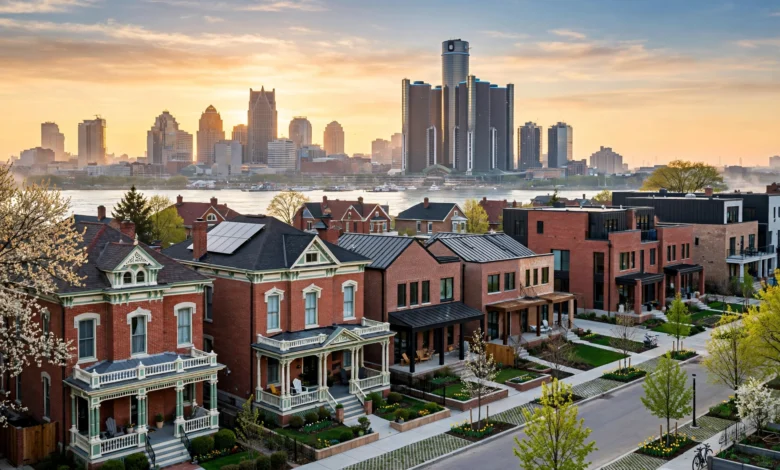
Detroit real estate has one of the most dramatic stories of any housing market in the country. A little over a decade ago, the city was coming out of the largest municipal bankruptcy in U.S. history, with tens of thousands of vacant homes and a reputation that scared off most buyers. Today, restored Victorian mansions sell to young families, Ford has turned a long-abandoned train station into a tech hub, and some districts are seeing record prices.
That comeback is real, but it is not evenly spread. Detroit is a big city with very different neighborhoods, and a street that is thriving can be a few minutes from one that is still struggling. Prices can look shockingly low compared with other major cities, yet property taxes are among the highest in the nation. Getting the full picture matters.
This guide focuses on the districts where revitalization is most visible: downtown, Corktown, Midtown, Brush Park, Lafayette Park, the Villages, Woodbridge, and New Center. For each, you will see what it feels like to live there, what kinds of homes you will find, and who tends to buy. We also cover the practical side of buying a home in Detroit, including how Michigan property taxes reset after a sale, how the Detroit Land Bank works, and what to inspect in older houses. Whether you are relocating, buying your first home, or investing, this should help you buy with clear eyes.
The Detroit Real Estate Comeback Explained
To understand Detroit real estate today, it helps to know how the city got here. Detroit’s population peaked at around 1.8 million in the 1950s, then fell for decades as jobs, residents, and investment moved to the suburbs. By the time the city filed for bankruptcy in 2013, entire blocks had emptied out and home values in many neighborhoods had collapsed.


What Drove the Turnaround
Several forces came together over the past decade:
- Private investment downtown. Companies led by Dan Gilbert’s Bedrock bought and restored dozens of downtown buildings, bringing thousands of office workers back to the core.
- Anchor institutions. Wayne State University, the Detroit Medical Center, Henry Ford Health, and the Detroit Institute of Arts kept Midtown and New Center stable and growing.
- Landmark projects. Ford’s restoration of Michigan Central Station in Corktown, which reopened in 2024 as an innovation hub, became a symbol of the city’s revival. New arenas, the QLine streetcar, and the riverfront parks added more momentum.
- Blight removal. The city and the Detroit Land Bank Authority demolished or sold tens of thousands of vacant properties, stabilizing many residential blocks.
- Affordability. Compared with Chicago, Boston, or New York, Detroit still offers historic homes and urban living at a fraction of the price.
Detroit Housing Market Snapshot for 2026
The numbers show a market that is rising slowly in the city itself and more strongly across the wider region:
| Measure | Recent Figure | Source |
|---|---|---|
| City of Detroit median sale price | About $100,000 (three months ending June 2026) | Redfin |
| City of Detroit median sale price | $110,000 in July 2026, a record high in regional tracking since 1994 | RE/MAX of Southeastern Michigan |
| Five-county metro Detroit median | $348,625 in July 2026 | RE/MAX of Southeastern Michigan |
| Typical days on market in the city | Roughly 48 to 50 days | Redfin |
Two things stand out. First, the citywide median is low because it includes many homes in neighborhoods that have not yet seen investment. In the revitalized districts covered below, prices are often several times higher. Second, the Detroit housing market has slowed somewhat this year, with more listings and more price cuts, which gives buyers more room to negotiate. Redfin’s Detroit home values page is a good place to track the latest numbers.
The Property Tax Reality
The low prices come with a big catch. Detroit has the highest effective property tax rate of any major U.S. city, measured at about 3.02% of market value in 2024 by the Lincoln Institute of Land Policy. The homestead millage rate is close to 68 mills, and rental or second-home properties pay more.
City leaders know this is a problem. A land value tax plan that would cut taxes on homes while raising them on vacant land was proposed under former Mayor Mike Duggan but stalled in the state legislature, and Mayor Mary Sheffield has commissioned studies on property tax relief. Until something changes, any honest look at Detroit real estate has to factor in taxes from the start.
8 Revitalized Districts Shaping Detroit Real Estate
These eight areas are where the city’s revival is most visible. Each offers something different, and together they make up the most active part of the Detroit real estate market.
1. Downtown Detroit
Downtown is where the comeback started. Campus Martius Park, Woodward Avenue, and the surrounding blocks are now full of restaurants, offices, hotels, and events, with sports venues for the Tigers, Lions, Red Wings, and Pistons all within walking distance. Major new projects, such as the Hudson’s Detroit development on the site of the old department store, keep reshaping the skyline.
Housing here is mostly apartments and condos in restored historic towers and new mid-rise buildings. Single-family homes are rare.
- Typical homes: Downtown Detroit condos and lofts in historic and new buildings
- Price level: Among the highest in the city per square foot
- Best for: Professionals and empty nesters who want walkability, nightlife, and short commutes
- Keep in mind: Condo fees and parking can add significantly to monthly costs, and supply of for-sale units is limited compared with rentals
2. Corktown
Corktown is Detroit’s oldest neighborhood, settled by Irish immigrants in the 1840s. Its narrow streets of Victorian rowhouses and small workers’ cottages now sit next to one of the city’s biggest success stories: Ford’s restored Michigan Central Station, which reopened in 2024 and anchors a growing mobility and tech district.
Michigan Avenue is lined with popular restaurants, bars, and coffee shops, and the neighborhood keeps attracting new construction townhomes and infill houses.
- Typical homes: Restored Victorian cottages and rowhouses, new townhomes, some lofts
- Price level: High by Detroit standards, with steady demand
- Best for: Buyers who want historic charm, a strong food scene, and proximity to the new tech jobs
- Keep in mind: Inventory is small, and Corktown is one of the more competitive corners of Detroit real estate, so well-priced homes move fast
3. Midtown
Midtown Detroit is the city’s cultural and educational center. It is home to Wayne State University, the Detroit Medical Center, the Detroit Institute of Arts, and a dense mix of museums, galleries, and independent shops. The area once known as the Cass Corridor has transformed into one of the most walkable parts of the city.
The QLine streetcar along Woodward connects Midtown to downtown and New Center, which makes car-free living realistic for many residents.
- Typical homes: Condos in converted historic buildings, new apartment-style condos, some restored mansions and rowhouses
- Price level: Mid to high
- Best for: University and hospital employees, students’ parents buying for rental use, and anyone who wants culture at their doorstep
- Keep in mind: Many buildings are rentals, so check the owner-occupancy rate when buying a condo
4. Brush Park
In the late 1800s, Brush Park was home to some of Detroit’s wealthiest families, who built grand Victorian mansions just north of downtown. After decades of decline, many of those houses were abandoned or demolished. Today the neighborhood is one of the clearest examples of the city’s revival, with surviving mansions restored and new modern townhomes and apartments filling vacant lots.
Brush Park sits between downtown, Midtown, and the arena district, so almost everything is within walking distance.
- Typical homes: Restored Victorian mansions (often split into condos), modern townhomes, new apartments
- Price level: High, especially for restored historic homes
- Best for: Buyers who want a central location with a mix of historic and modern housing
- Keep in mind: Game nights and events at nearby venues bring traffic and noise
5. Lafayette Park
Lafayette Park is unlike anywhere else in the city. Designed in the late 1950s and 1960s with architect Ludwig Mies van der Rohe, it holds the largest collection of Mies-designed buildings in the world: glass-walled townhouses, co-ops, and high-rises set in a large, park-like landscape just east of downtown. It is a National Historic Landmark.
Many of the low-rise townhouses are owned as cooperatives, which means you buy shares in the co-op rather than the unit itself.
- Typical homes: Mid-century modern co-op townhouses and high-rise condos
- Price level: Moderate, offering iconic architecture for less than you might expect
- Best for: Design lovers and buyers who want greenery, quiet, and quick access to downtown and Eastern Market
- Keep in mind: Co-op purchases have their own approval process and financing rules, and monthly carrying charges cover shared costs
6. Indian Village and West Village
On the city’s east side near Belle Isle and the riverfront, these two neighboring districts show the residential side of Detroit real estate at its most elegant. Indian Village is famous for its large early 20th century mansions designed by prominent architects, set on wide, tree-lined streets. West Village has smaller Victorian homes and a lively commercial strip with popular bakeries, cafes, and restaurants.
Both are historic districts with strong neighborhood associations and an active community life.
- Typical homes: Large historic mansions in Indian Village, Victorian homes and small apartment buildings in West Village
- Price level: High for Indian Village mansions, moderate to high in West Village
- Best for: Families and buyers who want space, history, and a close-knit neighborhood feel near the river
- Keep in mind: Big historic homes come with big maintenance and heating costs, and exterior work must follow historic district rules
7. Woodbridge
Just west of Wayne State, Woodbridge is a quieter residential neighborhood known for its Victorian and Queen Anne homes, community gardens, and strong sense of community. It offers easy access to Midtown without Midtown prices.
Woodbridge has seen steady renovation activity, with many older homes brought back to life by owner-occupants rather than large developers.
- Typical homes: Victorian and Queen Anne single-family homes, duplexes, small multi-unit buildings
- Price level: Moderate, with good value for historic homes close to the city’s core
- Best for: Buyers who want an older home with character, a yard, and a neighborly feel near Midtown
- Keep in mind: Many homes still need updates, so plan for renovation costs
8. New Center
Anchored by the landmark Fisher Building and the former General Motors headquarters (now Cadillac Place), New Center was once the city’s second downtown. Henry Ford Health’s ongoing expansion, including new medical and residential development, is bringing fresh investment to the area. The QLine connects it directly to Midtown and downtown.
Nearby historic neighborhoods such as Boston-Edison, once home to Henry Ford himself, offer some of the grandest single-family houses in the city.
- Typical homes: Historic apartments and condos, rowhouses, and large homes in adjacent historic districts
- Price level: Moderate to high, with large homes in Boston-Edison at the top end
- Best for: Healthcare workers and buyers looking for a central location with room to grow
- Keep in mind: Blocks vary a lot, so research each street carefully
Quick Comparison of the 8 Districts
| District | Main Housing Type | Relative Price | Vibe |
|---|---|---|---|
| Downtown | Condos, lofts | High | Busy and urban |
| Corktown | Victorian cottages, townhomes | High | Historic and trendy |
| Brush Park | Restored mansions, townhomes | High | Central and modern |
| Indian Village and West Village | Mansions, Victorians | Moderate to high | Leafy and residential |
| Midtown | Condos, rowhouses | Moderate to high | Cultural and walkable |
| New Center | Condos, historic homes | Moderate to high | Growing and central |
| Lafayette Park | Mid-century co-ops | Moderate | Quiet and green |
| Woodbridge | Victorian homes | Moderate | Community-focused |
These are relative comparisons. Prices can change sharply from one block to the next, so always look at recent sales on the exact streets you are considering.
How to Buy Detroit Real Estate Wisely
Low sticker prices can make Detroit look like an easy win, but buyers who skip the homework often get surprised. These are the issues that matter most when you buy Detroit real estate.
Understanding Detroit Real Estate Taxes
Michigan’s property tax system has a few quirks that every buyer should understand before making an offer.
Taxable value uncaps when a home sells. Under Michigan’s Proposal A, a homeowner’s taxable value can only rise by the rate of inflation or 5% a year, whichever is lower. When a property sells, that cap resets, and the new owner’s taxable value jumps to the home’s current state equalized value, which is roughly half of market value. In practice, this means your tax bill can be much higher than the seller’s. Always estimate taxes based on your purchase price, not the seller’s current bill.
File for the Principal Residence Exemption. If the home will be your main residence, file for the Principal Residence Exemption, often called the homestead exemption. It exempts you from up to 18 mills of school operating taxes, which is a big saving in Detroit. The State of Michigan’s Principal Residence Exemption guide explains eligibility and filing deadlines.
Check for tax abatements. Some newer or rehabbed homes carry Neighborhood Enterprise Zone (NEZ) abatements that lower taxes for a set number of years. Ask whether an abatement exists, whether it transfers to you, and when it expires, because taxes can rise sharply once it ends.
Know the transfer tax. Michigan charges a state transfer tax of 0.75% and Wayne County adds 0.11%, for a combined 0.86% of the sale price. By local custom, sellers usually pay it, but confirm this in your purchase agreement.
Buying Detroit Real Estate Through the Land Bank
The Detroit Land Bank Authority owns thousands of properties and sells many of them to the public through programs such as Own It Now listings and auctions. Some homes are move-in ready rehabs, while many need extensive work.
Land Bank purchases often come with conditions, such as finishing renovations and occupying or renting the home within a set time. You can browse available homes and program rules on the Detroit Land Bank Authority website. For buyers with renovation experience or a good contractor, this can be one of the most affordable ways into Detroit real estate. For first-time buyers, a finished home on the open market is usually less risky.
Detroit Real Estate for Investors: Rental Rules
Detroit’s low prices and solid rents attract many investors. If you plan to rent out a property, know the local rules:
- Rental registration and Certificate of Compliance. Detroit requires rental properties to be registered and to pass city inspections to earn a Certificate of Compliance before collecting rent.
- Lead safety. Homes built before 1978 typically need lead inspections or clearance as part of the rental process.
- Higher taxes. Rentals do not qualify for the Principal Residence Exemption, so they pay the higher non-homestead rate. Run your numbers with this in mind.
- Property management. Out-of-state investors should choose local managers carefully, since poor management has been a common source of losses in Detroit real estate.
What to Inspect in a Detroit Home
Much of the city’s housing stock was built before 1950, so thorough inspections are essential. Pay special attention to:
- Sewer lines. Old clay or cast iron lines can be cracked or blocked by tree roots. A camera inspection is well worth the cost.
- Basements and flooding. Parts of Detroit have experienced serious basement flooding during heavy storms. Check for water damage and ask about backflow prevention.
- Heating systems. Many older homes have aging boilers or furnaces that may need replacement.
- Electrical systems. Look for outdated wiring, undersized panels, and missing grounding.
- Lead service lines and lead paint. Detroit is replacing lead water service lines across the city, but you should confirm the status for any home you buy.
- Roof, masonry, and foundation. Michigan’s freeze-thaw cycles are hard on older brick and foundations.
- Scrapping and vacancy damage. Homes that sat empty may have missing copper pipes, wiring, or fixtures.
Financing and Assistance
Most buyers use conventional, FHA, or VA loans. For homes that need significant work, renovation loans such as an FHA 203(k) can bundle repair costs into the mortgage. Some lenders are cautious with very low-priced homes, so talk to a lender familiar with Detroit real estate early in your search.
First-time and moderate-income buyers may qualify for down payment help through the Michigan State Housing Development Authority (MSHDA) and local programs. Availability and limits change, so check current terms before you rely on them.
Smart Steps Before You Buy
- Work with a local agent who knows specific blocks, not just district names.
- Visit at different times of day to see traffic, activity, and how occupied nearby homes are.
- Check the city’s property records for tax history, code violations, and permits.
- Get contractor quotes before your inspection contingency expires if the home needs work.
- Budget for taxes and insurance using your expected purchase price, not the seller’s numbers.
Frequently Asked Questions About Detroit Real Estate
Is Detroit real estate a good investment in 2026?
It can be, especially in districts with strong job anchors and ongoing investment, such as Corktown, Midtown, and New Center. Prices in the city are still low compared with other major metros, and rents are solid. The trade-offs are high property taxes, uneven neighborhood conditions, and older housing stock that often needs work. Treat Detroit real estate as a block-by-block market rather than a citywide bet. This is general information, not financial advice.
What are the best Detroit neighborhoods to buy in?
The best choice depends on your budget and lifestyle. Downtown and Brush Park suit buyers who want urban living. Corktown and Midtown offer walkability and character. Indian Village and Boston-Edison have grand historic homes. Lafayette Park and Woodbridge offer more value for the money.
Why are Detroit property taxes so high?
Detroit’s high tax rate is partly a result of decades of population loss and falling land values, which shrank the tax base and pushed rates up. The city’s effective property tax rate is the highest among major U.S. cities. Reform proposals, including a land value tax, have been discussed but not enacted.
How much does a house cost in Detroit?
The citywide median sale price has hovered around $100,000 to $110,000 in 2026, but that figure includes many neighborhoods with little investment. In the revitalized districts covered in this guide, prices are often several times higher, especially for restored historic homes and new construction.
Can I buy Detroit real estate from the Land Bank?
Yes. The Detroit Land Bank Authority sells homes and lots to the public, often with requirements to renovate and occupy or rent the property within a set time. It can be a low-cost entry point into Detroit real estate, but many Land Bank homes need major repairs.
What should out-of-state buyers know about Detroit real estate?
Visit before you buy if you can, or work with a trusted local agent who can show you specific blocks. Budget carefully for property taxes, since they reset after a sale in Michigan. If you plan to rent the home out, register it with the city and hire a reputable local property manager, because remote ownership without good management has caused many investor losses in Detroit real estate.
Conclusion
Detroit real estate has moved from a story of decline to one of steady, uneven revival, driven by downtown investment, strong anchor institutions, landmark projects like Ford’s restored Michigan Central Station, and years of blight removal. The eight districts covered here show that revival at its most visible: busy downtown Detroit condos, historic Corktown cottages, walkable Midtown, the restored mansions of Brush Park, the modernist co-ops of Lafayette Park, the grand homes of Indian Village and West Village, the value-rich Victorians of Woodbridge, and the growing New Center area. Citywide prices remain low, with the median sale price around $100,000 to $110,000 in 2026, but revitalized districts sell for far more, and the city’s property taxes are the highest of any major U.S. city. Smart buyers estimate taxes based on their own purchase price, file for the Principal Residence Exemption, check for abatements, approach Detroit Land Bank Authority homes with realistic renovation budgets, follow rental registration rules, and get thorough inspections on older homes. Handled with that kind of care, Detroit real estate can offer historic character, urban convenience, and long-term upside that is hard to match in any other major American city.