Edinburgh Property Guide 2026: 9 Proven Tips for Brilliant Old Town vs New Town Living
Edinburgh property guide comparing Old Town and New Town living on prices, homes, noise, transport and 2026 investment rules for buyers.

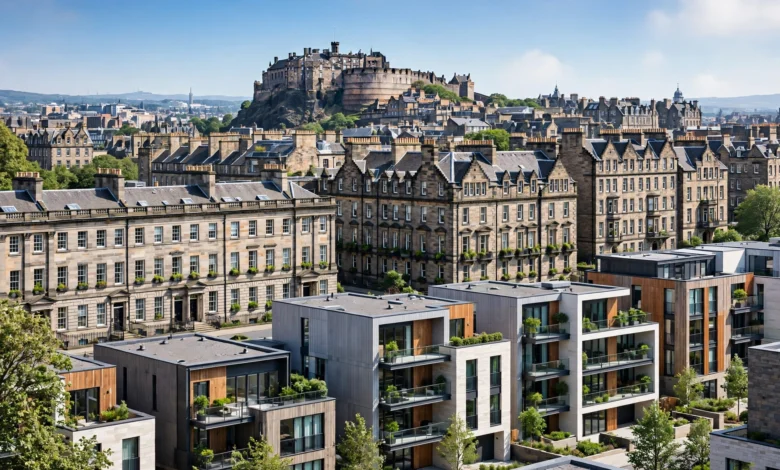
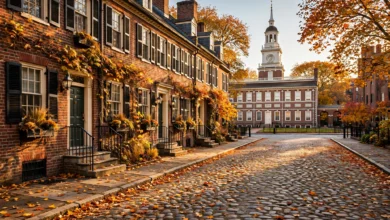
Edinburgh property gets under your skin quickly. You climb a close off the Royal Mile, walk into a flat with a window framing the castle, and suddenly you are running mortgage numbers on your phone. Or you walk along Heriot Row, see a first-floor Georgian drawing room with tall sash windows, and feel exactly the same. Both reactions make sense. The two districts sit inside the same UNESCO World Heritage Site, only a few minutes apart on foot, yet day-to-day life in each feels very different.
This guide is for anyone weighing up Old Town vs New Town living. Maybe you are buying your first flat, moving your family, relocating for work, or looking at an Edinburgh property investment. We cover what the homes are really like, what they cost in 2026, how noise and festival season shape everyday life, and what buying taxes and short-let rules mean for your budget.
I have tried to keep it honest. The Old Town is not all romance, and the New Town is not all elegance. Each has quirks that listings rarely mention: shared stair repairs, steep cobbles, parking permits, neighbours running holiday lets. By the end, you should know which side of Princes Street Gardens suits your life, your wallet and your plans for the next ten years.
Edinburgh Old Town vs New Town at a Glance
Before the detail, here is the short version.


| Factor | Old Town | New Town |
|---|---|---|
| Street layout | Medieval ridge with narrow closes and wynds | Planned Georgian grid with wide streets and squares |
| Typical homes | Tenement flats, conversions, modern courtyard blocks | Main-door flats, townhouses, lateral apartments, mews |
| Price level | Mid to high, with a wide range | Among the highest in the city |
| Atmosphere | Busy, touristy, lively at night | Calmer, residential, polished |
| Best for | Singles, couples, students, lovers of history | Professionals, families, long-term owners |
Both areas are desirable, and both hold value well. The right choice depends less on which is “better” and more on how you actually want to live.
A Short History That Still Shapes Every Edinburgh Property Here
You cannot understand Edinburgh property in these two districts without a little history, because the history decides the size of your rooms, the steepness of your stair and even who pays for the roof.
The Old Town grew along a volcanic ridge running from the castle down to Holyrood. Space was tight, so people built upwards, creating some of the earliest high-rise tenements in Europe. Side streets called closes branch off the Royal Mile like ribs off a spine. In the 18th century the Old Town suffered badly from overcrowding and poor sanitation, and plans for a new town north of the Nor Loch were drawn up in 1766 and completed by 1820, by which time most of the city’s wealthy residents had moved across. The Culture Trip
That new town was James Craig’s planned grid of broad streets, private gardens and neat terraces. It was built for the professional and merchant classes, which is why the rooms are generous, the ceilings are high, and the windows are enormous. The Old and New Towns were inscribed together as a UNESCO World Heritage Site in 1995. You can read the official listing on the UNESCO World Heritage page for the Old and New Towns of Edinburgh. Roomscout
What this means for buyers today:
- Old Town homes tend to be flats in tall buildings, often with irregular layouts, thick walls and small windows in older stock.
- New Town homes follow a predictable Georgian pattern, with grand principal floors, smaller top floors and basement or garden flats below.
- Nearly everything is protected. Heritage status, conservation areas and listed building rules affect what you can change.
Edinburgh Property Prices in 2026: What the Numbers Say
Let’s talk money, because this is where many Edinburgh property searches begin and end.
City-wide, the market has been steady rather than wild. The provisional average house price in Edinburgh was £304,000 in July 2026, up 4.0% on July 2025, which made it the second most expensive council area in Scotland. The ONS local housing prices data for Edinburgh is updated monthly and worth bookmarking if you track the Edinburgh property market closely. Office for National Statistics
Competition has cooled slightly compared with the frantic post-pandemic years. ESPC data reported early in 2026 showed homes achieving around 101.2% of valuation on average, a little lower than the previous year. In plain terms, sellers still get a small premium, but buyers are not fighting quite as hard as they were. Simpson & Marwick
New Town Property Prices
The New Town sits at the top of the city’s price ladder. Rightmove data based on Registers of Scotland records puts the average sold price in New Town at £506,004 over the last year. That average hides a huge spread. A one-bedroom top-floor flat on a busy street can sell for far less, while a full townhouse on a prime crescent can run into several million. Rightmove
On a per-square-metre basis, the city’s highest values are usually found in New Town, Stockbridge, the West End, Dean Village, The Grange and Morningside, often between about £6,500 and £10,500 per square metre. If you are comparing listings, price per square metre is a far better yardstick than headline price, because Georgian flats vary so much in size. Investropa
Old Town Property Prices
Old Town pricing is harder to pin down, because the stock is so mixed. You might see a compact studio in a converted tenement, a two-bedroom flat in a modern courtyard block, and a restored period apartment with castle views, all on the same street. As a rough rule, a typical Old Town flat costs less than a comparable New Town flat, but the best Old Town homes with views and outdoor space easily compete with New Town prices.
How Offers Work When You Buy Edinburgh Property
If you are new to Scotland, the buying process may surprise you:
- Home Report first. Sellers must provide a Home Report, which includes a survey, a valuation, an energy report and a property questionnaire.
- Note of interest. Your solicitor registers interest so you are told if a closing date is set.
- Closing date. Popular homes go to a closing date, where buyers submit sealed offers by a fixed time.
- Offers over. Many homes are marketed at “offers over” a figure, so the final price can land above the asking price.
- Missives. Once an offer is accepted, solicitors exchange letters called missives, and the deal becomes binding when they conclude.
Getting your mortgage in principle and a solicitor lined up before viewing gives you a real edge in any Edinburgh property purchase.
The Homes Themselves: What You Will Actually Find
Photos can be misleading, so here is what each district really offers.
Old Town Edinburgh Property Types
Much of the Old Town is made up of tenement flats reached by a shared stair. Local letting agents describe the housing as mostly traditional flats, with a number of newer courtyard-style developments that sit comfortably beside the older buildings and appeal to people who want a modern home with a historic setting. Glenham Property
Typical Old Town homes include:
- Traditional tenement flats off the Royal Mile, Canongate, Cowgate and Grassmarket, often with stone spiral stairs and no lift.
- Converted buildings such as former warehouses, churches and schools, which can offer unusual layouts and high ceilings.
- Modern apartment blocks with lifts, parking and better insulation, particularly around Holyrood and the southern edge near Quartermile.
- Rare gems like homes with private terraces or direct views of the castle or Arthur’s Seat, which command a clear premium.
The upside is character and location. The downside is that many flats have small kitchens, limited storage and several flights of stairs.
New Town Edinburgh Property Types
The New Town is more uniform, but it has more variety than people expect:
- Main-door flats with their own front door at street level, often with a private garden at the back. These are prized by families.
- Principal-floor apartments on the first floor, with the tallest ceilings and grandest windows in the building.
- Upper and attic flats that are cheaper per square metre but involve more stairs and sometimes lower ceilings.
- Basement and garden flats that offer outdoor space but can be darker, with damp to check carefully.
- Townhouses spread over four or five floors, the pinnacle of New Town living.
- Mews houses in the lanes behind the main streets, once stables, now quirky homes often with garages.
Many New Town streets also give residents access to private communal gardens, usually for an annual fee and a key. For families and dog owners, that access can be worth a lot.
Daily Life: Noise, Crowds and Festival Season
This is where the two areas really part ways, and where your Edinburgh property decision should get personal.
The Old Town is the city’s front stage. Tourists fill the Royal Mile from morning until late, pubs on the Grassmarket and Cowgate stay busy into the night, and in August the Fringe turns the whole district into a crowded open-air theatre. A local travel guide puts it bluntly: much of the main Royal Mile frontage is given over to tourist shops and overpriced restaurants, and the real character sits in the closes and side streets. Edinburgh Spirit
Living there can be magical, but ask yourself honestly:
- Can you sleep with late-night noise below your window?
- Will you enjoy festival crowds every summer, or dread them?
- Are you comfortable with a lot of short-stay visitors passing through?
The New Town is calmer. Streets like Heriot Row, Northumberland Street and Drummond Place are quiet and residential, while George Street and Rose Street carry the bars, shops and restaurants. You still get the buzz within a short walk, but it does not follow you home. That balance is why many people call living in Edinburgh New Town the city’s most comfortable way to be central.
One tip: visit any shortlisted flat on a Friday night and again in August before you commit. A quiet Tuesday afternoon viewing tells you very little.
Transport, Parking and Getting Around
Both districts are central, so you can walk almost everywhere. Waverley Station sits in the valley between them, with fast trains to Glasgow, London and the rest of Scotland. The tram runs along Princes Street and St Andrew Square, linking the airport in the west with Leith and Newhaven to the north.
The main difference is terrain. The Old Town is steep and cobbled, which makes it awkward with a pushchair or for anyone with limited mobility, though its main sights are all within about 20 minutes’ walk of each other. The New Town slopes downhill towards Canonmills, but its streets are wide and paved, so daily errands are easier. Edinburgh Spirit
On parking, be realistic:
- Residents’ permits are needed in central controlled zones, and demand often outstrips spaces.
- Private parking is rare in both areas and adds real value when it comes with a flat.
- Low Emission Zone rules apply in the city centre, so check that any car you own is compliant.
- Car-free living is completely normal here and saves a lot of money.
If you work from home or commute by train, either area works well. If you drive every day, a New Town mews with a garage or an Old Town new-build with a parking space could be worth the extra cost.
Families, Schools and Space
Families often lean towards the New Town, and the reasons are practical. Main-door flats and townhouses offer more space, private gardens and fewer stairs. Streets are quieter, and parks like Inverleith and the Royal Botanic Garden are close by.
The Old Town can suit families too, especially in larger modern flats near Holyrood Park or the Meadows. But smaller layouts, limited outdoor space and the constant bustle make it more popular with singles, couples, students and downsizers.
School catchments matter a great deal in Edinburgh and can move prices on their own. Always check the exact catchment for a specific address with the council before you offer, rather than relying on a listing or a neighbour’s advice. Catchment lines sometimes run down the middle of a street.
Buying Costs Every Edinburgh Property Buyer Should Budget For
The purchase price is only the start. Here is what else to plan for when buying Edinburgh property in 2026.
Land and Buildings Transaction Tax (LBTT)
Scotland uses LBTT rather than Stamp Duty. The Scottish Government’s 2026 to 2027 tax tables set out the current bands. Residential rates are 0% up to £145,000, 2% from £145,001 to £250,000, 5% from £250,001 to £325,000, 10% from £325,001 to £750,000 and 12% above £750,000, with first-time buyers getting a nil rate band up to £175,000. gov
The tax is charged in slices, not on the whole price. On a £500,000 New Town flat, a standard buyer pays nothing on the first slice, then climbing rates on each band above it, which comes to £24,600. That is a meaningful sum to have ready in cash.
Additional Dwelling Supplement (ADS)
If you already own a home and are buying a second property or a buy-to-let, ADS applies on top. The Scottish Government raised the ADS rate to 8% for contracts entered into on or after 5 December 2024. On a £300,000 investment flat, that is an extra £24,000. For any Edinburgh property investment, ADS can change the numbers dramatically, so factor it in from day one. revenue
Legal Fees, Surveys and Moving Costs
Budget for solicitor fees, registration dues, a mortgage valuation, removal costs and any furniture needed to fit awkward period rooms. In older buildings, many buyers also commission an independent survey on top of the Home Report, especially for roofs, stonework and damp.
Listed Buildings and Conservation Rules
Much of the New Town and many Old Town buildings are listed or sit in a conservation area. Changing windows, doors, paint colours on the front, or internal features in some cases can require consent. Replacement sash windows alone can cost thousands. Ask your solicitor to check the listing status before you commit, and never assume you can “just modernise” a period Edinburgh property.
Edinburgh Property Investment: Long Lets, Short Lets and the Visitor Levy
Investors love both districts, but the rules have changed a lot, and many older articles are out of date.
Short-Term Let Rules
Every short-term let in Scotland now needs a licence, and Edinburgh goes further. The whole Edinburgh council area became a short-term let control area on 5 September 2022, which means letting a property that is not your main home to short-stay guests is treated as a change of use needing planning permission. The council warns that running a short-term let without a licence is a criminal offence carrying a fine of up to £2,500. Full details are on the City of Edinburgh Council short-term lets licensing page. Passthekeysedinburgh
Getting that planning permission is hard. Industry sources report a refusal rate of around 90% for planning applications on secondary letting properties. So if you are buying a Royal Mile flat on the assumption it will become a holiday let, treat that plan as very uncertain unless the flat already has the right permissions. EdinBnB
The Edinburgh Visitor Levy
Edinburgh became the first council in Scotland to introduce a visitor levy, adding 5% to overnight stays from 24 July 2026, covering hotels, holiday lets, short-term rentals and licensed home sharing and home letting. The charge applies to the first five consecutive nights of paid accommodation. Hosts must collect it and file returns, which adds admin on top of licensing and safety checks. PropertymarkEdinBnB
Long-Term Letting
Because of all this, many owners are moving to standard long-term tenancies. Demand is strong, with average private rents in Edinburgh reaching £1,415 a month in August 2026, a 1.6% rise on the year before. Tenancies in Scotland run as open-ended Private Residential Tenancies, so understand the rules on notice, repairs and rent increases before you buy. Office for National Statistics
A quick investor checklist for Edinburgh property in either district:
- Calculate returns including the 8% ADS, not before it.
- Check whether any short-let use has existing planning consent.
- Look at the building’s common repair history and any pending works.
- Compare Old Town student and young professional demand with New Town’s professional and corporate tenants.
Owning a Historic Home: Stairs, Roofs and Common Repairs
This is the part most buyers skip, and it is where costs hide.
In both districts, most homes are flats in shared buildings. The title deeds decide who owns and pays for common parts such as the roof, the stair, the main walls and the chimneys. Where the deeds are silent, the Tenements (Scotland) Act 2004 fills the gaps and allows a majority of owners to agree essential repairs.
Stonework, lead roofs and cast-iron gutters on 200-year-old buildings are not cheap. A single stone repair project can cost each flat owner tens of thousands of pounds. Before buying any period Edinburgh property:
- Ask whether a property factor manages the building and what the annual fees are.
- Request minutes of recent owners’ meetings.
- Find out about any planned or disputed common repairs.
- Check for a building maintenance fund, and how much sits in it.
- Look at the stair yourself. A clean, well-lit, recently painted stair usually signals organised neighbours.
Modern Old Town developments tend to have factors and clearer service charges, which some buyers prefer. Traditional New Town buildings are often run informally by the owners themselves, which works brilliantly in some stairs and badly in others.
Old Town or New Town: Which Edinburgh Property Suits You?
Here is a practical way to decide.
Choose the Old Town If You:
- Love history, atmosphere and being in the thick of it.
- Are single, a couple, a student or a downsizer who wants a compact, central home.
- Do not mind noise, crowds and stairs.
- Want a slightly lower entry price for a central address.
- Prefer a modern flat with a lift in a historic setting.
Choose the New Town If You:
- Want space, tall ceilings and classic Georgian proportions.
- Have children, pets or plans for a family.
- Value quiet streets while staying walking distance from everything.
- Are buying for the long term and want one of the city’s most stable Edinburgh property locations.
- Want access to private gardens and a more residential community.
Some buyers find the answer is neither. Stockbridge, Broughton, Marchmont and Bruntsfield sit just outside the two districts and offer a mix of period homes and neighbourhood feel, often at slightly lower prices.
A Viewing Checklist for Old Town and New Town Flats
Take this list to every viewing:
- Count the stairs and imagine carrying shopping, luggage or a buggy up them.
- Open the windows and listen for pubs, traffic or buses.
- Look for damp on basement walls, around windows and under the top-floor ceiling.
- Check the heating and ask about energy bills, since large period rooms can be costly to heat.
- Test the phone signal and broadband, which can be patchy behind thick stone walls.
- Ask about neighbours, especially whether any flats in the stair are short-term lets.
- Read the Home Report closely, including the surveyor’s category ratings for repairs.
- Walk the area at night and at weekends before making an offer.
Frequently Asked Questions About Edinburgh Property
Is Old Town or New Town better for buying Edinburgh property?
Neither is better overall. The New Town suits people who want space and quiet, while the Old Town suits people who want atmosphere and a slightly lower entry price. Both have held value well over time.
Is New Town Edinburgh property a good long-term investment?
New Town homes have a long record of strong demand from owners and tenants. The main risks are high maintenance costs on old buildings and the 8% ADS for additional homes.
Can I buy an Old Town flat and run it as an Airbnb?
Only with a licence, and usually with planning permission if it is not your main home. Planning consent for this use is refused far more often than granted, so treat it as a bonus rather than your business plan.
How far apart are the Old Town and New Town?
They are separated by Princes Street Gardens and Waverley Station, and you can walk between them in five to ten minutes.
Do I need a Home Report to buy in Edinburgh?
Sellers of most homes in Scotland must provide one, so you will normally receive it free before viewing. Read it carefully, since it includes the survey and valuation.
Conclusion
Choosing between Old Town and New Town is less about which area is more beautiful and more about how you want to live, since both offer world-class history, a central address and homes that tend to hold their value. The Old Town gives you drama, energy and character in compact tenement flats and modern courtyard blocks, along with crowds, noise and a lot of stairs, while the New Town offers generous Georgian rooms, quieter streets, private gardens and some of the highest prices in the city. Whichever you lean towards, budget carefully for LBTT, the 8% ADS if you already own a home, and the shared costs of maintaining old buildings, and do not assume short-term letting will be allowed given Edinburgh’s control area and new 5% visitor levy. Visit at different times, read the Home Report closely, check the stair and the neighbours, and your Edinburgh property decision will rest on real life rather than a pretty photo.