Boston vs Cambridge Living: 10 Proven Insights From the Best Massachusetts Property Guide for 2026
Boston vs Cambridge living compared on 2026 home prices, property taxes, commutes, schools and lifestyle for Massachusetts buyers and renters.

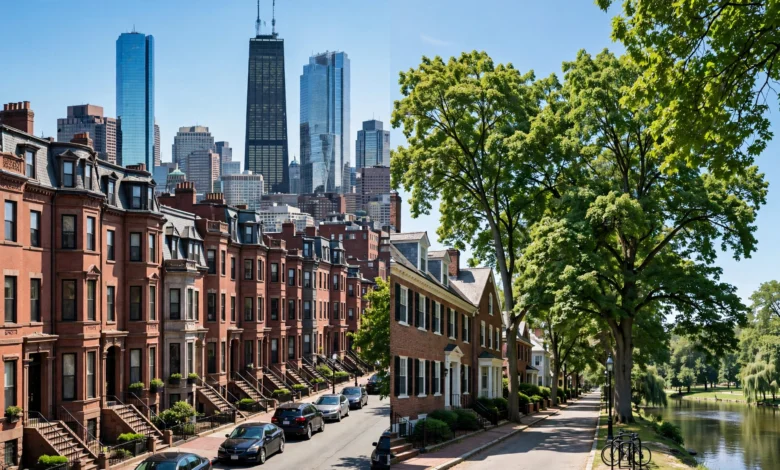
Boston vs Cambridge is one of the most common debates for anyone moving to Massachusetts. The two cities sit on opposite banks of the Charles River, share a subway line and a regional economy, and you can walk from one to the other in minutes. Yet living in each feels different in ways that matter when you’re signing a lease or a mortgage.
Boston is the big city. It has historic neighborhoods like Beacon Hill and the North End, the brownstones of Back Bay and the South End, the glass towers of the Seaport, and quieter family areas like West Roxbury and Jamaica Plain. Cambridge is smaller, denser and more academic, shaped by Harvard, MIT and the biotech boom around Kendall Square.
Prices in both are high by any standard, and they behave differently. Cambridge has a remarkably low property tax rate, but home prices that make that rate less of a bargain than it looks. Boston offers more variety and more entry points, but taxes, condo fees and neighborhood differences vary a lot.
This guide compares Boston vs Cambridge on what matters most: 2026 home prices, property taxes, neighborhoods, commutes, schools, housing types and the costs of buying in Massachusetts. Whether you’re a grad student deciding where to rent, a young family weighing a first purchase, or an investor looking at triple-deckers, you should finish with a clear sense of which side of the river suits you.


Boston vs Cambridge at a Glance
Here’s the short version before the detail.
| Factor | Boston | Cambridge |
|---|---|---|
| Size | About 650,000 people, 23 neighborhoods | About 120,000 people, 13 neighborhoods |
| Feel | Big city, varied, historic and modern | Compact, academic, tech and biotech focused |
| Typical homes | Condos, brownstones, triple-deckers, single-family houses | Condos, triple-deckers, Victorians, some large single-family homes |
| Price level | Wide range, from moderate to very high | High across most of the city |
| Residential tax rate (FY2026) | Higher | Among the lowest in the region |
| Transit | Every MBTA line, commuter rail, ferries | Red Line, Green Line at Lechmere, buses |
| Best for | Buyers wanting choice and neighborhood variety | Academics, tech workers, walkable village life |
Neither city is “better.” The right choice depends on your budget, work location, stage of life and taste in neighborhoods.
The Greater Boston Property Market in 2026
To compare Boston vs Cambridge properly, it helps to understand the wider market both cities belong to.
Greater Boston remains one of the most expensive housing markets in the country, and single-family homes are the tightest segment. The Greater Boston Association of Realtors reported the regional single-family median rising from $989,500 in April 2025 to $1,032,500 in April 2026. Condos sit lower, with regional condo medians holding near $750,000.
At the state level, the market has shown a split. The Massachusetts Association of Realtors reported new condo listings up 17.2% year over year in March 2026, while new single-family listings rose only 1%, and prices kept rising anyway. In plain terms, buyers who want a house face tight supply and bidding wars, while condo buyers have more choice and more room to negotiate.
What this means for anyone weighing Boston and Cambridge:
- Houses are scarce and expensive in both cities, and even more so in Cambridge.
- Condos are where most buyers start, especially first-time buyers and younger professionals.
- Luxury homes have softened in some areas, which can create opportunities at the top end.
- Taxes and condo fees change the monthly cost far more than many buyers expect.
Home Prices: Boston vs Cambridge in 2026
This is the question most people start with, and the answer is more nuanced than “Cambridge costs more.”
Cambridge Home Prices
Cambridge is one of the priciest cities in Massachusetts. According to Redfin, over the three months ending July 2026, the median sale price in Cambridge was $1.2 million, down 4.4% from a year earlier. The market is still competitive, though. Homes there received an average of four offers and sold in about 21 days, with a median price per square foot of $928, up 3.6% on the year.
The gap between property types is enormous. Local MLS figures for year-end 2025 showed Cambridge condo medians near $975,000 and single-family medians around $2,505,000. That second number is why many Cambridge buyers never seriously consider a detached house.
Boston Home Prices
Boston’s citywide numbers look lower, mostly because the city is so varied. Redfin reported a three-month median sale price of $852,000 ending May 2026. That figure blends studio condos in Brighton, family homes in West Roxbury and multimillion-dollar brownstones in Back Bay.
The real story is neighborhood variation. East Boston, for example, has a median list price near $790,000, up 3.9% year over year, driven by new condo construction. Beacon Hill, Back Bay and the South End run far higher, while Hyde Park, Roslindale and parts of Dorchester offer lower entry points.
What the Price Gap Means for You
If you compare like for like, a two-bedroom condo in central Cambridge usually costs more than a similar unit in most of Boston, but roughly the same as one in Back Bay, the South End or the Seaport. The cheapest entry points in Greater Boston’s core are almost always in Boston’s outer neighborhoods, not in Cambridge.
Property Taxes: A Big Difference Between Boston and Cambridge
Property taxes are where the Boston vs Cambridge comparison gets interesting, because the two cities take very different approaches.
Cambridge Tax Rate and Exemption
Cambridge taxes its labs, offices and commercial buildings at a much higher rate, which keeps the homeowner rate low. For FY2026, the Cambridge residential rate is $6.67 per $1,000 of assessed value, compared with $14.07 for commercial and industrial property.
Owner-occupants get a large break on top of that. For FY2026, the residential exemption removes $510,208 from the assessed value before the rate is applied, saving qualifying homeowners about $3,403. The median single-family tax bill comes to roughly $8,876, based on a median assessed value of $1,841,000.
Don’t let the low rate fool you, though. A low rate does not automatically mean a low bill, because high prices push assessed values up. The city also approved an overall property tax increase of 8% for FY2026, with the residential share rising by around 5%.
Boston Tax Rate and Exemption
Boston’s residential rate is higher. The city’s tax rate history lists a FY2026 residential rate of $12.40 per $1,000, with a commercial rate of $26.96. Boston also offers a generous residential exemption for owner-occupants. According to the city, it saved qualified homeowners up to $4,353.74 on their tax bill last fiscal year, applied to the third-quarter bill issued in late December.
You can check eligibility and apply through the City of Boston’s residential exemption page.
A Simple Tax Comparison
Here’s a rough illustration using the FY2026 rates for a home assessed at $900,000, before any exemption:
- In Cambridge: $900,000 × $6.67 ÷ 1,000 = about $6,003 a year.
- In Boston: $900,000 × $12.40 ÷ 1,000 = about $11,160 a year.
The exemptions narrow that gap for owner-occupants, and actual assessed values often differ from sale prices. But for investors and second-home buyers who can’t claim the exemption, Cambridge’s lower rate makes a real difference. For owner-occupants, the key lesson is to file for the exemption as soon as you’re eligible in either city.
Boston Neighborhoods: Where to Live on the Boston Side
Boston is a city of neighborhoods, each with its own housing stock and personality. Here are the areas buyers compare most often.
Back Bay and Beacon Hill
These are Boston’s classic prestige neighborhoods. Beacon Hill has gas lamps, brick sidewalks and narrow streets of historic row houses. Back Bay has grand Victorian brownstones along Commonwealth Avenue and Marlborough Street, with Newbury Street’s shops nearby. Most homes are condos in converted townhouses, and prices are among the highest in the city.
Best for: professionals and downsizers who want walkable, historic city living.
South End
The South End has the largest collection of Victorian row houses in the country, plus a strong restaurant scene and small parks. It’s lively, diverse and popular with professionals and young families who want character homes close to downtown.
Best for: buyers who love brownstones, dining and neighborhood energy.
Seaport and Fort Point
The Seaport is Boston’s newest neighborhood, full of glass towers, offices, restaurants and waterfront paths. Fort Point offers converted warehouse lofts. Homes here are mostly newer condos with amenities like gyms, concierge services and parking, which also means higher condo fees.
Best for: professionals who want modern buildings and a short walk to work.
Charlestown
Charlestown sits across the harbor from downtown with Federal-style row houses, the Bunker Hill Monument and a village feel. It’s popular with families and professionals who want history and quick access to the city.
Best for: families and couples who want a quieter neighborhood close to downtown.
Jamaica Plain and Roslindale
Jamaica Plain has Jamaica Pond, the Arnold Arboretum and a relaxed, community-focused atmosphere. Roslindale, next door, has a charming village square and more affordable houses. Both have plenty of triple-deckers and single-family homes.
Best for: families, first-time house buyers and anyone who values green space.
East Boston, Dorchester and West Roxbury
East Boston has changed quickly with new waterfront condos and harbor views. Dorchester, Boston’s largest neighborhood, offers triple-deckers and Victorians at lower prices, especially in areas near the Red Line. West Roxbury feels almost suburban, with single-family homes, yards and strong appeal for families.
Best for: buyers looking for value, space or a first home in the city limits.
Cambridge Neighborhoods: Where to Live on the Cambridge Side
Cambridge is smaller, but its neighborhoods still vary a lot in price and feel.
Harvard Square and Mid-Cambridge
Harvard Square is the city’s historic heart, with bookstores, cafés and the university campus. Mid-Cambridge, between Harvard and Central Square, mixes condos in older houses with smaller single-family homes. Redfin reported a Mid-Cambridge median around $930,000 in February 2026.
Best for: academics, students’ families and anyone who wants walkable village life.
Kendall Square and East Cambridge
Kendall Square is the center of the region’s biotech and tech industry, with MIT, big lab buildings and modern apartment and condo towers. East Cambridge, nearby, has older row houses and triple-deckers, plus the Lechmere Green Line station.
Best for: tech and life science workers who want to walk to the office.
Central Square and Cambridgeport
Central Square is Cambridge’s most urban and diverse area, with music venues, restaurants and a busy Red Line stop. Cambridgeport, south toward the river, offers quieter streets, parks and a mix of condos and houses.
Best for: young professionals, couples and buyers who want energy nearby but a calmer block at home.
West Cambridge and Avon Hill
West Cambridge, especially around Brattle Street, has large historic homes, bigger lots and private yards. Prices here often run into the high seven figures. This is where many of Cambridge’s most expensive single-family homes are found.
Best for: families with large budgets who want space and prestige.
North Cambridge and Porter Square
North Cambridge and Porter Square offer a more residential feel, with triple-deckers, two-families and condos. The Red Line at Porter and Alewife, plus the commuter rail at Porter, make commuting easy. Prices are generally lower than around Harvard Square or West Cambridge.
Best for: families and first-time buyers looking for relative value in Cambridge.
Commute and Transit: Getting Around Boston and Cambridge
Transport is one of the biggest practical differences in the Boston vs Cambridge decision.
Cambridge Transit
Cambridge is built around the MBTA Red Line, with stops at Kendall/MIT, Central, Harvard, Porter and Alewife. The Green Line reaches Lechmere in East Cambridge. Many residents walk or bike to work, and the city has an extensive network of protected bike lanes. If your job is in Kendall Square or at Harvard, living in Cambridge can mean a car-free, walkable life.
Boston Transit
Boston has every MBTA line, including the Red, Orange, Green, Blue and Silver lines, plus commuter rail at South Station, North Station and Back Bay, and harbor ferries. Downtown, the Seaport and Back Bay offer excellent access. Outer neighborhoods like West Roxbury and Hyde Park depend more on commuter rail, buses or driving.
You can check routes, schedules and service changes on the MBTA website.
Driving and Parking
Parking is hard in both cities. Many condos, especially older conversions, don’t come with a deeded parking space. Both cities use resident parking permits on many streets. A deeded space can add serious value to a home, so it’s worth checking before you buy.
Schools and Family Life
Families weigh schools heavily when comparing Boston and Cambridge.
Cambridge Public Schools
Cambridge runs a single citywide school district, with a controlled choice system for elementary schools and one main public high school, Cambridge Rindge and Latin. The city spends heavily per student, and many families appreciate the diversity and resources. Cambridge also offers universal pre-K programs for young children.
Boston Public Schools
Boston’s district is much larger, and quality varies widely from school to school. The city uses a home-based assignment system for most schools, and it has three exam schools, including Boston Latin School, that admit students by test and grades. Many Boston families also consider charter, parochial and private options.
Space for Families
Families often find more space for the money in Boston’s outer neighborhoods. West Roxbury, Roslindale, Jamaica Plain and parts of Dorchester offer single-family homes and yards at prices well below Cambridge. In Cambridge, most families live in condos or two-family houses, since single-family homes are scarce and very expensive.
Housing Types You’ll Find in Boston and Cambridge
Both cities share many of the same housing styles, but in different mixes.
- Triple-deckers. Three-unit wooden buildings, common in Dorchester, Somerville and North Cambridge. Many have been converted into condos.
- Brownstones and row houses. Found in Back Bay, the South End, Beacon Hill and Charlestown, usually split into condos.
- Victorian single-family homes. Common in West Cambridge, Jamaica Plain and Dorchester’s historic districts.
- Two-family houses. Popular with owner-occupants who rent out the other unit.
- Modern condo towers. Dominant in the Seaport, Kendall Square and parts of East Boston.
- Converted lofts. Found in Fort Point and parts of Cambridge.
Condo fees vary a lot. A 2026 LendingTree analysis found a median monthly HOA fee of $386 in the Boston metro, with 29.9% of payers paying over $500 a month. Luxury towers with concierge services often charge much more.
Buying Property in Massachusetts: What to Know
The Massachusetts buying process has its own steps and costs, and they apply equally in both cities.
The Buying Process
- Offer to Purchase. Your agent submits a written offer with a small deposit.
- Home inspection. Usually done within a week or so of an accepted offer.
- Purchase and Sale Agreement. A detailed contract, normally reviewed by attorneys, with a larger deposit.
- Mortgage commitment. Your lender approves the loan by an agreed date.
- Closing. An attorney handles the closing and records the deed.
Attorneys play a big role in Massachusetts transactions, so budget for legal fees on both sides.
Condo Documents
For condos, ask for the master deed, bylaws, budget, reserve fund details and recent meeting minutes. You’ll also need a 6(d) certificate confirming the unit’s fees are paid. Older converted buildings often have small reserves, which raises the risk of special assessments for roofs, porches or masonry.
Lead Paint Law
Much of the housing in both cities was built before 1978. Massachusetts has a strict lead paint law requiring homes with children under six to be deleaded. If you plan to rent out a unit, or you have young children, get a lead inspection and budget for possible deleading costs.
Closing Costs
Expect costs for your attorney, title insurance, lender fees, inspections and recording fees. Sellers in Massachusetts typically pay the state deeds excise tax. Ask your attorney for a full estimate early.
Renting vs Buying: Boston vs Cambridge
Many people start by renting before they buy, and the rental markets in both cities are tight.
Both cities are heavily shaped by students and young professionals, with a traditional September 1 lease cycle that drives huge demand each summer. Rent is high in both, though the exact gap depends on the neighborhood and unit type.
Some tips for renters and future buyers:
- Start early if you’re moving for a September lease, since the best units go months ahead.
- Rent first in a neighborhood you’re thinking of buying in, to test the commute and daily life.
- Compare total costs of buying, including taxes, condo fees, insurance and maintenance, against rent.
- Plan for maintenance. A common rule of thumb is to set aside about 1% of a home’s value each year for upkeep, more for older homes.
Investing in Boston and Cambridge Property
Both cities attract investors because of their universities, hospitals and tech jobs, which support steady rental demand.
Why Investors Like Cambridge
Cambridge has deep demand from graduate students, researchers and biotech workers, plus a low residential tax rate. The downside is high purchase prices, which can squeeze rental yields. Investors can’t claim the residential exemption, so the tax bill is higher than an owner-occupant’s.
Why Investors Like Boston
Boston offers more variety and more affordable entry points, especially triple-deckers and two-families in Dorchester, Roslindale and East Boston. Areas near universities, like Allston and Brighton, have strong student rental demand.
Investor Checklist
- Run numbers using the non-owner-occupied tax bill.
- Budget for lead paint compliance on older units.
- Check zoning rules and any restrictions on short-term rentals.
- Review condo association rules on renting if buying a condo.
- Factor in the September lease cycle when planning vacancies.
Boston vs Cambridge: Which Should You Choose?
Here’s a practical way to decide based on your situation.
Choose Cambridge If You:
- Work in Kendall Square, at Harvard, MIT or nearby labs.
- Want a compact, walkable city with a strong academic and tech culture.
- Value a single, well-funded school district.
- Plan to own and live in your home long term and can handle high prices.
- Prefer a lower property tax rate.
Choose Boston If You:
- Want more neighborhood variety, from historic brownstones to suburban-feeling streets.
- Need more affordable entry points or more space for the money.
- Work downtown, in the Seaport, the Longwood Medical Area or near commuter rail.
- Want access to every MBTA line and regional transport.
- Are looking for triple-deckers or two-families to invest in.
Many people also look at neighboring cities like Somerville, Brookline, Watertown and Medford, which offer similar access at different price points and tax rates.
A Viewing Checklist for Boston and Cambridge Homes
Take this list to every showing:
- Check the tax bill and whether the seller claims the residential exemption.
- Ask about parking and whether a space is deeded.
- Review condo finances, reserves and any planned assessments.
- Look for lead paint in homes built before 1978.
- Inspect the roof, porches and windows, especially in older homes.
- Time your commute at rush hour on the MBTA.
- Visit at night and on weekends to check noise near bars, campuses and stadiums.
- Ask about heating costs, since winters are long and older homes can be drafty.
- Check flood risk for low-lying areas near the harbor and the Charles.
Frequently Asked Questions About Boston vs Cambridge
Is Cambridge more expensive than Boston?
On average, yes, especially for single-family homes. But Boston’s prime neighborhoods like Back Bay and Beacon Hill are just as expensive, and Boston’s outer neighborhoods offer cheaper entry points.
Are property taxes lower in Cambridge or Boston?
Cambridge has a much lower residential tax rate, at $6.67 per $1,000 in FY2026, compared with Boston’s $12.40. Both offer residential exemptions for owner-occupants.
Which city is better for families?
It depends. Cambridge offers a single well-funded school district, while Boston offers more space for the money in neighborhoods like West Roxbury and Roslindale.
Is it easy to commute between Boston and Cambridge?
Yes. The Red Line connects the two cities directly, and many people walk or bike across the Charles River.
Should I rent or buy in Boston or Cambridge?
That depends on how long you’ll stay. Buying tends to make more sense if you plan to stay at least five to seven years, given high prices and closing costs.
Conclusion
The Boston vs Cambridge decision comes down to how you want to live and what you can afford, since both cities offer strong job markets, world-class universities, good transit and homes that tend to hold their value over time. Cambridge suits people who want a compact, walkable, academic city with a remarkably low property tax rate, though high prices, scarce single-family homes and a median sale price around $1.2 million make it a tough market to enter. Boston offers more choice, from historic brownstones in Back Bay and Beacon Hill to modern Seaport towers and family homes in West Roxbury and Roslindale, along with a wider range of price points and every MBTA line. Whichever side of the river you choose, check the tax bill and claim your residential exemption, review condo finances and parking, inspect older homes for lead paint and wear, and time your commute before you commit, and your Massachusetts property decision will rest on solid facts rather than first impressions.