Paris Arrondissements Explained: An Essential Buyer’s Guide to the Best of All 20 Districts in 2026
Paris arrondissements compared for buyers: 2026 prices per m², notary fees, rental rules and neighborhood character across all 20 districts.

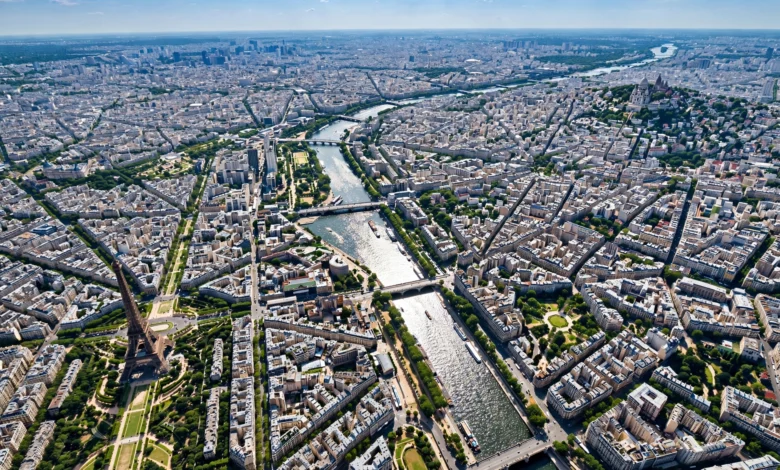
Paris arrondissements are the first thing every buyer has to understand, and the easiest thing to get wrong. The city is split into 20 districts that spiral outward from the centre like a snail shell, starting at the Louvre and ending in the far east near Père Lachaise. Parisians use the numbers constantly. Say you live in “the 11th” or “the 16th” and people immediately picture the streets, the prices and even the type of person who lives there.
For buyers, those numbers carry real weight. A two-bedroom flat in Saint-Germain-des-Prés can cost nearly twice as much per square metre as a similar flat in Belleville, even though the metro ride between them takes barely half an hour. Energy ratings, building condition and floor level can swing prices by tens of thousands of euros within a single street.
The good news is that 2026 is a more balanced moment to buy than the frenzied years before. Prices have come down from their peak, mortgage rates have settled, and sellers have had to become more realistic.
This guide walks through all Paris arrondissements from a buyer’s point of view. We cover what each district feels like, how prices compare, what notary fees and taxes cost, what the rules on renting out your flat look like, and the checks that protect you from expensive surprises. Whether you’re moving to Paris, buying a pied-à-terre or investing, you’ll finish with a clear map of where your money goes furthest.
How the Paris Arrondissements System Works
Before comparing districts, it helps to understand the layout, because it shapes almost every property decision in the city.
The Snail Shell
The arrondissements are numbered in a clockwise spiral. The 1st sits at the centre by the Louvre, and the numbers wind outward until the 20th in the east. Postcodes follow the same logic: 75001 for the 1st, 75011 for the 11th, and so on. The 16th is the one exception with two postcodes, 75016 and 75116.
Paris Centre
Since 2020, the 1st, 2nd, 3rd and 4th have been grouped under a single town hall called Paris Centre. For property purposes, people still talk about each one separately, and postcodes haven’t changed.
Left Bank and Right Bank
The Seine divides the city. The Left Bank (Rive Gauche), to the south, includes the 5th, 6th, 7th, 13th, 14th and 15th. It has long been associated with universities, publishers and a quieter, more intellectual feel. The Right Bank (Rive Droite), to the north, holds the other 14 districts, including business areas, grand boulevards and some of the city’s most diverse and lively neighbourhoods.
Quartiers Within Arrondissements
Each arrondissement is also split into four official quartiers, and buyers should think at that level or even street by street. The 17th, for example, includes the elegant Plaine Monceau and the much more affordable Épinettes. Treating an arrondissement as one uniform market is a common mistake.
The Paris Real Estate Market in 2026
To compare Paris arrondissements properly, you need a sense of where the whole market stands.
After a strong run that peaked around 2022, Paris went through a real correction. One buyer’s agent summarised the last few years as two years of decline of 8 to 10% from the 2022 highs, with rates stabilising around 3.20% over 20 years and first-time buyers coming back. By early 2026, prices had started to edge up again. The PAP observatory put the average at 9,720 €/m² in February 2026, up 1.9% on the year, while MeilleursAgents estimated 9,739 €/m² for flats on 1 March 2026.
Activity has also recovered. Paris recorded about 32,500 sales in the 12 months to the end of March 2026, compared with 29,800 a year earlier, helped by mortgage rates falling below 3.20% over 20 years.
Different sources measure prices in different ways, so you’ll see several “average” figures. That’s normal. What matters more is the spread. One 2026 analysis based on public transaction data finds prices ranging from 8,800 €/m² in the 20th to 16,400 €/m² in the 6th, with an average of 11,100 €/m².
For official figures, the Notaires du Grand Paris price map shows prices per square metre by arrondissement and neighbourhood, based on real notarised sales.
What this means for buyers in 2026:
- More negotiating room than in the boom years, especially for flats with flaws.
- Energy ratings matter a lot. Poorly rated flats sell at a clear discount.
- Central districts remain resilient, while outer eastern and northern districts offer the best value.
- Transaction volumes are recovering, so good flats still sell quickly.
Central Paris Arrondissements: The 1st to 4th
The historic heart of the city is where many international buyers start their search. It’s beautiful, walkable and full of history, but it’s also busy, touristy and expensive.
1st Arrondissement: Louvre and Palais-Royal
The 1st holds the Louvre, the Tuileries Gardens, Palais-Royal and Place Vendôme. It’s grand and central, but it has relatively few residents and a lot of tourists and offices. Flats here are often in historic buildings, sometimes without lifts.
Best for: pied-à-terre buyers who want a prestige address in the middle of everything.
2nd Arrondissement: Sentier and Montorgueil
The 2nd is the smallest district, known for the Sentier textile area, covered passages, the Bourse and the lively Rue Montorgueil market street. It has a younger, more urban feel than the 1st, with many small flats.
Best for: young professionals and buyers who want food, bars and central living.
3rd and 4th Arrondissements: The Marais
The Marais spans the 3rd and 4th and is one of the most sought-after areas in the city. Narrow medieval streets, 17th-century mansions, galleries, boutiques and cafés make it hugely popular. The Haut Marais in the 3rd feels slightly more residential, while the 4th includes Île Saint-Louis, part of Île de la Cité and the area around Place des Vosges.
Prices here are among the highest in Paris, and small studios and one-bedroom flats make up a lot of the stock.
Best for: buyers who want character, culture and a central address with strong resale appeal.
Left Bank Paris Arrondissements: The 5th, 6th and 7th
These three districts are the classic Left Bank, full of history, bookshops and elegant residential streets.
5th Arrondissement: Latin Quarter
The 5th is home to the Sorbonne, the Panthéon, the Jardin des Plantes and Rue Mouffetard. It has a student and academic feel, beautiful old buildings and excellent schools. Many families like the quieter streets around the Jardin des Plantes.
Best for: families, academics and buyers who want Left Bank charm at slightly lower prices than the 6th.
6th Arrondissement: Saint-Germain-des-Prés
The 6th is often the most expensive district in Paris. It includes Saint-Germain-des-Prés, the Luxembourg Gardens, famous cafés, art galleries and luxury boutiques. In one 2026 analysis, the 6th tops the list at around 16,400 €/m².
Homes range from small historic flats to grand apartments overlooking the Luxembourg. Demand from wealthy French and international buyers keeps prices high even in a slower market.
Best for: buyers who want the most prestigious Left Bank address and have the budget for it.
7th Arrondissement: Eiffel Tower and Ministries
The 7th includes the Eiffel Tower, Les Invalides, the Musée d’Orsay and many government buildings and embassies. It’s elegant, calm and wealthy, with large apartments in Haussmannian and older buildings. The area around Rue Cler is a lively market street, while the rest can feel very quiet in the evenings.
Best for: families and established buyers who want space, prestige and calm.
Western Paris Arrondissements: The 8th, 16th and 17th
These districts are traditionally associated with wealth, business and large family apartments.
8th Arrondissement: Champs-Élysées and Golden Triangle
The 8th includes the Champs-Élysées, the luxury “Golden Triangle” around Avenue Montaigne, and many company headquarters. It has grand apartments, but also many offices and fewer residents. Parts near Parc Monceau are more residential and very sought after.
Best for: luxury buyers and those who want large, prestigious apartments near business districts.
16th Arrondissement: Classic Family Paris
The 16th is the traditional choice for wealthy families. It has wide avenues, large Haussmannian and Art Nouveau apartments, top schools, the Bois de Boulogne and views of the Eiffel Tower from Trocadéro. The north (around Victor Hugo and Passy) is more expensive than the south (Auteuil).
Prices per square metre can be lower than in the 6th or 7th because apartments are larger, but total prices are high.
Best for: families who want space, schools, greenery and a quiet residential life.
17th Arrondissement: Two Different Worlds
The 17th is a good example of why you should think by quartier. The southern part around Plaine Monceau and Ternes is elegant and expensive, similar to the 8th. The Batignolles area has become very popular with young families, thanks to its village feel and the Martin Luther King park. The northern Épinettes area is more affordable.
Best for: families and professionals who want good value within a well-connected western district.
Central East Paris Arrondissements: The 9th, 10th and 11th
These districts have become some of the most popular with younger buyers over the past two decades.
9th Arrondissement: South Pigalle and Grands Boulevards
The 9th includes the Opéra Garnier, the big department stores and the trendy area known as SoPi (South Pigalle). It has beautiful Haussmannian buildings, good transport and a mix of offices and homes. It’s become a favourite for young professionals and families who want central living with character.
Best for: professionals and families who want central, lively and well-connected homes.
10th Arrondissement: Canal Saint-Martin
The 10th includes Gare du Nord, Gare de l’Est and the Canal Saint-Martin. The canal area is trendy and popular, while the streets around the stations can feel busy and gritty. Local market analysts note that the 10th, driven by the canal’s appeal, has been rising noticeably.
Best for: young buyers and investors looking for growth and character.
11th Arrondissement: Oberkampf and Bastille
The 11th is one of the densest districts in Europe and one of the liveliest in Paris, known for its bars, restaurants and markets around Oberkampf, Bastille and Rue de Charonne. It has many former workshops converted into lofts, along with classic Parisian buildings.
Best for: young professionals and couples who want energy, food and nightlife.
Eastern and Southern Paris Arrondissements: The 12th to 15th
These districts are often overlooked by international buyers but offer strong value and family-friendly living.
12th Arrondissement: Bercy and Bois de Vincennes
The 12th includes the Gare de Lyon, the Coulée Verte elevated park, Bercy and the huge Bois de Vincennes. It has a residential, family-friendly feel and a wide range of housing, from Haussmannian buildings to modern developments.
Best for: families who want green space and good transport.
13th Arrondissement: Chinatown and Modern Paris
The 13th mixes Paris’s largest Chinatown, the Butte-aux-Cailles village area, the Bibliothèque François Mitterrand and newer developments around Paris Rive Gauche. It’s one of the more affordable districts. One 2026 source puts the median price for older flats in the 13th at about 8,505 €/m².
Best for: first-time buyers and families looking for value and modern buildings.
14th Arrondissement: Montparnasse
The 14th includes Montparnasse, Denfert-Rochereau, the Parc Montsouris and the Cité Universitaire. It feels residential and calm, with quiet streets, good schools and a strong local community.
Best for: families and buyers who want a quiet Left Bank district at moderate prices.
15th Arrondissement: The Family District
The 15th is the most populous district in Paris. It’s residential, with large markets, good schools and quiet streets, plus a mix of older buildings and 1970s towers near the Seine at Beaugrenelle. It’s popular with families who want space at lower prices than the 7th next door.
Best for: families who want a practical, residential and well-connected district.
Northern and Eastern Paris Arrondissements: The 18th, 19th and 20th
These districts offer the most affordable entry points in the city, along with a lot of character and a younger population.
18th Arrondissement: Montmartre
The 18th includes Montmartre, Sacré-Cœur and the Abbesses area, which are charming and popular. Other parts, like La Chapelle and Barbès, are busier and cheaper, with ongoing regeneration. Prices can vary hugely within the district.
Best for: buyers who want village charm in Montmartre or value in areas undergoing change.
19th Arrondissement: Buttes-Chaumont and La Villette
The 19th has the Parc des Buttes-Chaumont, the Canal de l’Ourcq and the Parc de la Villette. It’s diverse and good value, with a mix of older buildings and modern housing.
Best for: first-time buyers, families and investors looking for value near big parks.
20th Arrondissement: Belleville and Ménilmontant
The 20th includes Belleville, Ménilmontant and the Père Lachaise cemetery. It’s artistic, diverse and one of the cheapest districts, at around 8,800 €/m² in one 2026 analysis.
Best for: first-time buyers, artists and investors seeking the best value within the city limits.
Paris Arrondissements Price Tiers at a Glance
Here’s a simplified guide to how the districts compare. Exact prices change by street, building and floor.
| Tier | Arrondissements | Character | Typical Buyers |
|---|---|---|---|
| Prime | 6th, 7th, 4th, 1st, parts of 8th and 16th | Historic, elegant, prestigious | Wealthy families, international buyers |
| Upper | 3rd, 5th, 2nd, 9th, parts of 16th and 17th | Central, charming, sought after | Professionals, families |
| Middle | 11th, 10th, 12th, 14th, 15th, parts of 17th | Residential, lively or family-friendly | Young families, professionals |
| Value | 13th, 18th, 19th, 20th | Diverse, changing, younger | First-time buyers, investors |
Buying Property in Paris: How the Process Works
Knowing the steps helps you move quickly when you find the right flat, which matters in a city where good homes still sell fast.
- Make an offer. Offers are usually made in writing. Once accepted, the price is generally set.
- Sign the compromis de vente. This preliminary contract commits both parties and is usually signed at a notary’s office. Buyers typically pay a deposit of around 5 to 10%.
- Cooling-off period. Buyers have a 10-day legal cooling-off period after receiving the signed contract, during which they can withdraw without penalty.
- Mortgage condition. Most contracts include a condition that the sale depends on getting a loan.
- Final deed. The acte authentique is signed at the notary’s office, usually about three months after the compromis, and you get the keys.
Documents to Check
Every Paris apartment sale comes with a set of mandatory diagnostic reports and building documents. Pay close attention to:
- Loi Carrez surface. The official measured living area, which is the basis for comparing price per square metre.
- DPE energy rating. Rated from A to G, it affects your heating bills, your resale value and your right to rent out the flat.
- Copropriété documents. The minutes of the last three general meetings, the building’s budget, the works fund and any planned major works.
- Charges. Monthly service charges vary widely, especially in buildings with a concierge, lift or central heating.
Notary Fees and Buying Costs in Paris
The purchase price is only part of the cost of buying in Paris. The biggest extra is the so-called “frais de notaire,” which is mostly tax.
How Much Are Notary Fees?
For older (existing) properties, total notary fees usually add around 7 to 8% to the purchase price. Most of this is transfer tax, known as DMTO. In 2026, the DMTO rate for existing homes stands at about 6.32% in most French départements, including Paris, following a 0.5-point increase allowed by the 2025 finance law.
For new-build homes, costs are far lower. New-build purchases carry a reduced tax rate of 0.715%, bringing total acquisition costs down to around 2.5% of the price.
First-Time Buyer Relief
First-time buyers purchasing their main home are exempt from the recent 0.5-point increase. They keep the older rate of about 5.81% instead of 6.32%. If you’re buying with a partner and only one of you qualifies, the relief may apply only to that person’s share.
Other Costs to Budget For
- Agency fees, often included in the listed price, but check whether they’re paid by the buyer or seller.
- Mortgage costs, including guarantee fees and insurance.
- Renovation budget, especially for older flats or those with poor energy ratings.
- Property tax (taxe foncière), paid annually by owners.
- Service charges for the building, paid quarterly.
Energy Ratings: Why the DPE Matters So Much in Paris
If there’s one factor that has changed Paris property in recent years, it’s the DPE energy rating. Much of Paris’s housing is old, and many flats score poorly.
A buyer’s agent quoted in 2026 put it clearly: a flat rated F or G sells at a discount of 10 to 20% compared with the same flat rated C or D. That discount reflects both higher heating bills and legal limits on renting.
Rules on renting poorly rated homes are tightening in stages. Since 2025, properties rated G can no longer be rented out, with F-rated homes following in 2028 and E-rated homes in 2034. That makes energy performance a key issue for investors.
What to do as a buyer:
- Check the DPE report carefully and ask how recent it is.
- Get renovation quotes before you commit if the rating is E, F or G.
- Ask about building works planned by the copropriété, such as roof insulation or new windows.
- Look into renovation grants, which can help pay for improvements.
- Use a poor rating to negotiate, since sellers know it affects value.
Renting Out Your Paris Apartment: Rules to Know
Many buyers plan to rent out their flat, either long term or to visitors. Paris has some of the strictest rules in Europe.
Short-Term Rentals
Since 1 January 2025, Paris has limited short-term tourist rentals of a main residence to 90 nights a year, down from 120. The change came under the Le Meur law passed in November 2024, and fines for breaking the rules doubled to up to €100,000 per offence.
Every listing needs a registration number. Letting a second home as a short-term rental requires change-of-use authorisation, which in Paris means buying compensation, and buildings can now vote to ban short-term rentals with a two-thirds majority. For most buyers, that makes a second home used purely as a holiday let very hard to run legally.
You can check the latest rules and register on the official City of Paris website.
Long-Term Rentals
Long-term renting is more straightforward but still regulated. Paris applies rent controls, which cap rents based on the neighbourhood, the number of rooms, the building’s age and whether the flat is furnished. The median rent in Paris sits around 40 €/m² per month, and chronic shortage of rental homes keeps demand strong.
Tips for landlords:
- Check the rent cap for your address before setting a price.
- Make sure the DPE rating allows you to rent.
- Choose between furnished and unfurnished, which have different lease lengths and tax rules.
- Budget for vacancy and management costs if you don’t live in Paris.
Transport and the Grand Paris Express
Paris has one of the densest metro systems in the world, so almost every district is well connected. Still, being close to a major hub or key lines can add value.
The biggest change is the Grand Paris Express, described as the largest urban transport project in Europe, with four new automatic metro lines (15, 16, 17 and 18), 200 km of track and 68 new stations due to reshape the region between 2026 and 2031. Most new stations are outside the city limits, but they strengthen links from Paris to the suburbs and airports, which supports demand in outer districts close to the ring road.
Within Paris, buyers often pay a premium for:
- Proximity to major hubs like Châtelet, Saint-Lazare or Montparnasse.
- Access to line 14, which now runs from Saint-Denis to Orly airport.
- Quiet streets near a metro station, rather than on a busy boulevard.
Choosing the Right Paris Arrondissement for You
With 20 districts to choose from, matching your priorities to the right area makes the decision much easier.
Families
Consider the 5th, 7th, 12th, 14th, 15th, 16th and 17th. These districts offer good schools, parks and larger apartments.
Young Professionals
Look at the 2nd, 3rd, 9th, 10th and 11th, with their bars, restaurants and central locations.
Prestige and Luxury Buyers
The 6th, 7th, 8th and 16th, along with the 4th around Île Saint-Louis, offer the most prestigious addresses.
First-Time Buyers on a Budget
The 13th, 18th, 19th and 20th offer the best value within the city limits.
Investors
The 10th, 11th, 18th, 19th and 20th combine lower entry prices with strong rental demand, especially near universities and transport hubs.
A Viewing Checklist for Paris Apartments
Take this list to every viewing:
- Check the Loi Carrez surface and compare the price per square metre with nearby sales.
- Read the DPE rating and ask about heating costs.
- Look at the building’s condition, including the stairwell, roof and facade.
- Ask about planned works and read the last three general meeting minutes.
- Check the floor and lift, since high floors without a lift sell at a discount.
- Look at light and noise, especially on busy streets or ground floors.
- Ask about charges and what they include.
- Visit at different times to check noise from bars, markets or traffic.
- Check the cellar and storage, which add useful value.
Frequently Asked Questions About Paris Arrondissements
Which Paris arrondissement is the most expensive?
The 6th is usually the most expensive, followed by the 7th, the 4th and parts of the 8th and 16th.
Which Paris arrondissements offer the best value?
The 13th, 18th, 19th and 20th tend to have the lowest prices per square metre within the city limits.
How much are notary fees in Paris?
For existing homes, total costs usually add around 7 to 8% to the price, mostly transfer taxes. New builds cost much less.
Can foreigners buy property in Paris?
Yes. There are no restrictions on foreign buyers, though getting a French mortgage as a non-resident can be harder and require a larger deposit.
Can I rent my Paris flat on Airbnb?
Only within strict limits. Main homes are capped at 90 nights a year, and second homes need costly change-of-use authorisation.
Conclusion
Understanding the Paris arrondissements is the key to buying well in the city, because each of the 20 districts has its own character, housing stock and price level, from the prestigious 6th and 7th on the Left Bank to the lively 10th and 11th and the more affordable 13th, 19th and 20th. The market in 2026 is more balanced than in the boom years, with prices recovering gently after a correction, mortgage rates around 3.2% and sales volumes picking up again. Buyers should budget for notary fees of around 7 to 8% on existing homes, pay close attention to DPE energy ratings that can knock 10 to 20% off a flat’s value, and understand strict rules on short-term rentals and rent control before investing. Think street by street rather than district by district, read the building documents carefully, and compare the price per square metre with real recent sales, and you’ll be well placed to find the right Paris apartment for your life and your budget.