Northern Virginia vs Richmond: 7 Essential Differences to Help You Choose the Best Place to Live in 2026
Northern Virginia vs Richmond in 2026: home prices, jobs, commutes, schools, taxes, and lifestyle compared to help you pick the right Virginia region.

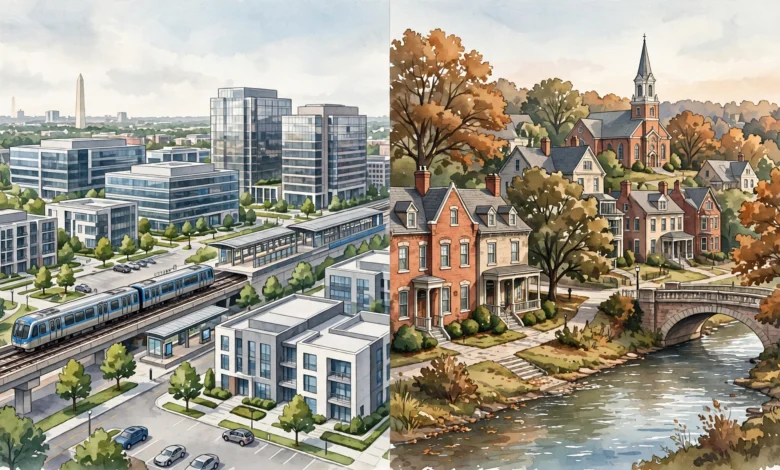
Northern Virginia and Richmond sit only about 100 miles apart, but buying a home in one feels very different from buying in the other. Northern Virginia, often called NoVA, is part of the Washington, D.C. metro area. It is fast-paced, high-earning, and expensive, with some of the best public schools and highest household incomes in the country. Richmond, the state capital, moves at a slower pace. It has a rich history, a growing food and arts scene, and home prices that leave far more room in the monthly budget.
If you are relocating to Virginia, changing jobs, or simply tired of paying D.C.-area prices, the Northern Virginia vs Richmond decision is one of the biggest you will make. It affects your mortgage, your commute, your kids’ schools, and how you spend your weekends.
This Virginia property guide compares the two regions side by side using current 2026 housing data. We break down seven essential differences, including home prices, cost of living, job markets, commute times, schools, lifestyle, and taxes. You will also find the best neighborhoods and suburbs in each region, a quick comparison table, and clear guidance on which area tends to suit different types of buyers.
By the end, you will have a practical picture of what life and homeownership look like in both places, so you can choose the region that fits your career, your budget, and the way you want to live.

Northern Virginia and Richmond: A Quick Overview
Before comparing numbers, it helps to understand what each region actually is and why people move there.
What Is Northern Virginia?
Northern Virginia is the cluster of counties and cities just across the Potomac River from Washington, D.C. It usually includes Arlington, Fairfax, Loudoun, and Prince William counties, plus the cities of Alexandria, Falls Church, Fairfax, Manassas, and Manassas Park. Stafford County to the south is often included too.
The region’s economy is driven by the federal government, defense contractors, consulting firms, and a huge technology sector. Amazon’s second headquarters in Arlington, the data center corridor in Loudoun County, and major employers in Tysons and Reston make Northern Virginia one of the wealthiest areas in the United States. That money shows up in home prices, school budgets, and the overall cost of living.
What Is the Richmond Region?
Richmond is Virginia’s capital and the center of the Richmond metro area, which includes the City of Richmond and the counties of Henrico, Chesterfield, Hanover, and Goochland, among others. It has roughly 1.3 million residents, about a third of Northern Virginia’s population.
Richmond’s economy is more diverse and less tied to Washington. State government, healthcare systems like VCU Health, financial firms including Capital One and the Federal Reserve Bank of Richmond, and a growing logistics and manufacturing base all provide jobs. The city is known for its historic neighborhoods, the James River, a lively restaurant and brewery scene, and a strong arts community.
Why People Compare the Two
Many buyers weigh Northern Virginia vs Richmond because they offer two very different versions of Virginia living. Northern Virginia gives you higher salaries, the D.C. job market, and top-tier schools at a premium price. Richmond gives you more space, lower costs, and a slower pace, with a two-hour drive to D.C. when you need it. Remote and hybrid work has made this choice more realistic, since many people can now keep a Northern Virginia salary while living in Richmond.
Northern Virginia vs Richmond at a Glance
Here is a quick side-by-side look at the two regions using the latest 2026 market data.
| Factor | Northern Virginia | Richmond region |
|---|---|---|
| Median home price | About $765,000 (August 2026, NVAR) | About $460,000 for single-family homes (July 2026, CVR MLS) |
| Median listing price | Varies widely by county | About $440,000 (August 2026, Realtor.com) |
| Market pace | Around 3 weeks on market, inventory rising | Steady prices, limited single-family inventory |
| Main employers | Federal government, defense, tech, consulting | State government, healthcare, finance, logistics |
| Commute style | Metro rail, VRE, heavy highway traffic | Mostly car-based, shorter drives |
| Schools | Several nationally ranked districts | Strong suburban districts, mixed city schools |
| Pace of life | Fast, busy, international | Relaxed, historic, creative |
| Distance to D.C. | 10 to 45 minutes | About 1.5 to 2.5 hours |
Sources: the Northern Virginia Association of Realtors August 2026 report for Northern Virginia, Central Virginia Regional MLS figures for Richmond single-family homes, and Realtor.com data on the Federal Reserve’s FRED database for the Richmond metro median listing price.
The headline is simple: a typical home in Northern Virginia costs roughly $300,000 more than a typical single-family home in the Richmond area.
7 Essential Differences Between Northern Virginia and Richmond
Numbers only tell part of the story. Here is how the two regions really differ when you live there.
1. Home Prices and What Your Money Buys
This is the biggest difference. In Northern Virginia, the median sold price reached about $765,000 in August 2026, up 2% from a year earlier. Loudoun County’s median was slightly higher, at about $771,000. For that price, many buyers get a townhouse or a modest single-family home in an inner suburb, or a larger house farther out in Prince William, Stafford, or western Loudoun.
In the Richmond real estate market, the median single-family sale price was about $460,000 in mid-2026. That budget often buys a three- or four-bedroom home with a yard in Henrico, Chesterfield, or Hanover County. Condos and townhomes in Richmond sold for a median of around $375,000.
- Northern Virginia: Expect smaller homes, smaller lots, and strong competition for well-located single-family houses.
- Richmond: Expect more square footage and land for the money, with a wider range of starter homes.
2. Cost of Living
Everything costs more in Northern Virginia, not just housing. Childcare, dining, insurance, and services all reflect the high incomes of the D.C. area. Richmond’s cost of living is much closer to the national average, which means your paycheck stretches further on everyday expenses as well as on your mortgage.
3. Jobs and Salaries
Northern Virginia has one of the strongest job markets in the country, with high-paying roles in government contracting, cybersecurity, cloud computing, and consulting. Salaries are among the highest in the nation, which helps offset the cost of living. Federal workforce cuts and contract changes in recent years have added some uncertainty for workers tied to government spending, so consider how secure your sector is.
Richmond’s job market is smaller but more balanced. Major employers include Capital One, Dominion Energy, VCU Health, Altria, and state government agencies, plus a growing number of manufacturing and logistics companies. Salaries are lower than in Northern Virginia, but so are costs, and the economy is less dependent on federal spending.
4. Commute and Transportation
Traffic in Northern Virginia is famously tough. I-95, I-66, I-495, and Route 28 can turn a 15-mile drive into an hour at rush hour. On the plus side, Northern Virginia has the Metrorail system, including the Silver Line to Dulles Airport and Loudoun County, plus Virginia Railway Express commuter trains and express toll lanes.
Richmond commutes are usually shorter and easier, with most trips handled by car. The Pulse bus rapid transit line runs along Broad Street, but public transit is limited compared with Northern Virginia. If you need to reach D.C., Amtrak runs several trains a day between Richmond and Washington.
5. Schools
Northern Virginia is known for some of the best public school systems in the country. Fairfax County Public Schools, Loudoun County Public Schools, and Arlington Public Schools all rank highly, and Thomas Jefferson High School for Science and Technology is one of the most selective public high schools in the nation.
The Richmond area has strong suburban school systems in Henrico, Chesterfield, and Hanover counties, along with the highly regarded Maggie L. Walker Governor’s School. Richmond Public Schools within the city are more mixed, so many families buying in the city look carefully at specific school zones or private options.
6. Lifestyle and Culture
Life in Northern Virginia is busy and diverse. You are minutes from the museums, monuments, and restaurants of Washington, D.C., and the region has a strong international community. Old Town Alexandria, Reston Town Center, and Arlington’s urban villages offer walkable living, while western Loudoun has wineries and horse country.
Richmond feels more laid back. The James River runs right through the city, with urban whitewater rafting, trails, and parks like Belle Isle and Maymont. Neighborhoods like the Fan, Church Hill, and Scott’s Addition are full of historic architecture, breweries, and independent restaurants. Virginia Beach and the Blue Ridge Mountains are each about two hours away for weekend trips.
7. Taxes
Both regions pay the same Virginia state income tax, which tops out at 5.75%. The bigger difference is property tax. Local real estate tax rates per $100 of assessed value are broadly similar across many Northern Virginia and Richmond-area jurisdictions, but because Northern Virginia homes cost so much more, the annual bill is usually much larger. Virginia localities also charge a personal property tax on vehicles, so check rates for your county or city in both regions.
Best Places to Live in Northern Virginia
Northern Virginia covers a lot of ground, and prices vary widely from one area to the next. These are some of the most popular areas for buyers in 2026.
Arlington
Arlington offers urban living just across the river from D.C. Neighborhoods like Clarendon, Ballston, and Courthouse are packed with apartments, condos, restaurants, and Metro stations, while North Arlington has quieter streets of single-family homes. Amazon’s HQ2 in National Landing has added jobs and new development. It is ideal for young professionals and families who want a short commute, but single-family homes are expensive.
Alexandria
Alexandria mixes historic charm with convenience. Old Town’s brick sidewalks, waterfront, and King Street shops are a major draw, and neighborhoods like Del Ray have a small-town feel. Rowhouses, townhomes, and condos are common, and Metro access makes it easy to get into D.C.
Fairfax County: Vienna, McLean, Reston, and Burke
Fairfax County is the heart of Northern Virginia real estate. McLean and Great Falls offer luxury homes on large lots, Vienna has a beloved small-town center, Reston combines planned neighborhoods with trails and lakes, and Burke and Springfield offer more moderate prices. Fairfax County Public Schools serve the entire county.
Loudoun County: Ashburn, Leesburg, and Brambleton
Loudoun County has grown rapidly thanks to tech jobs and data centers. Ashburn and Brambleton offer newer homes, community pools, and strong schools, while historic Leesburg has a charming downtown. The Silver Line Metro now reaches Ashburn, making commutes more flexible. Western Loudoun offers rural living with wineries and farms.
Prince William County and Stafford
Prince William County, including Gainesville, Bristow, and Woodbridge, and Stafford County to the south are where many Northern Virginia buyers find more space for less money. Commutes into D.C. or Tysons can be long, but VRE commuter trains and express lanes help.
Best Places to Live in the Richmond Area
The Richmond region offers everything from historic city rowhouses to large suburban homes. These are some of the most popular choices for buyers coming from Northern Virginia and elsewhere.
The Fan and Museum District
The Fan is Richmond’s most iconic city neighborhood, with tree-lined streets, Victorian rowhouses, and easy access to Virginia Commonwealth University, Carytown shopping, and the Virginia Museum of Fine Arts. It is walkable and full of character, though parking can be tight and older homes may need updates.
Church Hill
Church Hill, east of downtown, is one of the oldest neighborhoods in the city. It offers restored historic homes, views of the James River from Libby Hill Park, and a growing number of restaurants and cafes. Prices have climbed as the area has become more popular.
Henrico County: Short Pump and the West End
Henrico’s West End and Short Pump are favorites for families. They offer newer subdivisions, the Short Pump Town Center shopping area, and well-regarded Henrico County Public Schools. Commutes to downtown Richmond are usually 20 to 30 minutes.
Chesterfield County: Midlothian
Midlothian, in Chesterfield County, is known for large planned communities, good schools, and plenty of parks and golf courses. It offers some of the best value for families who want space and suburban amenities in the Richmond metro area.
Hanover County: Mechanicsville and Ashland
Hanover County, north of Richmond, combines strong schools with a more rural, small-town feel. Mechanicsville offers suburban subdivisions, and Ashland has a charming historic downtown with the railroad running through it. Being north of the city also makes it a little easier to reach Northern Virginia.
Goochland and Powhatan
For buyers who want land, Goochland and Powhatan counties offer large lots, farms, and newer estate homes west of the city. Goochland also has one of the lower local tax burdens in the region.
Northern Virginia or Richmond: Which Region Fits You?
There is no universal winner in the Northern Virginia vs Richmond debate. The right choice depends on your job, budget, and priorities.
Choose Northern Virginia If You…
- Work in the D.C. area and need to be in the office several days a week
- Earn a high income in government contracting, tech, or consulting
- Want access to some of the top public school systems in the country
- Value public transit, international dining, and big-city culture
- Are comfortable paying more for a smaller home in a prime location
Choose Richmond If You…
- Work remotely, work in Richmond, or only need to visit D.C. occasionally
- Want a larger home and yard for your budget
- Prefer a slower pace with a strong local food, arts, and outdoor scene
- Are a first-time buyer looking for a realistic entry point
- Want lower everyday living costs on top of a lower mortgage
The Remote Worker Middle Ground
Many buyers keep a Northern Virginia salary while living in the Richmond area. If you only commute to D.C. once or twice a month, the savings on housing can be dramatic. Hanover County and the northern parts of Henrico make that occasional trip a bit shorter. Just make sure your employer’s remote policy is stable before you commit.
Investment Outlook
Both regions have shown long-term price stability. Northern Virginia tends to hold value thanks to its high incomes and limited land, though federal spending changes can create short-term swings. Richmond has seen steady appreciation driven by in-migration and affordability, and its single-family inventory remains tight. Investors often find better rental yields in Richmond because purchase prices are lower relative to rents, while Northern Virginia offers deep rental demand from government and tech workers.
Frequently Asked Questions: Northern Virginia vs Richmond
Is Richmond cheaper than Northern Virginia?
Yes, by a wide margin. The median sold price in Northern Virginia was about $765,000 in August 2026, while the median single-family price in the Richmond area was about $460,000. Everyday costs are also lower in Richmond.
How far is Richmond from Northern Virginia?
Richmond is about 100 miles south of Washington, D.C. The drive from Northern Virginia usually takes 1.5 to 2.5 hours depending on traffic on I-95. Amtrak trains also connect the two regions.
Are schools better in Northern Virginia or Richmond?
Northern Virginia has several nationally ranked districts, including Fairfax, Loudoun, and Arlington. The Richmond suburbs, especially Henrico, Chesterfield, and Hanover, also have strong schools. City schools in Richmond vary more by neighborhood.
Can I live in Richmond and work in Northern Virginia?
A daily commute is very difficult because of distance and I-95 traffic. It works best for hybrid or remote workers who only need to be in Northern Virginia once or twice a week or less.
Which region is better for first-time buyers?
Richmond usually offers more realistic entry points, with condos and townhomes around $375,000 and single-family homes well below Northern Virginia prices. In Northern Virginia, first-time buyers often start with a condo or townhouse or look farther out in Prince William or Stafford.
Do property taxes differ between the two regions?
Tax rates are broadly similar, but because homes in Northern Virginia are more expensive, annual property tax bills are typically much higher there. Both regions pay the same Virginia state income tax.
Conclusion
Choosing between Northern Virginia and Richmond comes down to a trade-off between opportunity and affordability. Northern Virginia offers top-paying jobs, nationally ranked schools, Metro access, and proximity to Washington, D.C., but with a median home price around $765,000, heavy traffic, and a high cost of living. Richmond offers a median single-family price closer to $460,000, shorter commutes, a relaxed pace, historic neighborhoods, and strong suburban schools in Henrico, Chesterfield, and Hanover, with fewer high-paying jobs and limited transit. If your career keeps you close to D.C. several days a week, Northern Virginia is usually worth the premium, but if you work remotely or locally and want more home for your money, Richmond is hard to beat. Compare real tax bills, test your commute, check school zones by address, and use this Virginia property guide as a starting point to find the region that fits your life best.