Glasgow Property Guide 2026: 10 Best Up-and-Coming Neighbourhoods Smart Buyers Can’t Ignore
Glasgow property prices are still well below UK averages. These 10 up-and-coming neighbourhoods offer value, transport links and real regeneration.

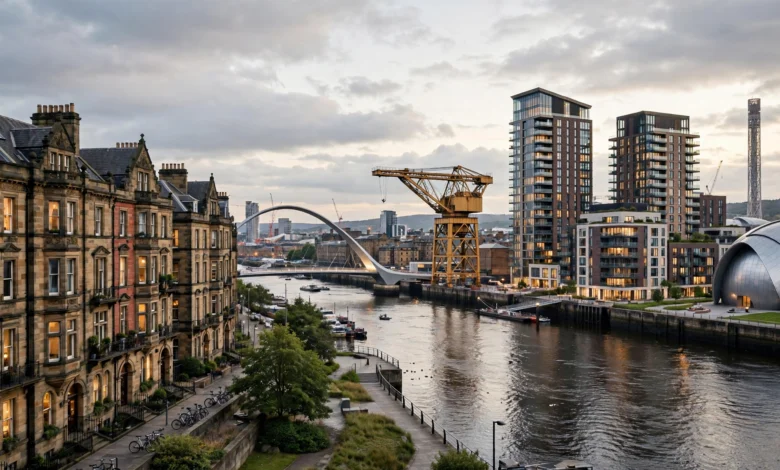
Glasgow property has quietly become one of the better-value stories in the UK. While buyers in London, Edinburgh, and much of southern England face eye-watering prices, Scotland’s largest city still offers handsome tenement flats, sandstone terraces, and riverside new builds for a fraction of the cost. Average prices in Glasgow sit below even the Scottish average, yet the city has two major universities, a growing tech and creative scene, and one of the strongest rental markets in the country.
The question most buyers ask isn’t whether Glasgow is affordable. It’s where to buy before everyone else catches on. The West End and Finnieston already carry premium price tags. The real opportunities now sit in neighbourhoods that are changing fast: places with new bridges, regeneration money, better transport, and a fresh wave of cafés, studios, and young residents moving in.
This Glasgow property guide looks at ten up-and-coming areas in Glasgow worth watching in 2026. For each one, you’ll see what’s driving change, who it suits, and what to be careful about. We’ll also cover the state of the Glasgow property market, the signs that an area is genuinely on the rise, and practical tips on Scottish buying costs like the Home Report and LBTT.
Whether you’re a first-time buyer looking for space, a landlord chasing rental yield, or a long-term investor betting on regeneration, this guide will help you narrow your search to the neighbourhoods with real momentum.

The Glasgow Property Market in 2026
Before zooming in on individual neighbourhoods, it helps to understand the bigger picture. The Glasgow property market in 2026 is steady rather than spectacular, which is arguably good news for buyers.
Glasgow House Prices
According to the ONS house price data for Glasgow, which draws on Registers of Scotland figures, the average house price in Glasgow was about £194,000 in July 2026 (provisional), up 2.6% on a year earlier. That’s slightly below the Scottish average of around £196,000 and far below the Great Britain average.
A few other points stand out from the same data:
- First-time buyers paid about £174,000 on average in Glasgow in July 2026.
- Semi-detached homes rose fastest, up around 5.4% over the year, as families competed for space.
- Flats rose more slowly, by about 1.7%, which keeps many tenement and new-build flats within reach of first-time buyers.
In short, prices are rising gently, not racing ahead. That gives buyers time to research rather than panic-bid.
Glasgow Rental Market
The rental side is where Glasgow really shines for investors. The Citylets Glasgow rental report for Q2 2026 put the average advertised rent at about £1,211 a month, with one-bedroom flats around £912 and two-bedroom flats around £1,211. Rents rose only about 1% over the year, but they’re up roughly 37% over five years.
That slowdown matters. After years of sharp rent growth, tenants have become more price-sensitive, so landlords now need to buy in areas where demand is broad and lasting, not just fashionable.
What’s Shaping Glasgow Property in 2026
- Regeneration along the Clyde. Riverside sites from Govan to the city centre are being transformed with new homes, bridges, and public spaces.
- Better connections. The Govan–Partick bridge, upgraded rail stations, and long-term plans for the Clyde Metro are reshaping which areas feel well connected.
- University and student demand. The University of Glasgow, Strathclyde, Glasgow Caledonian, and the city’s art and music schools keep rental demand strong.
- Housing supply pressure. Glasgow City Council declared a housing emergency in 2023, and limited supply continues to support prices and rents.
- Rental regulation. Scotland’s evolving private rented sector rules, including new powers for rent control areas, are something every landlord needs to watch.
What Makes a Glasgow Neighbourhood Up-and-Coming?
“Up-and-coming” gets used loosely in property marketing. Before trusting the label, look for real evidence. These are the signs that an area is genuinely on the way up:
- Public investment. New bridges, stations, schools, parks, or council-backed regeneration plans usually come before private investment.
- Transport improvements. Shorter journey times to the city centre or the West End tend to push up demand quickly.
- New independent businesses. Coffee shops, bakeries, breweries, studios, and small restaurants often signal a shift in who lives there.
- Rising rents with steady prices. If rents climb faster than purchase prices, yields improve and investors often follow.
- Spillover from expensive areas. Neighbourhoods next to pricey hotspots like the West End or Southside conservation areas absorb buyers who’ve been priced out.
- Quality housing stock. Red and blond sandstone tenements, period terraces, and well-built new developments hold their appeal over time.
- Falling vacancy and faster sales. Homes that sell or let quickly are a clear sign demand is outrunning supply.
The best opportunities usually tick several of these boxes at once. The ten neighbourhoods below each have at least three or four of them working in their favour.
10 Up-and-Coming Areas in Glasgow to Watch in 2026
These neighbourhoods aren’t ranked by guaranteed returns. They’re ordered roughly by how much momentum they have right now. Prices vary widely street by street, so always compare recent sold prices before making an offer.
1. Govan (G51)
If one area sums up the changing face of Glasgow property, it’s Govan. Once the heart of Clyde shipbuilding, it spent decades in decline. Now it’s one of the most talked-about regeneration stories in the city.
What’s driving change:
- The Govan–Partick bridge, opened in 2024, links Govan directly to Partick, the Riverside Museum, and the West End on foot or by bike.
- Riverside regeneration around Water Row and the old dock areas is bringing new homes and public space.
- The Queen Elizabeth University Hospital, one of Europe’s largest hospital campuses, is a major employer right on the doorstep.
- Govan subway station puts the city centre minutes away.
Who it suits: first-time buyers and investors looking for low entry prices with a clear regeneration story. Govan’s traditional tenements are among the cheapest in the city for their size and proximity to the centre.
Watch out for: quality varies a lot from street to street, and some pockets still face deprivation. Visit at different times of day and check the factor (property manager) and common repair history for tenements.
2. Partick (G11)
Partick sits right next to the West End’s priciest streets but usually costs noticeably less than Hyndland, Dowanhill, or the area around Byres Road. It already has plenty of fans, but the new bridge to Govan has boosted its status as a transport and lifestyle hub.
Why it’s gaining ground:
- Partick interchange combines rail, subway, and bus links in one place, making it one of the best-connected spots in Glasgow.
- Dumbarton Road keeps adding cafés, bars, and independent shops.
- Walkability to Kelvingrove, the University of Glasgow, and Finnieston appeals to students, young professionals, and NHS staff.
Who it suits: buyers who want West End living without the full West End price, and landlords targeting student and professional tenants.
Watch out for: older tenement flats may need roof or stonework repairs, so read the Home Report closely and ask about planned common works.
3. Dennistoun (G31)
In the East End, Dennistoun has steadily shaken off its old reputation. Its grand red sandstone tenements, tree-lined streets, and short walk to the city centre make it one of the best-value areas for character homes.
What makes it attractive:
- Duke Street and Alexandra Parade are home to a growing mix of independent cafés, delis, and restaurants.
- Alexandra Park offers a large green space close by.
- Rail links from Duke Street and Bellgrove stations get you into town in minutes.
- Proximity to the city centre and the Merchant City means many residents can walk or cycle to work.
Who it suits: first-time buyers and young families who want space and period features at a lower price than the West End or Southside.
Watch out for: popularity has already pushed prices up on the best streets. Look at the edges of the neighbourhood for better value.
4. Shawlands (G41)
On the Southside, Shawlands has long been popular, but it’s entering a new phase. Investment in the town centre, along with steady demand from people priced out of the West End, keeps it firmly on buyers’ radars.
Why people are moving here:
- Town centre improvements around Shawlands Cross and Kilmarnock Road have made the main street more pleasant and pedestrian-friendly.
- Queen’s Park and Pollok Country Park are both close, offering some of the best green space in the city.
- Strong food and drink scene with a mix of independent restaurants, bakeries, and bars.
- Neighbouring areas like Strathbungo and Battlefield add appeal, with conservation-area terraces and characterful streets.
Who it suits: families, couples, and professionals who want a community feel with good schools and parks.
Watch out for: competition for good flats can be fierce, so be ready to move quickly and set a firm budget before closing dates.
5. Tradeston (G5)
Tradeston sits on the south bank of the Clyde, directly across from the city centre. For years it was largely offices and empty land. Now it’s one of the fastest-changing districts in Glasgow.
What’s driving change:
- Major employment nearby, including large office campuses that bring thousands of workers to the area.
- New-build and build-to-rent developments with modern amenities and river views.
- The Tradeston pedestrian bridge links directly to the city centre and Anderston.
- Walking distance to Central Station, the Merchant City, and the IFSD business district.
Who it suits: young professionals, buy-to-let investors, and anyone who wants modern city-centre living with a short commute.
Watch out for: new-build flats often come with service charges, and resale values can depend heavily on how much competing supply arrives nearby.
6. Laurieston and the Gorbals (G5)
Few places in Glasgow have been through as many reinventions as the Gorbals. Today, the Laurieston regeneration has replaced much of the old housing with a mix of new homes, public art, and green space, all a short walk from the city centre across the river.
Why it’s worth a look:
- Large-scale regeneration has delivered new private and social housing in a planned, mixed community.
- Cultural anchors like the Citizens Theatre, which has undergone a major refurbishment, give the area a strong identity.
- Bridges and walkability connect it to the Merchant City and the city centre in minutes.
- Prices remain lower than in many comparable city-centre locations.
Who it suits: buyers who want to live close to town at a lower price, and investors targeting city-centre workers and students.
Watch out for: the area is still a mix of old and new, and some streets feel more finished than others. Check which phase of development a property sits in.
7. Sighthill (G21)
Sighthill is home to one of the largest regeneration projects in Scotland. The old high-rise estate has been cleared and replaced with new streets, homes, a modern school campus, parkland, and a landmark pedestrian bridge over the M8 linking the area directly to the city centre.
What makes it interesting:
- A brand-new neighbourhood being built from the ground up with modern homes and infrastructure.
- The M8 bridge turns what used to feel like a cut-off area into a short walk from Buchanan Street and the city centre.
- Education campus and public spaces are designed to attract families.
- Nearby Port Dundas and the canal area are also seeing investment.
Who it suits: long-term buyers and investors comfortable betting on an area that’s still taking shape.
Watch out for: this is a longer-term play. Amenities and resale demand are still building, so don’t expect quick gains.
8. Maryhill and the Canal Corridor (G20)
The Forth and Clyde Canal has become one of Glasgow’s quiet success stories. Around Maryhill, Hamiltonhill, and the Speirs Locks creative quarter, old industrial land is being turned into homes, studios, and event spaces.
Why it’s on the rise:
- Canal regeneration has created walking and cycling routes, waterside housing, and creative venues.
- Spillover from the West End and North Kelvinside brings buyers looking for value just a short hop from Byres Road.
- Rail stations at Maryhill and Gilshochill connect to the city centre.
- Larger homes for the money compared with the nearby West End.
Who it suits: buyers who want more space at a lower price and like the idea of living near water and green routes.
Watch out for: Maryhill is a large area with mixed housing quality. The streets nearest the canal and the West End border tend to perform best.
9. Calton and the Barras (G40)
Just east of the city centre, Calton and the area around the famous Barras market have been getting a fresh look. Venues, bars, makers’ spaces, and new homes are appearing alongside long-established local businesses.
What’s driving change:
- The Barras regeneration has turned the historic market area into a hub for food, music, and weekend events.
- Proximity to the Merchant City and Glasgow Green makes it walkable to town and the river.
- New residential projects are bringing modern flats to an area with historically low prices.
Who it suits: investors looking for an early-stage opportunity, and buyers who want city-fringe living on a budget.
Watch out for: the area is still early in its turnaround, and some parts face real social challenges. Research individual streets carefully.
10. Cessnock, Ibrox and Kinning Park (G51)
This cluster on the Southside, between Govan and Tradeston, often gets overlooked. That’s exactly why it’s interesting. It benefits from the same regeneration pressure as its neighbours but usually costs less.
Why it deserves attention:
- Two subway stations (Cessnock and Kinning Park) offer quick access to the city centre and West End.
- Pacific Quay, home to major broadcasters and the Glasgow Science Centre, is close by.
- Kinning Park has a growing independent scene, including cafés and creative workspaces.
- Traditional tenements at prices below the city average.
Who it suits: first-time buyers and landlords looking for well-connected, affordable flats.
Watch out for: match days near Ibrox Stadium bring crowds and traffic, which matters if you’re close to the ground.
Up-and-Coming Glasgow Neighbourhoods Compared
| Neighbourhood | Postcode | Best for | Main growth driver | Main watch-out |
|---|---|---|---|---|
| Govan | G51 | First-time buyers, investors | Govan–Partick bridge, riverside regeneration | Uneven street quality |
| Partick | G11 | West End lifestyle on a budget | Transport interchange, West End spillover | Tenement repair costs |
| Dennistoun | G31 | Period homes, young families | Independent scene, city-centre access | Best streets already pricier |
| Shawlands | G41 | Families, professionals | Town centre investment, parks | Strong competition |
| Tradeston | G5 | Young professionals, buy-to-let | Office campuses, new builds | Service charges, new supply |
| Laurieston and Gorbals | G5 | City-fringe value | Planned regeneration | Mixed old and new streets |
| Sighthill | G21 | Long-term investors | Large-scale regeneration, M8 bridge | Amenities still developing |
| Maryhill and canal | G20 | Space for the money | Canal regeneration, West End spillover | Mixed housing quality |
| Calton and Barras | G40 | Early-stage investors | Barras revival, city-centre proximity | Early in turnaround |
| Cessnock, Ibrox, Kinning Park | G51 | Affordable flats | Subway links, Pacific Quay | Match-day disruption |
How Buying Property in Glasgow Works
If you’re new to Scotland, the buying process can feel unfamiliar. It’s different from England in several important ways, and understanding them can save you money and stress.
The Home Report
Most homes for sale in Scotland come with a Home Report, prepared by the seller before marketing. It includes a survey and valuation, an energy performance certificate, and a property questionnaire. Read it closely. It tells you the surveyor’s valuation, flags repairs by category, and often reveals issues with roofs, damp, or common parts of a tenement.
“Offers Over” and Closing Dates
Many Glasgow homes are advertised at “offers over” a set price. In popular areas, the final sale price can end up above the Home Report valuation. When several buyers are interested, the selling agent may set a closing date, and everyone submits a sealed offer through their solicitor. Your offer is usually your one shot, so decide your maximum in advance.
The Role of Your Solicitor
In Scotland, your solicitor submits your offer and negotiates the legal contract, known as the missives. Once missives are concluded, the deal is legally binding for both sides. That means less chance of being gazumped than in England, but also less room to pull out.
Land and Buildings Transaction Tax (LBTT)
Scotland uses LBTT instead of Stamp Duty. At the time of writing, standard residential rates start at 0% on the first £145,000, and first-time buyers get relief that raises the nil-rate band to £175,000. Buy-to-let investors and second-home buyers pay an extra Additional Dwelling Supplement (ADS), currently 8% of the full purchase price. Rates can change, so check the latest figures on the Revenue Scotland LBTT guidance before you budget.
Tenement Factors and Common Repairs
Many Glasgow flats sit in tenements with shared roofs, stairwells, and back courts. These are usually managed by a factor, who organises repairs and charges each owner a share. Ask about the factoring fee, any upcoming common works, and whether a building repair fund exists. Major roof or stonework repairs can cost thousands per flat.
Tips for Buying in Up-and-Coming Glasgow Areas
Buying early in a rising neighbourhood can pay off, but only if you choose carefully. These tips apply to all ten areas above:
- Walk the area at different times. Visit on a weekday morning, a weekend afternoon, and an evening to get a real feel for it.
- Compare sold prices, not asking prices. Registers of Scotland data and property portals show what homes actually sold for.
- Follow the regeneration plans. Glasgow City Council publishes local development and regeneration frameworks. Projects that are funded and under way matter more than ideas on paper.
- Buy near the good stuff. Streets close to stations, parks, and main shopping streets usually hold value best.
- Check transport times yourself. Do the commute you’d actually make before committing.
- Think about resale. Two-bedroom flats in good condition near transport tend to appeal to the widest pool of buyers and tenants.
- Get a mortgage agreement in principle early. In a closing-date situation, sellers favour buyers who are ready to proceed.
Risks to Consider Before Investing in Glasgow Property
Even the most promising neighbourhood carries risks. Go in with realistic expectations.
Regeneration Can Take Longer Than Expected
Large projects often run years behind schedule or change shape along the way. If your plan depends on a new station, bridge, or development, make sure you can wait if it’s delayed.
Rental Regulation in Scotland
Scotland has tightened private renting rules in recent years, including powers for local councils to introduce rent control areas. If you’re buying to let, factor in possible limits on rent increases, stricter standards on damp and repairs, and licensing requirements. Speak to a local letting agent or adviser before buying.
Interest Rates and Affordability
Mortgage rates still have a big effect on what buyers can afford. A rise in rates can cool demand, especially in areas that rely heavily on first-time buyers.
Older Building Costs
Tenements are beautiful but old. Many need ongoing maintenance, and energy efficiency upgrades can be costly. Budget for repairs on top of your purchase price.
Gentrification Isn’t Guaranteed
Some areas tipped as “the next big thing” never quite arrive. Buy somewhere you’d be happy living or letting even if prices only rise in line with the wider city.
This guide is general information, not financial, legal, or tax advice. Talk to a solicitor, mortgage adviser, or independent financial adviser about your own situation.
Conclusion
Glasgow property offers something increasingly rare in the UK: good homes, strong rental demand, and real regeneration at prices that still sit below the Scottish average, with the city’s typical home costing around £194,000 in mid-2026 and average rents above £1,200 a month. The best opportunities now lie beyond the established West End and Finnieston, in neighbourhoods like Govan and Partick, newly linked by their bridge; Dennistoun and Shawlands with their period tenements and lively high streets; Tradeston and Laurieston on the south bank close to the city centre; long-term regeneration plays like Sighthill, the Maryhill canal corridor, and Calton; and well-connected, affordable pockets such as Cessnock and Kinning Park. Each comes with its own trade-offs, so look for funded public investment, good transport, and quality housing stock, read every Home Report carefully, budget for LBTT and tenement repairs, keep an eye on Scotland’s changing rental rules, and buy somewhere you’d be happy to own even if growth arrives more slowly than expected.