Madrid Property Guide 2026: Central vs Suburban Living and 7 Essential Tips for a Smart Buy
Madrid property prices hit records in 2026. Compare central and suburban living on cost, space, commutes, and lifestyle before you buy.

Madrid property has become one of the hottest topics in European real estate, and for good reason. The Spanish capital offers sunshine, a deep job market, excellent public transport, and a lifestyle that keeps drawing people from across Spain and around the world. It also has record-high prices, with the city average now well above €6,000 per square metre.
That creates a real dilemma for buyers. Do you pay a premium to live in the heart of the city, where you can walk to tapas bars, parks, and museums but might have to settle for a smaller flat? Or do you look to the suburbs, where your money stretches further, you might get a garden or a pool, and the trade-off is a daily commute?
There is no single right answer. A young professional who lives for city life will make a very different choice from a family with two kids and a dog. What matters is understanding the real differences in cost, space, transport, schools, and daily routine before you commit.
This guide compares central and suburban living in detail. You will find current price data, profiles of the most popular central districts and suburban towns, a side-by-side comparison, and a clear breakdown of taxes and buying costs in the Madrid region. Whether you are relocating, buying your first home, or investing, it will help you decide where your next Madrid property should be.

The Madrid Property Market in 2026
Before comparing neighborhoods, it helps to understand the bigger picture. The Madrid property market has been on a strong run for several years, and 2026 has brought new records.
Prices at a Glance
According to idealista’s July 2026 Madrid price report, asking prices in the city averaged €6,547 per square metre, just 1.1% below the all-time high of €6,619 reached in April 2026. That is more than double the national average of €2,933.
Official transaction data paints a similar story, even if the numbers are a bit lower because they reflect actual sale prices rather than asking prices. Spain’s property registrars put Madrid at €5,283 per square metre in the last quarter of 2025, up nearly 50% in four years and about 17% in a single year. As Catalan News reported, Madrid has now overtaken Barcelona as the more expensive of Spain’s two biggest cities.
Prices Vary Enormously by Area
The city average hides huge differences. Approximate asking prices based on idealista district data from late 2025 and early 2026:
| Area | Approx. Price per m² | Type |
|---|---|---|
| Salamanca | About €10,000 | Central, prime |
| Chamberí | About €8,800 | Central, prime |
| Chamartín | About €7,800 | Central-north |
| Retiro | About €7,700 | Central |
| Centro | About €7,300 | Historic core |
| Carabanchel | About €3,550 | Outer city district |
| Puente de Vallecas | About €3,200 | Outer city district |
| Villaverde | About €2,750 | Outer city district |
Most suburban towns in the wider Community of Madrid sit well below the central districts. Even the priciest commuter towns, such as Pozuelo de Alarcón, have typically been priced at roughly half of what you would pay per square metre in Salamanca, while southern and eastern towns are cheaper still.
What Is Driving Demand
Several forces keep pushing Madrid real estate higher:
- Strong job growth. Madrid is Spain’s economic center, home to corporate headquarters, government, finance, and a growing tech scene.
- Population growth. The region keeps attracting Spaniards from other provinces as well as international residents, especially from Latin America.
- Limited supply. New construction has not kept up with household growth, particularly in the city itself.
- International buyers and investors. Foreign buyers and funds remain active in prime central areas.
- High rents. With rents also at record levels, many tenants decide buying makes more sense, adding to demand.
For buyers, the takeaway is clear: whether you choose central or suburban Madrid property, expect competition for good homes and limited room for bargains in the most popular areas.
Central Madrid Property: Living in the Heart of the City
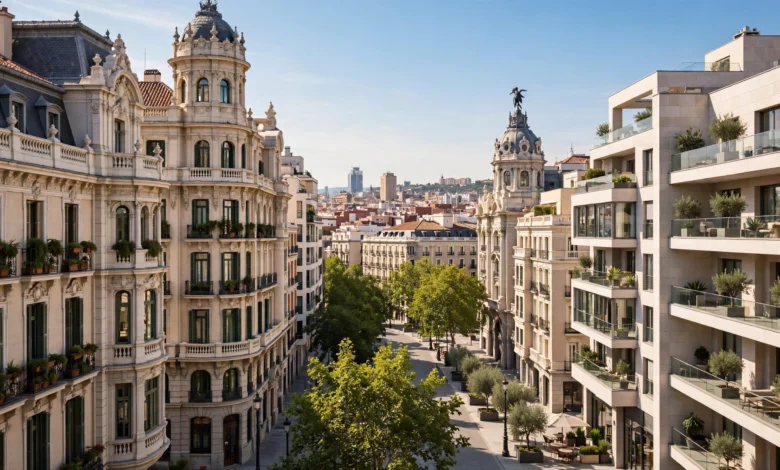
Central Madrid property means living inside or close to the M-30 ring road, in districts like Centro, Salamanca, Chamberí, Retiro, Chamartín, and Arganzuela. This is the Madrid most visitors fall in love with: lively streets, historic buildings, endless restaurants, and the feeling that everything is just around the corner.
The Best Central Neighborhoods
Salamanca. Madrid’s most prestigious district, built in the 19th century on an elegant grid of wide streets. It is known for luxury shopping on Calle Serrano, grand apartment buildings with high ceilings and balconies, and some of the highest prices in Spain. It suits buyers who want classic elegance, top services, and a quieter, more polished version of city life.
Chamberí. Often called the most “Madrileño” of the central districts, Chamberí combines handsome old buildings with a strong local feel. Areas like Trafalgar and Almagro have neighborhood markets, plazas full of families, and plenty of bars. It is popular with professionals and families who want central living without the tourist crowds.
Centro (Malasaña, Chueca, La Latina, Lavapiés). The historic core is packed with character. Malasaña and Chueca are trendy and buzzing at night, La Latina is famous for its tapas and Sunday Rastro market, and Lavapiés is the city’s most multicultural neighborhood. Flats here are often older, smaller, and full of charm, but noise and tourist rentals can be issues.
Retiro. Named after Madrid’s most famous park, Retiro offers green space on your doorstep, classic architecture, and a calmer residential atmosphere. It is a favorite for families and anyone who loves running, walking, or weekend picnics.
Chamartín. North of Salamanca, Chamartín includes upscale residential areas like El Viso, with rare single-family homes, as well as modern apartment blocks near the business district along Paseo de la Castellana. It suits executives and families who want a central address with a bit more space.
Arganzuela. Bordering the Madrid Río park along the Manzanares River, Arganzuela has become a popular alternative for buyers priced out of the classic districts. It offers newer buildings, cultural spaces like Matadero, and easy access to the center.
The Advantages of Central Living
- Walkability. Shops, markets, cafes, gyms, and cultural venues are usually a few minutes away on foot. Many residents do not need a car at all.
- Excellent public transport. Central districts are covered by dense Metro and bus networks, with major train stations at Atocha, Chamartín, and Sol.
- Short commutes. Most of the city’s offices are in or near the center and along the Castellana business axis.
- Lifestyle and culture. World-class museums like the Prado and Reina Sofía, theaters, live music, and Madrid’s famous late-night dining are all close by.
- Strong resale and rental demand. Central Madrid property has historically held its value well and rents easily, which matters if you ever sell or let it out.
The Downsides of Central Living
- High prices and less space. Your budget buys fewer square metres. Many central flats are 60 to 90 square metres, and larger homes command steep premiums.
- Older buildings. Many central properties are in buildings that are 80 to 150 years old. Some lack lifts, have outdated wiring or plumbing, or need costly renovation.
- Noise. Streets in nightlife areas can stay loud well past midnight, especially in summer when windows are open.
- Parking. Private parking is scarce and expensive, and low-emission zone rules limit which cars can enter some areas.
- Tourist rentals. Some central buildings have a high share of short-term rentals, which can change the feel of a community. Madrid has tightened rules on new tourist flats in the center, so check a building’s situation before you buy.
- Limited outdoor space. A small balcony or shared rooftop is often the best you will get.
Who Central Madrid Suits Best
Central living tends to work best for singles, couples, and professionals who value convenience and lifestyle, for empty nesters downsizing from a larger home, and for investors who want strong rental demand. Families can thrive in central districts too, especially in Chamberí, Retiro, and Salamanca, but they usually need a larger budget to get enough space.
Suburban Madrid Property: More Space for Your Money
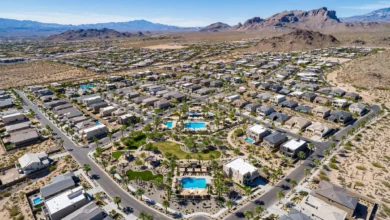
Suburban Madrid property covers the towns of the wider Community of Madrid that surround the capital. Some are leafy, upscale enclaves with villas and international schools. Others are busy working cities with their own centers, universities, and jobs. What they share is more space per euro and a lifestyle built around family, greenery, and the car or commuter train.
The Northwest: Upscale and Family-Focused
Pozuelo de Alarcón, Majadahonda, Las Rozas, and Boadilla del Monte form Madrid’s most affluent suburban belt. These towns offer detached houses and townhouses with gardens and pools, modern apartment complexes with shared amenities, and many of the region’s best-known private and international schools.
Pozuelo is usually the most expensive municipality in the region outside the capital, while Majadahonda and Las Rozas combine good schools with lively town centers and large shopping areas. Commutes into the city by car or Cercanías commuter train typically take 25 to 45 minutes, depending on traffic and destination.
- Best for: Families who prioritize schools, space, and safety
- Watch out for: High prices by suburban standards, and heavy rush-hour traffic on the A-6 and M-40
The North: Business Hubs and Good Connections
Alcobendas, San Sebastián de los Reyes, and Tres Cantos sit north of the city near major business parks and the airport. Alcobendas and La Moraleja, its luxury enclave, are home to many corporate offices, which means some residents can avoid commuting into central Madrid altogether. Tres Cantos is a planned town known for green spaces, safety, and a strong community feel.
- Best for: Professionals working in the northern business parks, and families wanting newer homes
- Watch out for: Premium pricing in La Moraleja and parts of Alcobendas
The South: Value and Strong Transport
Getafe, Leganés, Alcorcón, Móstoles, and Fuenlabrada are large, established cities in their own right, linked to Madrid by Metrosur, Cercanías trains, and fast motorways. They offer some of the most affordable Madrid property in the metropolitan area, with good local services, universities, and hospitals.
- Best for: First-time buyers and families who want space on a tighter budget
- Watch out for: Some neighborhoods are dated, so quality varies by street and building
The East: Growth and Historic Charm
Alcalá de Henares, Torrejón de Ardoz, and Rivas-Vaciamadrid round out the main options. Alcalá is a UNESCO World Heritage city with a historic university and a lively old town. Rivas is popular with young families for its parks and newer developments, while Torrejón offers good value close to the airport corridor.
- Best for: Buyers who want character or new-build value east of the city
- Watch out for: Longer commutes to western and southern parts of Madrid
The In-Between Option: Outer City Districts
Not every budget-conscious buyer needs to leave the city. Districts outside the M-30 such as Carabanchel, Usera, Puente de Vallecas, Ciudad Lineal, and Hortaleza offer Madrid property at far lower prices than the center while keeping Metro access and city services. Some, like Carabanchel and Usera, have become popular with younger buyers and artists, and prices there have been rising quickly.
The Advantages of Suburban Living
- More space. The same budget can buy a home two or three times larger than in the center, often with a terrace, garden, or communal pool.
- Family amenities. Parks, sports facilities, and a large choice of schools are easy to reach.
- Newer buildings. Many suburban homes were built in the last 30 years, with lifts, garages, storage rooms, and better insulation.
- Quieter streets. Less nightlife noise and less tourist traffic.
- Parking. Most homes include a garage space or easy street parking.
The Downsides of Suburban Living
- Commuting time and cost. Daily travel into central Madrid can add an hour or more to your day.
- Car dependence. In many towns, especially in the northwest, a car is close to essential.
- Less spontaneity. Evenings out in the city require more planning, and late-night public transport is limited.
- Community fees. Developments with pools, gardens, and security can carry significant monthly fees.
Central vs Suburban Madrid Property: Side-by-Side
| Factor | Central Madrid | Suburban Madrid |
|---|---|---|
| Price per m² | Highest, often €7,000 to €10,000+ in prime districts | Much lower, roughly half or less in many towns |
| Typical home | Older apartment, 60 to 90 m² | Newer apartment or house, often 100 m² or more |
| Outdoor space | Small balcony, if any | Terraces, gardens, communal pools |
| Transport | Metro and buses everywhere | Cercanías, Metro Ligero, and car |
| Commute to center | Walk or short Metro ride | 25 to 60 minutes |
| Nightlife and culture | On your doorstep | A trip into town |
| Schools | Good options, high demand | Wide choice, including international schools |
| Rental demand | Very strong | Solid, especially near business parks |
How to Choose: 7 Essential Tips for Buying Madrid Property
Once you understand the trade-offs, these seven tips will help you narrow your search and pick the right Madrid property for your life.
- Map your real daily routine. Write down where you work, where your children will go to school, and where you spend your free time. Then test the commute from each shortlisted area at rush hour, not on a quiet Sunday.
- Set a total budget, not just a price. Add taxes, fees, renovation, furniture, and moving costs to the purchase price. In central Madrid, older flats often need updating, which can add tens of thousands of euros.
- Compare price per usable square metre. Spanish listings often show built area (metros construidos), which includes walls and shared spaces. Ask for the usable area (metros útiles) to compare homes fairly.
- Check the building, not just the flat. Ask about the lift, facade, roof, and any planned works. Request the minutes of recent community meetings to see whether large repairs or special charges are coming.
- Think about resale and rental potential. Even if you plan to stay forever, life changes. Homes near Metro or Cercanías stations, with lifts, good light, and outdoor space, are easier to sell or rent.
- Visit at different times. A quiet street at noon can be a party zone at 2 a.m. in Malasaña, and a peaceful suburb can turn into a traffic jam at school drop-off time.
- Consider a trial rental. If you are new to Madrid, renting for six months to a year in your preferred area is the best way to test it before you commit to buying.
Buying Madrid Property: Process, Taxes, and Costs
The buying process is similar whether you choose central or suburban Madrid property, and it is open to foreign buyers. Here is how it typically works.
Step-by-Step Buying Process
- Get an NIE. Every buyer needs a Spanish foreigner identification number (NIE) to buy property, pay taxes, and open a bank account.
- Open a Spanish bank account to handle payments, taxes, and utility bills.
- Arrange financing. Spanish banks lend to both residents and non-residents, though non-residents usually get lower loan-to-value ratios and need a larger deposit.
- Do your legal checks. An independent lawyer should request a nota simple from the Land Registry to confirm ownership, debts, and charges, and check urban planning compliance and community fee status.
- Sign a reservation or deposit contract. Most sales use a contrato de arras, with a deposit often around 10% of the price. If the buyer backs out, the deposit is usually lost. If the seller backs out, they typically return double.
- Complete at the notary. Both parties sign the public deed (escritura) before a notary, and the balance is paid.
- Register and pay taxes. Your lawyer or gestoría pays the taxes and registers the property in your name.
Taxes and Buying Costs in the Madrid Region
Budget for these costs on top of the purchase price:
| Cost | Resale Home | New Build |
|---|---|---|
| Main purchase tax | Transfer tax (ITP), generally 6% in the Community of Madrid | VAT (IVA) at 10% |
| Stamp duty | Not applicable | Stamp duty (AJD), 0.75% in the Madrid region |
| Notary, registry, and gestoría | Roughly 1% to 2% combined | Roughly 1% to 2% combined |
| Legal fees | Often around 1% | Often around 1% |
| Mortgage costs | Valuation and related fees if financing | Valuation and related fees if financing |
All in, many buyers should plan for total costs of roughly 8% to 12% on top of the price for a resale home, and a little more for a new build. Reduced transfer tax rates may be available for certain buyers in some circumstances, so ask your lawyer what applies to you.
Ongoing Costs to Plan For
- IBI (property tax): An annual municipal tax based on the cadastral value of the home.
- Community fees: Monthly charges for shared areas, lifts, porters, gardens, or pools. These tend to be higher in suburban developments with amenities and in central buildings with porters.
- Waste collection fee: Madrid and many other municipalities charge a separate annual waste fee.
- Insurance and utilities: Home insurance is required if you have a mortgage, and older central buildings can have higher heating and maintenance costs.
- Non-resident income tax: Non-residents who own Madrid property generally pay an annual imputed income tax even if the home is not rented out.
Important Notes for Foreign Buyers
Spain ended its golden visa program for property investors in April 2025, so buying a home no longer leads to residency on its own. The government has also floated further restrictions and taxes on non-EU buyers who will not live in the property. Rules in this area are changing, so check the current situation with a Spanish lawyer before you commit. The Spanish Tax Agency’s guidance for non-residents is a useful starting point for understanding ongoing tax obligations.
FAQs About Madrid Property
Is Madrid property a good investment in 2026?
Madrid property has delivered strong price growth and rental demand in recent years, supported by jobs, population growth, and limited supply. Prices are now at record levels, though, so future gains may be slower. Central homes tend to hold value best, while some outer districts and suburbs offer more room to grow. This is general information, not financial advice.
Is it cheaper to buy Madrid property in the suburbs?
Yes, in most cases. Suburban Madrid property typically costs much less per square metre than the central districts, so the same budget buys more space. Factor in commuting costs, a possible second car, and community fees to compare the full cost fairly.
Can foreigners buy Madrid property?
Yes. Foreigners can buy Madrid property with an NIE and a Spanish bank account. The golden visa for property buyers ended in April 2025, and new restrictions for non-EU, non-resident buyers have been discussed, so check the current rules with a lawyer before buying.
What are the best suburbs of Madrid for families?
Pozuelo de Alarcón, Majadahonda, Las Rozas, Boadilla del Monte, Tres Cantos, and Alcobendas are popular with families for their schools, safety, and space. Rivas-Vaciamadrid and parts of the southern cities offer more affordable family-friendly options.
How much does it cost to buy Madrid property in total?
On top of the price, plan for roughly 8% to 12% in taxes and fees for a resale home, mainly the 6% transfer tax plus notary, registry, legal, and gestoría costs. New builds carry 10% VAT plus 0.75% stamp duty instead of transfer tax.
Which central Madrid neighborhoods are best for living?
Chamberí and Retiro are favorites for a balanced, residential feel. Salamanca offers elegance and prestige, Malasaña and Chueca suit people who love nightlife, and La Latina appeals to anyone who wants traditional Madrid character.
Conclusion
Choosing between central and suburban Madrid property comes down to what you value most in daily life. With city asking prices averaging around €6,500 per square metre in 2026 and prime districts like Salamanca and Chamberí reaching €8,800 to €10,000, central living offers unmatched walkability, culture, short commutes, and strong resale and rental demand, but usually in smaller, older flats with little outdoor space. The Madrid suburbs, from upscale Pozuelo de Alarcón, Majadahonda, and Las Rozas to business-friendly Alcobendas and value-rich Getafe and the southern cities, give you far more space, newer buildings, gardens, and family amenities in exchange for longer commutes and more reliance on the car, while outer city districts like Carabanchel and Usera offer a middle ground. Whichever you choose, map your real routine, budget for the full cost including the 6% transfer tax or 10% VAT and fees, check the building as carefully as the flat, and get independent legal advice, especially as a foreign buyer now that the golden visa has ended. With clear priorities and careful due diligence, your next Madrid property can fit both your budget and the life you want to live in Spain’s capital.