Brisbane Property Guide 2026: 10 Proven Insights on Brilliant River Suburbs and Rising Values
Brisbane property guide covering river suburbs, 2026 prices, flood checks, transport links and buying costs for home buyers and investors.

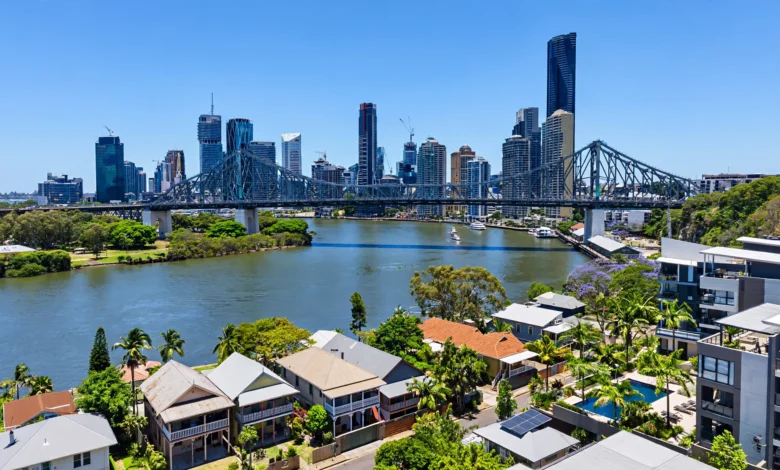
Brisbane property has had one of the most remarkable runs of any Australian city this decade. A few years ago, people talked about Brisbane as the affordable alternative to Sydney and Melbourne. That label no longer fits. Median values have crossed the million-dollar mark, riverfront streets regularly set new records, and the 2032 Olympics keep the city in the national spotlight.
The river sits at the heart of it all. It winds through the city in wide loops, creating peninsulas of leafy streets, old Queenslanders, converted wool stores and glassy apartment towers. Suburbs like New Farm, Bulimba, Hawthorne and Chelmer command serious premiums because of that water frontage, the CityCat stops and the lifestyle that comes with them.
But the river brings risk too. The 2011 and 2022 floods reminded everyone that a beautiful outlook and a flood overlay can share the same address.
This guide is for anyone thinking about Brisbane river suburbs, whether you are buying your first home, upgrading for a growing family, relocating from interstate or building an investment portfolio. We look at where values stand in 2026, how the main river pockets compare, what flood checks to run, which infrastructure projects matter, and what buying will really cost you.

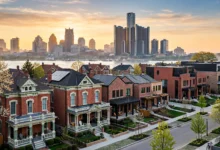
The goal is simple: to help you make a clear, well-informed decision about Brisbane property without the sales pitch.
Where the Brisbane Property Market Stands in 2026
Before looking at individual suburbs, it helps to know where the wider Brisbane property market is right now, because the picture has shifted during 2026.
After years of strong gains, values peaked in May. Cotality figures show the Brisbane dwelling median at $1,080,142 in August 2026, after a 1.0% fall that month and a 2.7% drop over the quarter. Values were still 10.8% higher than a year earlier. The long-run story remains strong: Brisbane recorded 64.1% growth from trough to peak over the past five years.
Houses and units are now priced very differently. At the end of July 2026, Cotality put the Brisbane median house value at $1,207,039 and units at $875,135.
What does this mean for buyers?
- More negotiating room. Auction clearance rates have been soft. In the week ending 6 September 2026, Brisbane’s clearance rate was just 25.9%.
- Interest rates matter again. Rate rises this year have tightened borrowing capacity, and some lenders expect further moves.
- Premium homes are feeling it most. In the latest Cotality data, the top end of the market saw the sharpest declines, while units held up better than houses.
- Long-term demand is intact. Population growth, limited new supply and major infrastructure still support Brisbane property values over time.
In plain terms, 2026 is the first year in a while where buyers are not automatically on the back foot. That makes it a good time to do careful homework, especially in the river suburbs, where prices are highest and due diligence matters most. For monthly updates, the Cotality Home Value Index is the standard reference used by banks and analysts.
Why River Suburbs Lead Brisbane Property Values
Why do buyers pay so much more to live near the water? It comes down to a handful of things that are hard to replicate anywhere else in the city.
Lifestyle and Outlook
Brisbane is a subtropical city built around outdoor living. River suburbs give you riverside paths for running and cycling, parks right on the water, and views that change from morning mist to evening city lights. New Farm Park, the Bulimba riverfront and the long river walks through Toowong and St Lucia are part of daily life for locals, not just weekend outings.
Transport by Water
The CityCat and ferry network turns the river into a commuter route. A home within a short walk of a ferry terminal means you can get to the CBD without a car or a train, and many buyers value that more than a garage.
Scarcity
Riverfront land is finite. Much of it was built on decades ago, so new supply mostly comes from apartments or the rare knock-down rebuild. That scarcity keeps a floor under riverfront homes Brisbane buyers compete for, even when the wider market cools.
Prestige and Schools
Several river pockets sit close to well-regarded private and state schools, which adds a family premium on top of the lifestyle premium.
Brisbane River Suburbs Compared: The Main Pockets
The river creates several distinct markets. Here is how the main groups compare.
Inner City: New Farm, Teneriffe and Kangaroo Point
These are the top-tier inner-city river suburbs. New Farm mixes restored Queenslanders, character cottages and riverfront apartment complexes, with cafés, parks and the Powerhouse arts centre on its doorstep. Teneriffe is known for converted wool stores, warehouse apartments and grand houses along the water.
Prices here sit at the very top of the Brisbane property ladder. In mid-2025, Domain reported New Farm as Brisbane’s most expensive suburb, with a house median of $2.95 million. Another 2026 guide puts Teneriffe’s median house price at around $3.7 million, noting that the house stock is very limited because most of the land was developed long ago. Different data providers measure these small markets differently, so treat any single median as a guide, not a rule.
Kangaroo Point offers something different: clifftop and riverside apartments with some of the best city views in Brisbane. The Kangaroo Point Green Bridge has also made walking and cycling into the CBD much easier.
Best for: professionals, downsizers and anyone who wants walkable, apartment-style city living.
The Inner East: Bulimba, Hawthorne, Balmoral and Norman Park
Across the river from New Farm, this group is the family heartland of the river suburbs. Bulimba’s Oxford Street is one of the city’s favourite village strips, with restaurants, shops and a cinema, and a ferry terminal at the end. Hawthorne is the quieter neighbour, with leafy streets and bigger blocks.
Recent figures show just how prized these suburbs are. A June 2026 analysis placed Hawthorne’s median house price at $2,300,000 and Bulimba’s at $2,225,000, both after strong annual growth. Hawthorne is quieter than Bulimba partly because no major arterial or state-controlled roads run through it, which gives it a village feel.
Balmoral and Norman Park offer similar access to the river and the city, often at slightly lower entry points, though “lower” is relative in this part of town.
One caution: river flooding affects parts of Bulimba, and buyers should check Council flood mapping and property-level overlays before buying. That applies to much of the inner east.
Best for: families, upgraders and buyers who want a big backyard close to the CBD.
The North Bank: Hamilton and Ascot
Hamilton runs along the northern bank with a mix of grand hillside homes, riverfront apartments and the newer Northshore precinct. Ascot sits just behind it, famous for its racecourse, heritage homes and old-money appeal. Hamilton’s hills matter here: many of the best homes sit well above flood levels with long river views, which is exactly the combination buyers want.
Best for: established families and prestige buyers who want views, elevation and top schools nearby.
The West: Toowong, St Lucia, Indooroopilly and Taringa
This belt surrounds the University of Queensland and the big Indooroopilly shopping and transport hub. St Lucia is bordered by the river on three sides and is popular with academics, students and families. Toowong offers riverside apartments, good train access and quick trips to the city.
Rental demand here is strong because of the university and hospital workforce, which makes the western river suburbs a favourite with investors. Values are generally below the inner-city and inner-east peaks, though riverfront homes in St Lucia and Indooroopilly still fetch prestige prices.
Best for: investors, academics, students’ parents and anyone who wants good transport and shopping.
The Leafy South West: Chelmer, Graceville, Sherwood and Fig Tree Pocket
Further upstream, these suburbs feel almost like a country town inside the city. Big blocks, jacaranda-lined streets, character Queenslanders and quiet riverside parks are the draw. Chelmer and Graceville are especially sought after by families.
The trade-off is flood exposure. Parts of these suburbs were hit hard in 2011 and again in 2022. Prices often vary sharply from one street to the next depending on elevation, so the same suburb can hold both flood-clear premium homes and heavily affected ones.
Best for: families who want space and a slower pace, and who are willing to do thorough flood checks.
The Inner South: West End, South Brisbane and Yeronga
West End is Brisbane’s creative, café-filled inner suburb, with a mix of apartments, workers’ cottages and warehouse conversions. South Brisbane sits next to South Bank’s parklands and cultural precinct. Both are very walkable, but low-lying pockets are known for flood exposure, with West End and South Brisbane often named among the more vulnerable areas near the river. Yeronga, further south, offers a quieter family option with river parks and larger blocks.
Best for: renters, young professionals and apartment buyers who value culture and walkability.
Flood Risk: The Most Important Brisbane Property Check
If there is one section of this guide to read twice, it is this one. Flood risk can affect your safety, your insurance premium, your loan and your future resale value. Every serious Brisbane property buyer near the river needs to run these checks.
Understand the Four Types of Flooding
Brisbane City Council’s Flood Awareness Map covers four sources of flooding: river flooding, creek and waterway flooding, storm tide, and overland flow from stormwater during heavy rain. Many buyers only think about the river. Overland flow can affect homes nowhere near the water, and it catches people out every storm season.
Get the FloodWise Property Report
The single most useful tool is Council’s free FloodWise Property Report. It is specific to the address, giving flood levels in metres AHD and the minimum habitable floor level. It covers river, creek and waterway flooding, storm tide and overland flow.
The report shows flood levels across five likelihood bands, from a 0.2% chance per year to a 20% chance per year. The key number to compare is the minimum habitable floor level, which in Brisbane is the 1% AEP flood level for the highest source plus a 0.5 metre buffer. If the home’s floor sits below that level, factor it into your offer.
Check Insurance Before You Commit
Get a real insurance quote before signing a contract, not after. In higher-risk areas, insurers may charge much higher premiums or decline flood cover altogether. A property that is cheap to buy but costly to insure may not be cheap at all.
Talk to Your Lender
Banks look at flood risk too. A lender may ask for a flood report, a new valuation, proof of floor levels and evidence of insurance. A lower valuation can push up your loan-to-value ratio, which can mean a bigger deposit or lenders mortgage insurance.
Remember That Floods Do Not Always Hurt Values Long Term
This is the part that surprises people. Cotality’s review four years after the February 2022 floods found that affected coastal south-east Queensland suburbs usually recovered within 18 months and now sit about 31% above pre-flood values. That does not make flood risk irrelevant. It means the risk shows up mostly in your costs, your stress and your insurance, rather than always in long-term capital growth.
A simple flood checklist for any river suburb:
- Look up the address on the Flood Awareness Map.
- Download the FloodWise Property Report.
- Compare the floor level of the home against the minimum habitable floor level.
- Ask the seller and neighbours whether the home flooded in 2011 or 2022.
- Get two or three insurance quotes.
- Confirm your lender is comfortable with the report.
- Check whether the home has been raised, restumped or flood-proofed.
Brisbane Property Types in the River Suburbs
What you can buy near the river varies a lot, and the type of home affects both your lifestyle and your flood exposure.
- Traditional Queenslanders. Timber homes raised on stumps, with verandahs and high ceilings. Many have been lifted and built in underneath, which adds space but can place living areas lower if done poorly.
- Post-war and character cottages. Smaller timber homes on compact blocks, popular for renovation.
- Modern architect-designed homes. Often knock-down rebuilds on premium blocks, built to current flood standards.
- Wool store and warehouse conversions. Found mostly in Teneriffe and Newstead, with high ceilings and exposed brick.
- Riverfront apartments. From boutique blocks to large towers, especially in Kangaroo Point, Hamilton, Toowong and South Brisbane.
- Townhouses. A growing middle option for families who cannot stretch to a detached house.
As Brisbane house prices have passed $1 million, apartments and townhouses have become a real alternative entry point for owner-occupiers and investors who want inner and middle-ring locations without the cost of a house. For many first home buyers, a unit near the river is now a more realistic path into a premium suburb than a house further out.
Infrastructure Driving Brisbane Property Growth
Big projects change how people move around a city, and that changes what they will pay to live in certain spots. Here are the projects most relevant to Brisbane property buyers in 2026.
Cross River Rail
This underground rail line will add new CBD stations and a second river crossing for trains. Once it opens, it is expected to improve travel times across the network, especially for suburbs near the new stations at Woolloongabba, Boggo Road and Albert Street. Suburbs close to these stations often see stronger interest in the years leading up to opening.
Brisbane Metro and Green Bridges
The Brisbane Metro high-frequency bus service links key suburbs with the city, and the new green bridges give walkers and cyclists more direct routes across the river. For inner-city buyers, these make car-free living much easier.
The 2032 Olympic and Paralympic Games
The Games have become part of Brisbane’s growth story. Beyond the venues themselves, they are speeding up spending on transport, public spaces and housing. Some analysts point out that Brisbane house prices are already well above the national average, and compare this run to Sydney’s before the 2000 Games. It is worth being careful here: the Olympics are one factor among many, and buying purely on Olympic hype is risky.
Supply Constraints
Supply may matter more than any single project. CBRE forecasts only about 3,100 new inner-city dwellings a year from 2026 to 2031, well short of the demand implied by population growth. Tight supply in the river suburbs, where land is scarce, is a big reason values have held up.
Buying Costs Every Brisbane Property Buyer Should Budget For
The purchase price is only the start. Here is what else to plan for.
Transfer Duty (Stamp Duty)
Queensland charges transfer duty on most property purchases, and the amount depends on the price and whether you will live in the home. Owner-occupiers can often claim the home concession rate, which lowers the bill compared with investors.
First Home Buyer Concessions
First home buyers have some of the most generous help in the country. Since 1 May 2025, eligible first home buyers purchasing a new home or vacant land to build on can get a full concession that reduces duty to nil. For established homes, the first home concession applies to homes under $800,000 and can save up to $24,525.
One important change for 2026: from 1 August 2026, buyers must be Australian citizens, permanent residents or specified foreign retirees to qualify for home concessions. Always check the latest rules with the Queensland Revenue Office’s first home concession page before you sign.
Many river suburb houses sit well above the $800,000 concession limit, so first home buyers in these areas are more likely to benefit from the new-home exemption on apartments or townhouses.
Foreign Buyer Duty
If you are a foreign buyer, an additional foreign acquirer duty applies on top of standard duty. Budget for it early, because it adds a significant amount.
Other Costs
- Conveyancing and legal fees for reviewing contracts and settling.
- Building and pest inspections, which are essential for older timber homes.
- Flood and structural reports if the home has been raised or flooded before.
- Loan costs, including lenders mortgage insurance if your deposit is under 20%.
- Body corporate fees for apartments and townhouses, which can be high in riverfront towers with pools, lifts and concierge services.
- Insurance, which can be much higher near the river.
Brisbane Property Investment: Rents and Yields
Investors have done well in Brisbane, and rental demand remains solid in 2026.
Rents have kept rising. House rents are up about 6.7% over the past year and unit rents about 5.6%. Vacancy is a little looser than it was, though. Brisbane’s rental vacancy rate of 1.9% is now equal highest among the capital cities alongside Sydney, which means tenants have a bit more choice than during the peak rental squeeze.
Yields tell an important story for river suburb investors. Across Brisbane, unit gross rental yields sit around 4.0%, compared with about 3.2% for houses. In premium river suburbs, yields on houses are often lower still, because prices have risen faster than rents. That means investors buying riverfront houses are usually betting on capital growth, while unit investors get a better balance of income and growth.
Some tips for Brisbane property investment near the river:
- Target homes close to ferry stops, universities and hospitals, where tenant demand is strongest.
- Check body corporate finances and any planned special levies before buying an apartment.
- Factor flood insurance into your cash flow, not just your purchase decision.
- Compare the building’s owner-occupier mix, since heavily investor-owned blocks can see slower growth.
- Speak with an accountant about how recent federal tax changes affect your plans.
Old Houses Near the River: What to Inspect
Many of the most charming homes in the river suburbs are also the oldest. Timber Queenslanders are beautiful, but they need careful inspection.
Watch for these common issues:
- Termite damage in stumps, floors and walls.
- Stump condition and whether the home has been properly restumped.
- Unapproved building work, especially where the space under a raised home has been built in.
- Rot and moisture in verandahs, window frames and around bathrooms.
- Asbestos in older linings, eaves and bathrooms.
- Heritage and character overlays that limit demolition or major changes.
Brisbane City Council has character protections in many older suburbs, meaning you may not be able to knock down a pre-1947 home or change its street appearance freely. If your plan is to demolish and rebuild, check the overlays before you buy, not after.
How to Choose the Right Brisbane River Suburb for You
With so many options, it helps to match suburbs to your priorities.
If You Want Walkable City Living
Look at New Farm, Teneriffe, Kangaroo Point and West End. Apartments and townhouses dominate, and you can reach the CBD on foot, by bike or by CityCat.
If You Have a Young Family
Consider Bulimba, Hawthorne, Norman Park, Chelmer and Graceville. You get bigger blocks, parks and schools, though you must check flood exposure street by street.
If You Want Prestige and Views
Hamilton, Ascot, Teneriffe and elevated parts of Hawthorne and St Lucia offer grand homes, long views and strong resale appeal.
If You Are Investing
The western suburbs around the university, plus apartments in Toowong, Kangaroo Point and South Brisbane, offer steady tenant demand and better yields than riverfront houses.
If You Are on a Tighter Budget
Look at units in river suburbs or houses in the suburbs one or two streets back from the river. You still get the lifestyle, often with lower prices and lower flood risk.
A Viewing Checklist for River Suburb Homes
Take this list to every inspection:
- Download the FloodWise Property Report before you view.
- Check floor levels against the minimum habitable floor level.
- Ask directly whether the home flooded in 2011 or 2022.
- Look under the house for water marks, rust and damp.
- Walk to the ferry and time the trip.
- Visit at peak hour to see traffic on nearby roads.
- Check for noise from bars, events, flight paths or river traffic.
- Book building, pest and structural inspections before your contract goes unconditional.
- Get insurance quotes during your cooling-off or due diligence period.
Frequently Asked Questions About Brisbane Property
Are Brisbane property prices still rising in 2026?
Values rose strongly for years but peaked in May 2026 and have eased slightly since. They remain higher than a year ago, and long-term demand drivers are still in place.
Which Brisbane river suburb is the most expensive?
It depends on the data source. Teneriffe and New Farm usually top the lists, with Hawthorne, Bulimba, Hamilton and Ascot close behind.
Is it safe to buy a home near the Brisbane River?
It can be, with proper checks. Use the FloodWise Property Report, compare floor levels, get insurance quotes and speak with your lender before committing.
Do first home buyers pay stamp duty in Queensland?
Eligible first home buyers purchasing a new home or land to build on can pay no transfer duty. For established homes, a concession applies below $800,000.
Will the 2032 Olympics push Brisbane property values higher?
The Games are driving investment in transport and housing, which supports demand. But they are only one factor, so buy based on the home’s fundamentals, not event hype.
Conclusion
The Brisbane river suburbs remain some of the most desirable addresses in Australia, offering a rare mix of water views, ferry commutes, village shopping strips and leafy streets close to the CBD, and they have played a big part in the city’s rising values over the past five years. The market has cooled a little since its May 2026 peak, which gives buyers more room to negotiate, but tight supply, population growth and projects like Cross River Rail and the 2032 Olympics still support long-term demand. Each river pocket has its own personality, from inner-city New Farm and Teneriffe to family-friendly Bulimba and Hawthorne, prestige Hamilton, investor-friendly St Lucia and leafy Chelmer, so the right choice depends on your budget, lifestyle and appetite for risk. Whatever you choose, treat flood checks, insurance quotes, building inspections and transfer duty planning as essential steps, and your Brisbane property decision will rest on solid facts rather than a pretty river view.