First-Time Buyer’s Guide to Texas Real Estate: 7 Essential Steps to Buy Smart in 2026
A first-time buyer's guide to Texas real estate covering budgeting, loans, home search, offers, and closing in today's market.

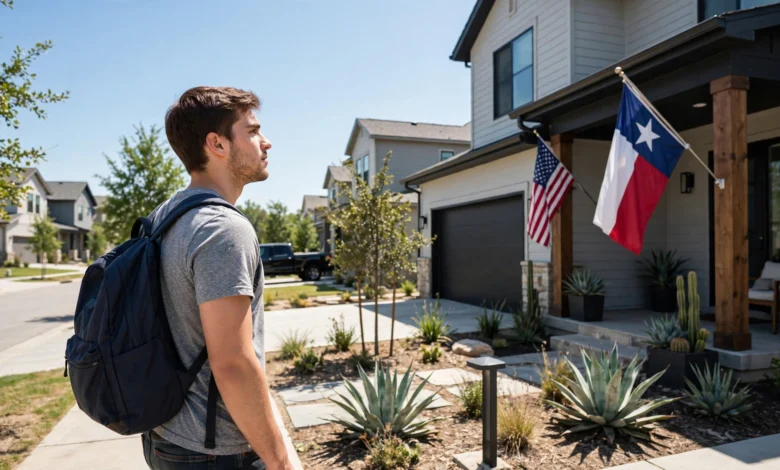
Buying your first home is one of the biggest financial decisions you’ll ever make, and doing it in Texas comes with its own set of rules, costs, and opportunities. This first-time buyer’s guide to Texas real estate is built for people who are starting from scratch: no jargon, no assumptions, just a clear path from “I think I want to buy a house” to holding the keys.
The good news is that the timing isn’t bad. After a few frantic years of bidding wars and homes selling in days, the Texas market has cooled into something closer to normal. Inventory is up, homes are sitting longer, and sellers are more willing to negotiate than they were in 2021. That doesn’t mean buying a home is simple, though. Property taxes here run higher than the national average, insurance costs have climbed, and every metro area behaves a little differently.
This guide walks through the entire process step by step: figuring out what you can actually afford, understanding your loan options, finding the right agent, searching smart, making a competitive offer, and getting through closing without surprises. Whether you’re eyeing a starter home in Houston, a townhouse in Austin, or a family house in San Antonio, the fundamentals below apply across the state. Let’s get into it.
1. Understand Where the Texas Market Stands Right Now
Before you start touring homes, it helps to know what you’re walking into. The Texas housing market has shifted meaningfully in favor of buyers compared to the pandemic years, and understanding this shift will shape almost every decision you make.


As of mid-2026, the statewide median home price sits somewhere between $334,000 and $345,000 depending on the data source, with housing supply running around 5 months and homes averaging roughly 64 to 80 days on market before going under contract. That’s a big change from the sub-two-month supply that defined 2021 and 2022. More supply and slower sales mean first-time home buyers in Texas now have room to negotiate, ask for closing cost credits, and take their time on inspections instead of waiving them to compete.
A few things worth keeping in mind:
- Prices vary widely by metro. Austin has cooled the most from its pandemic peak, with entry-level homes often starting in the $325,000 to $450,000 range. Houston remains the most affordable major metro for first-time buyers, with a median price closer to $270,000. Dallas and San Antonio fall somewhere in between.
- Buyer leverage has returned. With homes sitting longer, sellers are more open to covering closing costs, doing repairs, or offering rate buydowns instead of just cutting price.
- No state income tax still helps affordability. Texas continues to attract people relocating from higher-cost states, which keeps long-term demand steady even as short-term price growth flattens.
Knowing these dynamics before you start house hunting means you won’t panic and overpay out of fear of missing out. The market is giving buyers room to be deliberate again.
2. Get Your Finances in Order Before You Shop
This is the step most first-time buyers rush, and it’s the one that causes the most heartburn later. Before you fall in love with a listing photo, you need a realistic picture of what you can afford and what a lender will actually approve you for.
Check and Strengthen Your Credit
Your credit score directly affects your interest rate, and even a half-point difference in rate can mean tens of thousands of dollars over a 30-year loan. Pull your credit reports, dispute any errors, pay down credit card balances, and avoid opening new credit lines in the months before you apply for a mortgage.
Calculate What You Can Actually Afford
Lenders will often approve you for more than you should comfortably spend. A common rule of thumb is keeping your total housing payment, including principal, interest, taxes, and insurance, under 28% of your gross monthly income. Don’t stop at the mortgage payment estimate a lender gives you; factor in:
- Property taxes (Texas has some of the highest effective property tax rates in the country, often 1.6% to 2.2% of home value annually, since there’s no state income tax to offset it)
- Homeowners insurance, which has risen sharply in many parts of the state due to storm and hail risk
- HOA dues, if applicable
- Utilities, which can run higher in Texas summers due to air conditioning costs
- Maintenance and repair costs, typically budgeted at 1% of home value per year
Save for a Down Payment and Closing Costs
You don’t need 20% down to buy a home in Texas. Conventional loans can go as low as 3% down for qualified buyers, and FHA loans allow as little as 3.5%. That said, putting less down usually means paying private mortgage insurance (PMI) until you build enough equity. Beyond the down payment, budget for closing costs, which typically run 2% to 5% of the purchase price and cover things like the appraisal, title insurance, and lender fees.
3. Explore Loan Options and First-Time Buyer Assistance Programs
One advantage of buying in Texas is the number of programs specifically designed to help first-time home buyers. It’s worth understanding your options before assuming you need a traditional 20%-down conventional loan.
Common Loan Types
- Conventional loans: Best for buyers with solid credit and some savings; down payments can be as low as 3%.
- FHA loans: Backed by the Federal Housing Administration, these are popular with first-time buyers because they allow lower credit scores and down payments as low as 3.5%.
- VA loans: Available to eligible veterans and active-duty service members, often with no down payment required.
- USDA loans: Designed for buyers in eligible rural and some suburban areas of Texas, with no down payment required for qualified applicants.
Texas-Specific Assistance Programs
Two agencies in particular are worth researching early in your search:
- The Texas State Affordable Housing Corporation (TSAHC) offers down payment assistance grants and mortgage credit certificates for eligible first-time buyers and can be paired with a variety of loan types.
- The Texas Department of Housing and Community Affairs (TDHCA) runs the My First Texas Home program, offering competitive interest rates and down payment assistance for income-qualified buyers.
Many cities also run their own local down payment assistance programs, so it’s worth checking with the housing department in whichever city you’re targeting. These programs can meaningfully lower the cash you need upfront, and a good local lender or housing counselor can tell you within minutes whether you qualify.
Get Pre-Approved, Not Just Pre-Qualified
Pre-qualification is a quick estimate based on what you tell a lender. Pre-approval is a verified commitment based on your actual income, credit, and assets, and it’s what sellers and agents take seriously. Get a pre-approval letter before you start seriously touring homes; it tells you your real budget and makes your offers competitive when you find the right place.
4. Find the Right Real Estate Agent
A good agent does more than unlock doors. In a state as large and varied as Texas, local expertise matters enormously, since a great agent in Fort Worth may know nothing useful about buying land outside Waco.
What to look for:
- Local market knowledge. Ask how many transactions they’ve closed in the specific neighborhoods or suburbs you’re considering in the last 12 months.
- First-time buyer experience. Some agents specialize in relocation or investment clients and may move faster than a nervous first-timer needs. Ask directly how they support first-time buyers through financing questions and inspection decisions.
- Communication style. You’ll be texting, calling, and emailing this person constantly for weeks. Make sure their responsiveness and style match what you need.
- No cost to you as a buyer. In most transactions, the seller pays the buyer’s agent commission, so working with a buyer’s agent typically doesn’t cost you directly out of pocket. Since the 2024 industry settlement changes, buyers in Texas may now need to sign a buyer representation agreement before touring homes, so ask your agent to walk you through what that agreement covers.
Interview two or three agents before committing. A quick conversation about how they’d approach your specific situation, budget, and target neighborhoods will tell you a lot.
5. Search Smart: Narrowing Down Your Texas Home
With financing lined up and an agent in place, the search itself is where most of the emotional decision-making happens. A structured approach keeps you from getting swept up in a listing that looks great in photos but doesn’t fit your life.
Decide on Location Priorities
Texas is enormous, and commute times, school districts, and flood risk vary block by block in some areas. Make a list of non-negotiables versus nice-to-haves:
- Commute time to work or family
- School district quality, even if you don’t have kids, since it affects resale value
- Flood zone status, particularly important in Houston, along the Gulf Coast, and parts of Austin
- Proximity to highways, groceries, and healthcare
- HOA restrictions and fees, if the neighborhood has one
Know the Trade-Offs of New Construction vs. Resale
Texas has an unusually large new construction market compared to many states, especially in fast-growing suburbs around Dallas, Austin, and Houston. New builds often come with builder incentives like rate buydowns or covered closing costs, and they typically need less immediate maintenance. Resale homes, on the other hand, tend to sit on larger lots, be closer to established amenities, and offer more room to negotiate on price. Neither is automatically better; it depends on your priorities around cost, location, and how much home maintenance you want to deal with in year one.
Use Tools Wisely, But Verify With Your Agent
Sites like Zillow and Redfin are useful for browsing, but their automated value estimates (Zestimates and similar tools) can be off by tens of thousands of dollars, especially in fast-changing markets. Treat listing sites as a starting point and lean on your agent and a professional appraisal for the real numbers.
6. Make a Competitive Offer
Once you find the home, the offer process is where preparation pays off. In a more balanced market, you don’t need to waive every protection to win, but you still need a strong, well-structured offer.
What Goes Into a Strong Offer
- Price, based on comparable recent sales your agent pulls, not just the asking price
- Earnest money, a deposit (often 1% to 2% of purchase price) showing you’re serious, held in escrow and applied toward closing if the deal goes through
- Option period, a Texas-specific feature giving you a short window (commonly 7 to 10 days) to have the home inspected and back out for any reason for a small fee
- Financing contingency, protecting you if your loan falls through
- Closing timeline, typically 30 to 45 days from contract to close
Negotiate Beyond Just Price
In today’s buyer-friendlier market, you can often negotiate for the seller to cover part of your closing costs, complete specific repairs identified in inspection, or offer a temporary interest rate buydown. Don’t assume the listed price is the only number on the table.
Get a Professional Inspection
Never skip this, even if the home looks perfect. A licensed inspector will check the foundation (a real concern in Texas due to expansive clay soils that shift with moisture changes), roof, HVAC, plumbing, and electrical systems. Foundation issues are common enough in Texas that many buyers also get a separate foundation specialist to weigh in if the general inspection flags anything.
7. Close the Deal and Move In
The final stretch involves a mix of paperwork and last checks before the home is officially yours.
What Happens Between Contract and Closing
- Home appraisal: Your lender orders this to confirm the home is worth what you’re paying. If it comes in low, you may need to renegotiate price or bring more cash.
- Title search and title insurance: This confirms the seller has clear legal right to sell the home and protects you from future ownership disputes.
- Final loan approval: Your lender does a final review of your financials, so avoid making large purchases or opening new credit during this window.
- Final walkthrough: Usually 24 to 48 hours before closing, you’ll walk through the home one last time to confirm agreed-upon repairs were made and nothing has changed.
Closing Day
You’ll sign a stack of documents, including the deed and loan paperwork, and pay your remaining closing costs and down payment, usually via cashier’s check or wire transfer. Once everything is signed and funds are recorded, you get the keys. In Texas, closings are typically handled through a title company rather than an attorney, which tends to keep the process straightforward.
After You Move In
Set up your homestead exemption with your county appraisal district as soon as possible; it can meaningfully reduce your annual property tax bill and is one of the most commonly missed steps by new Texas homeowners. It’s also worth reviewing your insurance policy in your first year to make sure your coverage matches the home’s actual replacement cost, particularly for wind, hail, and flood coverage depending on your region.
Frequently Asked Questions
How much do I need for a down payment on a house in Texas?
It depends on the loan type. Conventional loans can go as low as 3% down, FHA loans require 3.5%, and VA or USDA loans may require none at all for eligible buyers. Texas-specific assistance programs can also help cover part of the down payment for qualified first-time buyers.
Are property taxes really higher in Texas?
Yes. Since Texas has no state income tax, property taxes tend to run higher than the national average, often between 1.6% and 2.2% of a home’s assessed value annually, depending on the county and local school district.
Is now a good time to buy in Texas?
Compared to the extreme seller’s market of 2021 and 2022, current conditions favor buyers more, with rising inventory, longer days on market, and more room to negotiate. That said, the right time to buy still depends on your personal financial readiness more than market timing.
Do I need a real estate agent as a first-time buyer?
It’s strongly recommended. An experienced buyer’s agent typically doesn’t cost you anything directly, since the seller usually covers the commission, and their local knowledge and negotiation skills are especially valuable for someone going through the process for the first time.
Conclusion
Buying your first home in Texas doesn’t have to feel overwhelming once you break it into clear steps: understand the current market, get your finances and pre-approval in order, explore first-time buyer assistance programs, find an agent who knows your target area, search with a clear list of priorities, make a well-structured offer, and follow through carefully to closing. The current market gives first-time buyers more breathing room than it has in years, but the fundamentals of preparation still matter most. Take the process one step at a time, lean on professionals you trust, and you’ll be far better positioned to buy smart and settle into a home that actually fits your life and budget.