Manchester Property News: Northern England’s Rising Star, 7 Powerful Reasons Investors Can’t Ignore in 2026
Manchester property news: Northern England's rising star explained, from record rental yields to regeneration outpacing UK growth in 2026.

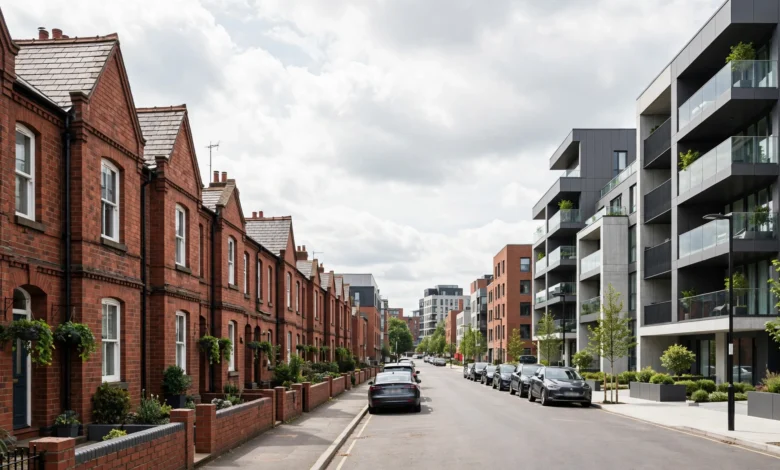
Manchester Property News: Northern England’s rising star status has been earned the hard way, through more than a decade of sustained regeneration, population growth, and job creation that’s now translating into some of the strongest property fundamentals anywhere in the UK. While national house price growth sits at a modest 1.3%, Manchester has posted annual growth as high as 6.3% according to some measures, and 4.9% year-over-year as of April 2026 according to Manchester Surveyors’ analysis, a result specifically described as “defying the UK slowdown” affecting much of the rest of the country.
The rental market tells an even more compelling story for investors. Average gross rental yields across Manchester sit around 6% to 6.6%, with well-located apartments achieving 8% or higher, and short-term rental yields climbing as high as 7.4% in some segments. Compare that to typical Zone 1 and Zone 2 London yields, which frequently fall below 4%, and the arithmetic behind Manchester’s growing reputation as the UK’s leading regional property market becomes clear.
This article breaks down exactly what’s driving Manchester’s rise as Northern England’s property star, the specific price and yield data behind the headlines, the regeneration projects reshaping entire neighborhoods, and what buyers and investors need to understand about a market JLL has forecast to be among the UK’s top performers through 2028. Whether you’re considering a first home, a buy-to-let investment, or simply tracking where the UK’s property momentum is genuinely concentrated, here’s the complete, current picture.
Manchester Property News: The Current Price and Growth Data
Because multiple sources track Manchester’s housing market using slightly different time periods and methodologies, it’s worth laying out the range of figures currently being reported.


| Source | Average House Price | Annual Growth | As Of |
|---|---|---|---|
| ONS (via Orlando Reid) | £248,000 | +1.4% | March 2026 |
| ONS (via TK Property Group) | £254,000 | +4.4% | January 2026 |
| Manchester Surveyors | £254,000 (mortgaged property) | +4.9% | April 2026 |
| Orlando Reid Invest | N/A | +6.3% | 2026 |
| Investropa | £255,000 | N/A | Late 2025 |
The variance largely reflects differences in whether a measure tracks all sales, mortgaged transactions only, or specific reporting windows, but the consistent theme across nearly every source is that Manchester has meaningfully outpaced the UK’s national average growth rate of just 1.3% to 1.5% through the same period. By property type, semi-detached homes have emerged as the strongest performer, up 3.8% year-over-year as of April 2026, while flats have lagged behind houses in several recent measures, an important distinction for anyone comparing property types within the city.
Why Manchester Has Become Northern England’s Rising Star
Several structural forces, sustained over more than a decade, explain why Manchester has earned its reputation as the UK’s standout regional property market.
1. Exceptional Population and City-Centre Growth
An estimated 100,000 people are projected to live in Manchester’s city centre alone, a scale of urban residential density virtually unmatched outside London among UK cities. This concentrated population growth has directly fueled demand for city-centre apartments and supporting infrastructure, even as overall housing delivery has struggled to keep pace.
2. Outstanding Graduate Retention
Manchester boasts the UK’s highest graduate retention rate at 51%, supported by a student population exceeding 100,000 across the city’s universities. This consistent pipeline of educated, employed young professionals choosing to stay in Manchester after graduation provides a dependable, renewing tenant base that underpins the city’s strong rental demand year after year.
3. Substantial, Sustained Job Creation
Greater Manchester added more than 114,000 jobs between 2018 and 2023 and is projected to add a further 59,572 roles by 2028. Separately, redevelopment efforts are expected to bring 65,000 new jobs to the city, pushing city-centre employment to 315,000 by 2040, a pace of job growth projected to double that of the North of England as a whole. Manchester’s employment rate reached 70.5% in 2025, with unemployment forecast to fall to approximately 4.8% in 2026.
4. A Genuinely Transformative Regeneration Pipeline
Manchester’s regeneration agenda spans multiple major projects across the wider conurbation: Victoria North, Red Bank Riverside, Holt Town, and the Salford Quays 2030 Vision each represent long-term investment programs actively reshaping entire districts. The £1 billion Good Growth Fund has supported new homes, job creation, and public realm improvements, while the Bee Network transport upgrade continues improving connectivity across Greater Manchester, both directly supporting long-term capital growth potential in the areas they touch.
5. A Thriving Media and Technology Cluster
Salford Quays and MediaCity have emerged as a distinct investment zone, anchored by major broadcasters including the BBC and ITV alongside a growing cluster of digital agencies and technology companies. This concentration of media and tech employment has created a stable, well-paid professional tenant base specifically drawn to the Salford Quays corridor, supporting both occupancy rates and rental pricing power in the surrounding property market.
6. Consistently Recognized Buy-to-Let Performance
Manchester has achieved back-to-back top rankings in the Aldermore Buy to Let City Tracker, a recognition analysts attribute not to chance but to structural demand drivers, a genuinely constrained supply pipeline, and a regeneration agenda that’s been consistently delivered over more than a decade, rather than a short-term cyclical spike.
7. Relative Affordability Compared to London
Even with recent growth, Manchester’s average house price of roughly £248,000 to £255,000 remains dramatically below the UK average of £270,000 and sits far beneath Greater London’s average, which remains above £500,000. This relative affordability continues attracting professionals, students, businesses, and investors who would otherwise be priced out of comparable opportunities in the capital.
Which Manchester Neighborhoods Are Leading the Growth
Manchester’s rise hasn’t been evenly distributed. Several specific neighborhoods have significantly outperformed the citywide average, driven by targeted regeneration investment.
- Ancoats and New Islington rank among the fastest-rising areas in the city, benefiting from improved transport links, proximity to the city centre, and a wave of new amenities and quality housing stock delivered through ongoing regeneration.
- Levenshulme has seen median house prices increase by roughly 168% between 2013 and 2023, one of the most dramatic gentrification-driven transformations anywhere in Greater Manchester.
- Hulme continues attracting strong demand from young professionals and families drawn to its combination of regeneration investment and relative affordability compared to more established central neighborhoods.
- The Victoria North corridor, including Collyhurst and Red Bank, sits directly at the intersection of major regeneration investment and strong rental demand, positioning it among the areas expected to see the highest price growth in the years ahead.
- Oldham, while technically a separate borough within Greater Manchester, offers a compelling combination of significant annual house price growth alongside genuine affordability, with an average selling price of £206,170 as of July 2025, up 6.74% from the year prior.
Projected price growth in these top-performing neighborhoods ranges from approximately 4% to 6% for the year, compared to the citywide average of around 3% to 4%, according to recent neighborhood-level analysis, confirming that targeted, regeneration-adjacent investment continues to outperform the broader market.
Manchester’s Rental Market: The Real Investment Story
For many investors, Manchester’s true appeal lies less in capital growth alone and more in its rental market performance, which has become one of the strongest in the UK.
- Average gross rental yields sit around 6% to 6.6%, with well-located apartments achieving 8% or higher, figures that comfortably outperform most southern UK markets.
- Short-term rental yields have climbed to 7.4% in some segments, compared to typical Zone 1 and Zone 2 London yields that frequently fall below 4%, according to investment analysis targeting foreign investors.
- Demand has consistently outpaced supply. Rental demand has surged over recent years, driven by rapid population growth and increasing numbers of young professionals choosing city-centre living, while new housing delivery has struggled to keep pace, with Deloitte’s Crane Survey recording just 4,448 new homes delivered to the market over a recent one-year period.
- Wage growth is supporting rental affordability alongside demand. Mean annual pay in Greater Manchester sits around £33,715, having risen nearly 7.9% year-on-year, a wage growth rate that helps sustain rental demand even as rents themselves continue climbing.
Is Manchester’s Property Momentum Sustainable?
This is the honest question every serious investor needs to weigh before committing capital, and the current data suggests a more nuanced answer than a simple “yes” or “no.”
Reasons for continued confidence:
- JLL has forecast Manchester to be the second-strongest UK city for house price growth through 2028, trailing only Birmingham, with projected cumulative growth of 19.3% compared to a national forecast of 17.6% over the same period
- Savills separately forecasts cumulative price growth of around 28% to 29% for the North West region by 2029, a notably stronger regional outlook than the national picture
- The North West as a whole is forecast to avoid a nominal price fall in 2026 (unlike the broader UK market, which some forecasts suggest could fall by up to 2.0% in 2026) before delivering growth of 3.5% in 2027 and 6.5% annually in each of 2028, 2029, and 2030
Reasons for measured caution:
- Buyers have become more cautious nationally, with financing costs elevated and investors scrutinizing value more carefully than in previous cycles
- Rental yields have compressed in some central areas as prices have risen faster than rents in certain segments, a dynamic worth monitoring for yield-focused investors specifically
- High service charges on new-build apartments, ranging from £2,000 to £4,000 annually, represent a real and growing cost that can meaningfully affect net investment returns
- Analysts increasingly suggest Manchester’s next phase will reward discipline and selectivity rather than broad-based speculation, with growth likely concentrating in areas connected to employment, transport, and visible regeneration rather than lifting the entire market uniformly
What This Means for Buyers Considering Manchester
Given the specific mix of strong fundamentals and more selective near-term growth, here’s what prospective buyers should factor into their decision.
- Target regeneration-adjacent neighborhoods for the strongest growth potential. Areas like Ancoats, Hulme, and the Victoria North corridor have consistently outperformed the citywide average and remain the focus of continued investment.
- Consider property type carefully. Recent data shows houses and semi-detached properties outperforming flats, an important consideration for buyers weighing different property types within the same budget.
- Factor in ongoing service charges for new-build apartments. With annual charges potentially reaching £2,000 to £4,000, these costs should be built into any return calculation rather than treated as an afterthought.
- Weigh Manchester’s relative affordability against London directly. With average prices roughly half of London’s, and considerably below the UK average once accounting for property type and location, Manchester continues to offer a meaningfully different value proposition for buyers and investors priced out of the capital.
For readers who want to track Manchester’s housing data directly, the Office for National Statistics UK House Price Index provides official, regularly updated price data at both the national and city level, while JLL’s UK residential research offers detailed forecasting on Manchester’s position relative to other major UK cities.
What This Means for Investors and Landlords
For investors:
- Manchester’s combination of yield (6% to 9% gross depending on property type and location), sustained price growth, and strong structural rental demand makes it one of the more compelling UK markets for both income and capital growth strategies in 2026
- The MediaCity and Salford Quays corridor offers a distinct investment thesis built around a stable, well-paid professional tenant base tied to major media and technology employers
- Investors specifically prioritizing yield over prestige will find Manchester’s arithmetic considerably more favorable than comparable London opportunities, given the persistent gap between the two markets’ rental yield profiles
For landlords:
- Strong graduate retention and sustained population growth continue supporting occupancy stability, reducing void periods compared to markets more dependent on a single tenant demographic
- Rising wages across Greater Manchester (up nearly 7.9% year-on-year) provide some cushion supporting continued rent affordability even as rental prices climb
Frequently Asked Questions
What is the average house price in Manchester in 2026?
Estimates range from approximately £248,000 to £255,000 depending on the source and specific measurement period, with most figures agreeing Manchester’s average sits well below both the UK national average of roughly £270,000 and Greater London’s average of over £500,000.
Why is Manchester considered Northern England’s rising star property market?
Manchester combines exceptional population growth, the UK’s highest graduate retention rate, substantial ongoing job creation, a genuinely transformative regeneration pipeline spanning multiple major projects, and rental yields significantly outperforming London, a combination that’s earned it back-to-back top rankings in national buy-to-let performance trackers.
Are Manchester rental yields really better than London’s?
Yes, in most comparisons. Average gross rental yields in Manchester sit around 6% to 6.6%, with well-located apartments achieving 8% or higher and short-term rentals reaching up to 7.4%, compared to typical Zone 1 and Zone 2 London yields that frequently fall below 4%.
Which Manchester neighborhoods are seeing the strongest price growth?
Ancoats and New Islington, Levenshulme, Hulme, and the Victoria North corridor (including Collyhurst and Red Bank) currently lead Manchester’s neighborhood-level growth, each benefiting from targeted regeneration investment and strong demand from young professionals and families.
Conclusion
Manchester Property News: Northern England’s rising star reputation rests on more than a decade of consistently delivered fundamentals rather than a short-term speculative surge: sustained population and job growth, the UK’s highest graduate retention rate, a multi-billion-pound regeneration pipeline spanning Victoria North, Salford Quays, and MediaCity, and rental yields that consistently outperform London by a wide margin. With JLL and Savills both forecasting Manchester and the broader North West to outperform national UK growth through 2028 and 2029 respectively, even as the near-term national market shows signs of caution, the city’s underlying story remains one of the most structurally sound in the entire country. For buyers and investors, the opportunity going forward likely lies less in broad citywide exposure and more in the specific regeneration-adjacent neighborhoods, Ancoats, Hulme, Victoria North, and similar corridors, where the combination of employment growth, transport investment, and genuine housing scarcity continues delivering the strongest returns within one of the UK’s most closely watched regional property markets.