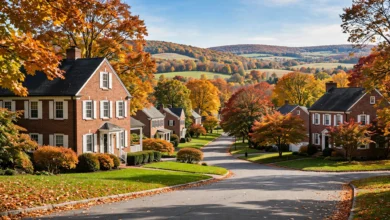
New Jersey Real Estate: Commuter Towns See Price Surges, 7 Explosive Markets Redefining the Suburbs in 2026
New Jersey real estate: commuter towns see price surges as hybrid work and NYC affordability push buyers across the Hudson in 2026.

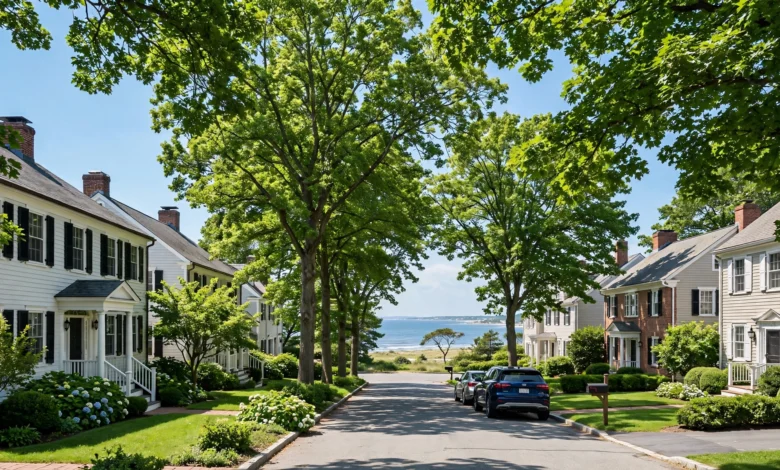
New Jersey real estate: commuter towns see price surges that are reshaping the entire Northern New Jersey housing landscape in 2026, and the numbers are difficult to overstate. Montclair, long known as one of the state’s most desirable NYC-commuter suburbs, posted median sale price growth of over 40% year-over-year in the first quarter of 2026, according to Redfin data cited by local brokerages. Asbury Park, a once-distressed shore town along the North Jersey Coast Line, saw prices climb 22.3% year-over-year to a median of $727,000. Bergen County’s median single-family home price ended 2025 at $840,000, up nearly 10% annually, with homes selling at more than 103% of asking price.
These aren’t isolated spikes. They reflect a structural shift in how, and where, people are choosing to live relative to New York City. With hybrid work now standard across most industries, buyers no longer need to optimize for a five-day-a-week commute, a change that has effectively expanded the radius of towns considered “commutable” and unlocked demand in communities that previously felt too far from Manhattan for daily use.
This article breaks down exactly which New Jersey commuter towns are seeing the sharpest price surges, what’s driving the demand, how transit access continues to shape value, and what buyers and sellers should understand about a market that Redfin has specifically named among the U.S. regions most likely to keep heating up through 2026. Whether you’re house hunting across the Hudson or just trying to understand why your hometown suddenly feels unaffordable, here’s the complete picture.
New Jersey Real Estate: Why Commuter Towns Are Surging Right Now
Before diving into specific towns, it’s worth understanding the forces behind this price surge across New Jersey’s commuter corridor.
- Hybrid work has expanded the commutable map. Buyers no longer need to live within a 30-minute train ride if they’re only going into Manhattan two or three days a week, which has opened up demand for towns further from urban cores that previously felt impractical for full-time commuters.
- NYC affordability continues pushing buyers across the Hudson. New York City’s persistently high real estate prices and cramped living spaces continue to drive buyers toward New Jersey, where the same budget typically buys significantly more space, a yard, and often better school districts.
- Return-to-office trends are adding fresh demand on top of hybrid flexibility. Redfin specifically named Northern New Jersey as one of the U.S. markets most likely to heat up in 2026, citing return-to-office policies at major employers as a factor reigniting demand for NYC-accessible suburbs even among workers who thought they’d left commuting behind for good.
- Lower property taxes and larger homes remain a durable draw. Compared to NYC’s outer boroughs, New Jersey commuter towns consistently offer more square footage, private outdoor space, and, in many cases, comparatively lower property tax burdens relative to the value received.
- Inventory has remained historically tight. Much of the price acceleration in these towns reflects basic supply and demand imbalance: strong, sustained buyer interest running into a limited supply of homes, particularly in walkable downtowns near train stations.
Which New Jersey Commuter Towns Are Seeing the Biggest Price Surges
Here’s a breakdown of specific commuter towns posting the most significant price gains through 2026, organized by transit corridor.
1. Montclair — The Standout Essex County Surge
Montclair has emerged as the most dramatic story in this cycle, with median sale prices up over 40% year-over-year according to Q1 2026 Redfin data. The town benefits from NJ Transit’s Midtown Direct service, offering a roughly 35 to 40 minute express ride straight to Penn Station without a transfer, combined with a genuinely vibrant downtown arts and dining scene that continues to attract creative professionals and families alike. Housing stock ranges from Victorian mansions in Upper Montclair to more modest colonials and condos elsewhere in the township, giving the surge room to touch multiple price tiers rather than concentrating purely at the top end.
2. Asbury Park — The Shore Town Comeback Story
Asbury Park’s transformation from a distressed shore town into a vibrant cultural destination has become one of the more remarkable New Jersey real estate stories of the current cycle. Home prices climbed 22.3% year-over-year as of March 2026, with the median sale price reaching $727,000 and average home values around $679,000. While its roughly 90-minute NJ Transit commute to New York via the North Jersey Coast Line is longer than many traditional commuter towns, hybrid work has made that tradeoff increasingly viable for buyers prioritizing lifestyle and waterfront access over a daily door-to-door commute.
3. Red Bank — Building Momentum Along the Navesink
Red Bank has steadily built its identity as a cultural and culinary hub along the Navesink River, with median sale prices hitting $848,000 in March 2026. Like Asbury Park, Red Bank sits along the North Jersey Coast Line with a commute of roughly 75 minutes to Manhattan, a distance that would have deterred many buyers a decade ago but now fits comfortably within a two- or three-day-a-week hybrid schedule.
4. Bergen County’s Bergen Line Corridor — Broad-Based Strength
Rather than a single standout town, Bergen County’s Bergen Line corridor, connecting communities including Rutherford, Wood-Ridge, Hasbrouck Heights, Ridgewood, Glen Rock, and Fair Lawn directly to Penn Station, has shown broad-based price strength. The county’s median single-family home price ended 2025 at $840,000, up nearly 10% year-over-year, with homes selling at an average of 103.7% of list price and median days on market dropping from 70 to 42 days by March 2026, clear signs of an active seller’s market with no near-term signs of softening.
5. Essex County’s Midtown Direct Towns — Consistent, Sustained Demand
Beyond Montclair specifically, the broader Essex County corridor served by NJ Transit’s Midtown Direct service, including South Orange, Maplewood, and Millburn, continues to draw buyers who have exhausted their options in Brooklyn, Queens, and the Bronx. These towns specifically appeal to buyers seeking a particular combination of strong school districts and outdoor space that’s increasingly difficult to find within city limits, and demand has been intense enough that over-asking offers have become the market norm rather than the exception.
6. Union County’s Westfield and Cranford — The Family-Focused Tier
Westfield, served by the Raritan Valley Line with a roughly 60 to 70 minute commute via a Newark transfer, has become one of the towns “most NYC families dream about,” commanding a median price in the $1.1 million to $1.3 million range thanks to excellent schools and one of the most complete downtown districts in the state. Cranford offers a somewhat more accessible entry point within the same general commuter corridor while still delivering strong schools and a walkable Main Street.
7. Hoboken and Jersey City — The Urban Transit Premium
At the more urban end of the spectrum, Hoboken and Jersey City continue commanding a premium for their exceptionally short PATH train commutes, roughly 10 to 15 minutes to Manhattan. Jersey City neighborhoods like Paulus Hook and Hamilton Park have seen particularly strong demand growth, offering buyers a car-free, walkable lifestyle that closely mirrors city living while still delivering meaningfully more space and value than a comparable Manhattan or Brooklyn purchase.
How Transit Access Continues to Shape Commuter Town Value
Even as hybrid work reshapes buyer priorities, transit access remains one of the clearest predictors of price strength across New Jersey commuter towns. A few patterns stand out:
- One-seat or near-one-seat rides to Penn Station command the strongest premiums. Towns on NJ Transit’s Midtown Direct service, which travels straight into Manhattan without requiring a transfer, consistently outperform comparably sized towns on lines requiring a Newark or Secaucus transfer.
- PATH access delivers the fastest commute times but the highest entry price. Hoboken’s roughly 10 to 15 minute PATH ride represents the shortest commute of any major New Jersey option, and pricing reflects that convenience accordingly.
- Longer commute corridors are seeing outsized percentage gains precisely because they started from a lower base. Asbury Park and Red Bank’s roughly 75 to 90 minute commutes would have been considered impractical for daily use in past cycles, but their more affordable starting price points have made them attractive to buyers willing to trade commute time for lifestyle and value, fueling some of the sharpest percentage increases in the state.
- Walkability around train stations adds a further premium. Towns with a genuine walkable downtown clustered near the train station, such as Montclair, Westfield, and Maplewood, tend to command stronger demand than towns where the train station sits disconnected from any real commercial or social hub.
What Buyers Should Know About New Jersey’s Commuter Town Boom
Given how sharply prices have moved in specific corridors, buyers need a clearer strategy than simply chasing the towns getting the most attention.
- Budget realistically across a range of towns rather than fixating on one. New Jersey’s commuter town market spans from under $500,000 to well over $1.5 million depending on the town, meaning buyers priced out of Montclair or Westfield may find genuinely comparable transit access and schools in nearby, less hyped communities at a meaningfully lower price point.
- Understand your actual commute needs before optimizing for train speed. If your employer expects only two or three office days a week, a longer commute corridor like the North Jersey Coast Line towns may deliver considerably more home and lifestyle value than paying a premium for the shortest possible ride.
- Move quickly in the hottest micro-markets. Homes in some of the most in-demand towns, particularly smaller starter homes near Midtown Direct stations, are reportedly selling in as little as 12 days on market, meaning pre-approval and a readiness to move fast matter more than in slower-moving markets.
- Factor in total commuting cost, not just home price. Monthly PATH passes run roughly $114 to $120, while NJ Transit rail passes from towns like Montclair, Summit, or Maplewood typically range from $150 and up, a real ongoing cost that should factor into any town-to-town budget comparison.
- Watch for hybrid-work-driven demand in previously overlooked corridors. According to recent market analysis, some of the strongest emerging opportunities are in towns that would have felt too far for a traditional five-day commute but are now perfectly positioned for the two-to-three-day office schedules that have become standard across many industries.
For readers who want to track detailed, town-by-town data directly, Redfin’s New Jersey market data provides current median sale prices, days on market, and year-over-year comparisons across the state’s commuter corridors, while NJ Transit’s official rail schedules and fare information offer the most accurate current commute times and monthly pass costs for anyone comparing towns by transit access.
What This Means for Sellers in New Jersey’s Commuter Corridors
Sellers in many of these markets currently hold a meaningfully strong position, though the specifics vary by town and price tier.
- Well-located homes near Midtown Direct or Bergen Line stations continue to see multiple offers, particularly in the sub-$750,000 tier where first-time buyers are competing hardest against limited inventory.
- Presentation still matters even in a hot market. With days-on-market figures compressing across most of these corridors, homes that show well and are priced realistically relative to recent comparable sales continue to attract the fastest, strongest offers.
- Shore and coastal commuter towns are benefiting from a broader lifestyle-driven demand shift. Sellers in towns like Asbury Park and Red Bank are seeing buyer pools that increasingly include people prioritizing lifestyle and remote-work flexibility, not just traditional daily commuters, expanding the potential buyer base for these listings.
Frequently Asked Questions
Which New Jersey commuter towns have seen the biggest price increases in 2026?
Montclair led with median sale prices up over 40% year-over-year in Q1 2026, followed by Asbury Park (up 22.3% to a $727,000 median) and Bergen County broadly, where the median single-family home price reached $840,000, up nearly 10% annually.
Why are New Jersey commuter towns surging in price right now?
The primary drivers include hybrid work arrangements expanding the range of practical commuter towns, continued affordability pressure pushing NYC buyers across the Hudson, return-to-office policies reigniting demand at major employers, and historically tight housing inventory in many of these towns.
What is the fastest commute from New Jersey to New York City?
Hoboken offers the fastest option, with a PATH train commute of roughly 10 to 15 minutes to Manhattan, followed by other PATH-accessible Jersey City neighborhoods.
Are New Jersey commuter towns still worth it if I only go into the office two or three days a week?
Yes, and according to recent market analysis, 2026 represents one of the strongest cases yet for commuter town living under a hybrid schedule, since buyers no longer need to optimize purely for daily commute speed and can instead prioritize schools, lifestyle, and value in towns that would have felt too distant in previous years.
Conclusion
New Jersey real estate: commuter towns see price surges that reflect far more than typical seasonal market fluctuation; they represent a genuine structural shift in how buyers value transit access, space, and lifestyle now that hybrid work has become the norm across most industries. Montclair’s 40%-plus annual price growth, Asbury Park’s shore-town comeback, and Bergen County’s broad-based 10% gain all point to the same underlying story: New Jersey’s commuter corridors are absorbing demand that would once have flowed exclusively toward NYC’s outer boroughs, and towns once considered too far for daily commuting are now thriving specifically because a full five-day office schedule is no longer the default. For buyers, this means casting a wider geographic net and weighing total lifestyle value rather than fixating solely on the shortest train ride, and for sellers in these corridors, current conditions remain some of the strongest seen in years, with no clear signs of the momentum fading heading into the rest of 2026.