Melbourne Property Guide: 7 Surprising Differences Between Inner City and Outer Suburbs
A clear, practical Melbourne property guide comparing inner city and outer suburb living: prices, lifestyle, transport, and growth potential.

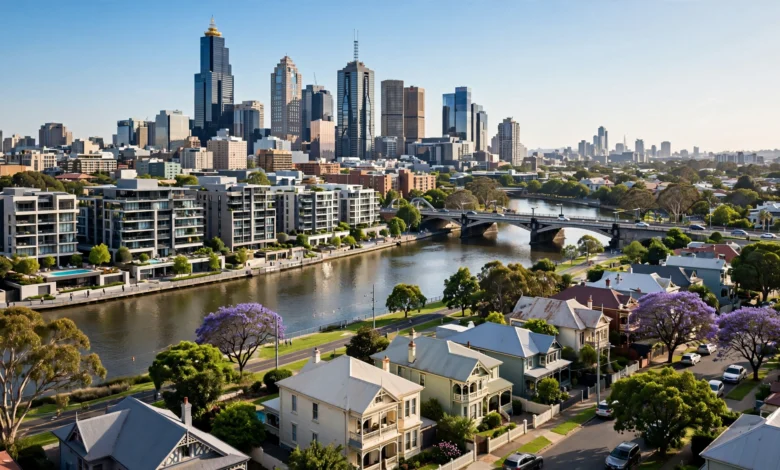
Choosing where to buy in Melbourne usually comes down to one question that sounds simple but rarely is: do you pay more for proximity, or pay less for space? This Melbourne property guide is built to answer that question honestly, using how the market actually behaves in 2026 rather than the usual generalisations.
Melbourne is really two markets wearing one name. Within ten kilometres of the CBD, you’re buying into cafes on every corner, tram stops you can walk to, and a housing stock that’s decades old and getting more expensive by the quarter. Head twenty, thirty, or forty kilometres out, and you’re in a different world entirely: brand-new estates, three and four-bedroom houses with actual backyards, and price tags that still let first-home buyers get a foot in the door. Neither option is automatically the “smart” one. It depends on your income, your stage of life, how you feel about commuting, and whether you’re buying to live in or to build wealth.
This guide walks through both segments in detail: what you get for your money, how the lifestyle actually differs day to day, what the transport situation looks like, and which type of buyer tends to do better in each. By the end, you should have a much clearer sense of where you fit.
What This Melbourne Property Guide Covers
Before getting into specifics, it helps to define the terms, because “inner city” and “outer suburbs” get used loosely.
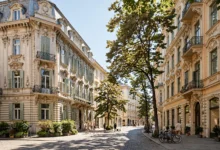
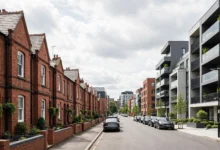
- Inner city Melbourne generally refers to suburbs within roughly 10km of the CBD: Carlton, Fitzroy, Richmond, South Yarra, Brunswick, North Melbourne, and similar pockets.
- Middle-ring suburbs sit between 10km and 20km out, places like Box Hill, Preston, Footscray, and Camberwell, and often get lumped into either category depending on who’s writing.
- Outer suburbs cover the growth corridors from roughly 20km to 50km from the CBD, including Werribee, Melton, Craigieburn, Cranbourne, Pakenham, and Sunbury.
This Melbourne property guide focuses mainly on the two ends of that spectrum, since that’s where the trade-offs are sharpest and the buying decision is most consequential.
Melbourne Inner City Suburbs: What You’re Buying Into
Buying inner city in Melbourne means paying a premium for land scarcity, established infrastructure, and a lifestyle built around walkability. It’s worth breaking down exactly what that premium buys you.
Lifestyle and Amenities
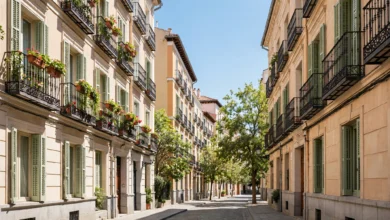
Inner city living in Melbourne is defined by density done well. You’re within walking distance of restaurants, live music venues, independent grocers, parks, and universities. Suburbs like Fitzroy and Carlton were built well before cars were standard, so the street grids favour walking and cycling over driving. For many buyers, this lifestyle is the entire point of paying inner city prices: less time spent commuting or driving to get groceries, more time actually living in the city they chose.
Price Point and Property Types
According to recent suburb-level data, established inner-east suburbs like Hawthorn, Kew, and Camberwell now comfortably exceed $2.1 million for a median house, while inner-north pockets such as Fitzroy and Clifton Hill sit between $1.5 million and $1.8 million, with Carlton and Brunswick trading closer to $1.2 million to $1.35 million depending on the quarter. Even the more affordable end of inner city Melbourne isn’t cheap: Kensington’s median house price recently topped $1.11 million, and Carlton followed close behind at around $1.17 million, generally buying a single-fronted terrace or a two-bedroom period cottage rather than anything larger.
What you’re buying in the inner city is typically:
- A period home, terrace, or Victorian-era cottage on a small block
- A townhouse or apartment in a low- or mid-rise building
- Less land, but significantly more built-in convenience and heritage character
Transport and Commute
This is where inner city Melbourne genuinely earns its price tag. Trams run down most major inner streets, train stations are frequently within a ten-minute walk, and many residents don’t need a car for day-to-day life. For anyone who works in or near the CBD, the commute time from an inner city suburb can be under twenty minutes, compared to well over an hour from some outer growth corridors during peak periods.
Melbourne Outer Suburbs: The Case for Space and Value
The outer suburbs of Melbourne tell a completely different story, and for a growing number of buyers, it’s a more attractive one. Affordability, new housing stock, and family-sized blocks are drawing buyers who would otherwise be priced out of the inner ring entirely.
Affordability and Land Size
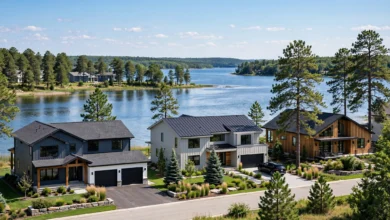
Outer growth suburbs like Melton, Werribee, and Sunbury currently sit with median house prices starting around $650,000 to $750,000, roughly half of what buyers pay in established inner suburbs. That gap buys considerably more physical space: a three or four-bedroom house with a backyard, rather than a two-bedroom terrace with no garden. In areas like Melton South, buyers can still find houses priced under $500,000, delivering rental yields above 4%, a figure that’s difficult to find anywhere closer to the CBD.
Growth Corridors and Infrastructure
Suburbs such as Tarneit, Truganina, and Craigieburn have seen house prices rise by double digits over the past year, driven largely by new housing estates and improving public transport links. Government investment in rail corridors, new schools, and road upgrades has followed the population growth into these areas rather than preceded it, which is a pattern worth watching if you’re weighing long-term capital growth against buying into an already-established suburb.
Key drivers behind outer suburb momentum include:
- New housing supply – modern builds with better energy efficiency and larger floorplans
- First-home buyer incentives – stamp duty concessions that specifically favour properties under certain price thresholds
- Infrastructure catch-up – new train stations, freeway extensions, and shopping precincts following population growth
- Family-friendly design – larger blocks, more parks, and newer schools built to service growing populations
Trade-offs to Consider
None of this comes free. Living in Melbourne’s outer suburbs generally means:
- Longer commute times into the CBD, often 45 to 90 minutes each way during peak hours
- Greater reliance on a car, since public transport coverage thins out the further you go
- Fewer established amenities in brand-new estates, though this typically improves over five to ten years as infrastructure catches up
- Less diversity in dining, culture, and nightlife compared to inner city precincts
Price Comparison: Inner City vs Outer Suburbs
Putting the numbers side by side makes the gap concrete. Melbourne’s overall median house price currently sits somewhere in the $850,000 to $950,000 range depending on the data source and the month, but that citywide figure hides enormous variation.
| Segment | Typical Median House Price | What You Get |
|---|---|---|
| Inner east (Kew, Hawthorn, Camberwell) | $2.1 million+ | Established homes, top school zones, premium land |
| Inner north (Fitzroy, Carlton, Brunswick) | $1.1 million – $1.8 million | Period terraces, walkable lifestyle, small blocks |
| Middle ring (Box Hill, Preston, Footscray) | $900,000 – $1.25 million | Larger blocks, growing amenity, mixed housing stock |
| Outer growth corridors (Melton, Werribee, Craigieburn) | $600,000 – $780,000 | New builds, larger land, family-sized homes |
This spread is one of the more useful things a Melbourne property guide can highlight: the median for the whole city means very little on its own. A buyer with a $700,000 budget is looking at an entirely different city depending on which ring they target.
Lifestyle Differences: City Buzz vs Suburban Space
Beyond price, the day-to-day experience of living inner city versus outer suburb is genuinely different, and this is often underweighted by first-time buyers focused purely on numbers.
Inner city living suits people who:
- Work in or near the CBD and want a short commute
- Value walkability over car dependency
- Prioritise dining, nightlife, and cultural access
- Are comfortable trading living space for location
Outer suburb living suits people who:
- Want a larger home and yard, particularly with kids
- Can work remotely or have flexible commute options
- Prioritise a lower mortgage repayment over proximity
- Value quieter streets and newer community infrastructure
Neither lifestyle is objectively better. It’s a genuine trade-off between space and proximity, and the right answer depends entirely on how you actually spend your week.
Investment Potential: Capital Growth vs Rental Yield
For buyers thinking about property investment in Melbourne rather than owner-occupation, inner city and outer suburb properties tend to perform differently, and it’s worth understanding the mechanics rather than just the headline growth numbers.
Inner and middle-ring suburbs tend to be favoured for capital growth. Supply is constrained (there’s limited land left to build on), and demand from professionals, students, and downsizers stays consistently strong. Forecasts for 2026 generally place inner and middle-ring growth ahead of outer corridors on a percentage basis, even though outer suburbs often see faster growth in raw dollar terms during boom periods.
Outer suburbs, on the other hand, tend to deliver stronger rental yields. A more affordable purchase price combined with solid rental demand from families means the yield-to-price ratio is often more attractive than in the inner city, where high purchase prices can compress yields to 2% or lower. This is a genuine strategic choice: growth-focused investors often lean inner or middle ring, while yield-focused or cash-flow-focused investors often prefer growth corridors.
If you want a deeper, independently reported breakdown of current suburb-level price data across Melbourne, the Domain House Price Report is a useful, regularly updated reference point. For rental market conditions and vacancy trends specifically, the Real Estate Institute of Victoria publishes quarterly data that’s worth checking before committing to either strategy.
Transport and Commute Times Compared
Transport access is arguably the single biggest practical difference between the two segments, and it deserves its own honest look rather than a passing mention.
Inner city Melbourne benefits from Melbourne’s tram network, which is one of the largest in the world, plus frequent train services and short distances that make cycling genuinely viable. Many inner suburbs also fall within a 20 to 30 minute walk of the CBD, meaning some residents skip public transport altogether.
Outer suburbs rely far more heavily on train lines that terminate at the fringe, supplemented by bus routes and, increasingly, car dependency. Commute times of over an hour each way aren’t unusual for outer south-east or outer west residents working in the CBD. That said, several growth corridors are seeing genuine transport investment, including new stations and V/Line upgrades, which is gradually narrowing the commute gap for some pockets.
Who Should Buy Inner City vs Outer Suburbs
Bringing it together, here’s a practical breakdown of which buyer profile tends to suit each segment.
Consider inner city Melbourne if you:
- Have a higher budget and want to minimise commute time
- Are a single professional, couple, or downsizer without a need for a large yard
- Value lifestyle amenities as much as the property itself
- Are investing primarily for long-term capital growth
Consider outer suburb Melbourne if you:
- Are a first-home buyer working within a tighter budget
- Have or plan to have a family and want more indoor and outdoor space
- Can tolerate a longer commute or have remote/hybrid work flexibility
- Are investing primarily for rental yield or affordability-driven entry into the market
Making Your Decision: A Melbourne Property Guide Checklist
Before settling on either segment, it’s worth running through a short checklist:
- Set your budget first – it will narrow your options faster than any lifestyle preference
- Map your actual commute – not the theoretical one, but where you’ll realistically be working most weeks
- Decide what you’re optimising for – lifestyle and convenience, or space and affordability
- Check infrastructure timelines – if you’re buying in a growth corridor, confirm what transport and school upgrades are actually funded versus proposed
- Compare like-for-like property types – a townhouse inner city versus a house outer suburb isn’t a fair price comparison
- Factor in ongoing costs – outer suburb living often means higher transport and fuel costs that partially offset the cheaper purchase price
Working through this checklist honestly tends to clarify the decision far more than comparing median prices alone.
Conclusion
Choosing between inner city and outer suburb living in Melbourne isn’t about finding the objectively “better” option, it’s about matching the property to how you actually want to live and what you’re trying to achieve financially. Inner city suburbs offer walkability, shorter commutes, and stronger long-term capital growth, but at a significant price premium and with far less space. Outer suburbs offer affordability, larger homes, and often better rental yields, at the cost of longer commutes and thinner amenities, at least for now. This Melbourne property guide has laid out the price differences, lifestyle trade-offs, transport realities, and investment considerations for both segments, so the next step is simply matching those factors against your own budget, priorities, and stage of life.