Perth Real Estate Market 2026: Mining Boom Sparks Soaring Housing Demand
Perth real estate market update: mining-driven jobs and record-low supply are pushing housing demand and prices toward new highs in 2026.

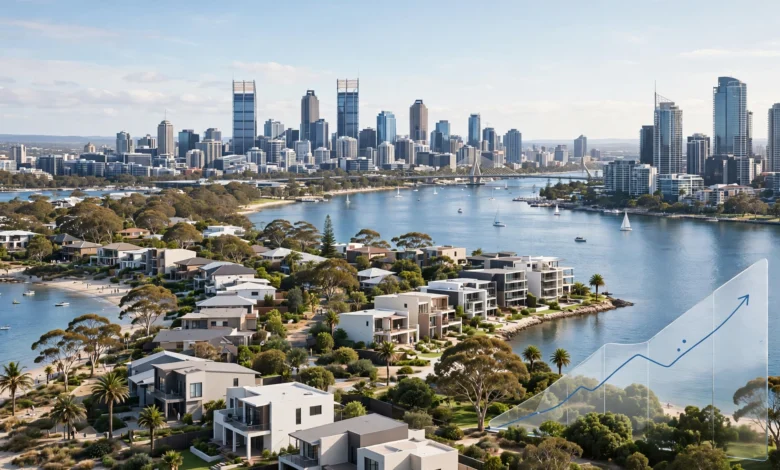
The Perth real estate market has spent the past two years doing something few analysts predicted a decade ago: outpacing every other Australian capital, quarter after quarter. Median house prices have climbed toward the $1 million mark, rental vacancy rates sit below 1%, and active listings are running at roughly a third of what a balanced market would need. Behind a lot of this sits Western Australia’s resources sector, still generating well-paid jobs across the Pilbara and feeding demand back into Perth’s suburbs, even as the drivers of this cycle have become more varied than the mining booms of the past.
If you’re trying to figure out whether Perth is still a smart place to buy, sell, or invest in 2026, the short answer is that the fundamentals are genuinely strong, but the story is more nuanced than “mining boom equals housing boom.” This article breaks down what’s actually driving demand right now, what the price and supply data show, which suburbs are seeing the fastest growth, and what the risks look like heading into 2027.
We’ll also look at how this cycle differs from the mining-driven booms of the 2000s and early 2010s, since understanding that difference matters a lot for anyone deciding whether now is the right time to act. Perth’s economy has diversified since those earlier cycles, and that diversification is arguably why this current run of growth looks more sustainable than the boom-and-bust pattern the city has experienced before.
Perth Real Estate Market Overview: Where Things Stand in 2026
Before getting into causes, it’s worth laying out exactly where prices, supply, and rental conditions sit right now, because the numbers here are genuinely striking by Australian standards.

Median Price Growth
Perth’s median dwelling price has been forecast to grow by as much as 12.3% in 2026, according to ANZ’s latest economic outlook, applied to a median house price that would put typical values around $1.11 million by year’s end. Other analyses put the current median house price closer to $890,000 to $1,000,000 depending on the data source and property type, with units trading around $635,000. Regardless of the exact figure, the direction is consistent: Perth has posted some of the strongest capital growth of any Australian city over the past two years, with annual gains in the 15% to 20% range during the peak of this run.
Rental Market Conditions
Rental vacancy rates in Perth have fallen below 1%, a level not seen in most other Australian capitals for over a decade. That scarcity has pushed rental yields to levels investors in Sydney or Melbourne haven’t seen in years, making Perth one of the more attractive markets nationally for buy-to-let investors chasing cash flow rather than just capital growth.
Listings and Supply Shortage
Active listings in Perth sat at around 3,600 properties as of April 2026, a 20% increase from January but still roughly 55% below the decade average. For context, analysts estimate the market would need closer to 11,000 active listings to be considered balanced. On the construction side, Western Australia completed approximately 16,500 new dwellings in 2025, well short of the roughly 27,000 completions needed to keep pace with population growth, an annual shortfall of more than 10,000 homes.
How the Mining Sector Continues Fueling Perth Housing Demand
Mining hasn’t disappeared as a driver of Perth’s property market, it’s just no longer the only one. Understanding its current role requires separating direct resources employment from the broader economic ripple effects it generates.
Direct Employment in the Resources Sector
Strong employment across mining, engineering, and health remains one of the structural pillars supporting Perth’s housing market, according to mortgage industry analysis. FIFO (fly-in, fly-out) workers based in Perth but employed on Pilbara mine sites continue to represent a meaningful share of buyer demand in the city’s outer and northern suburbs, where many resources workers choose to settle their families while working rotational shifts at remote operations.
Regional Mining Centres Still Matter
Beyond Perth proper, mining and infrastructure investment continue supporting demand in regional Western Australian centres, including:
- The Pilbara region, home to major iron ore operations
- Port Hedland, one of the world’s largest bulk export ports
- Karratha, a key service hub for resources projects
- Bunbury, Geraldton, and Albany, which benefit from broader regional infrastructure spending
Regional mining towns like Port Hedland and Karratha tend to see more volatile price cycles than Perth itself. When a mining boom is running hot, growth in these towns can be explosive, but it can also reverse quickly when commodity prices soften, which is exactly why so much resources-driven wealth ultimately flows back into Perth’s more stable capital city market rather than staying in the regions.
Why This Cycle Looks Different From Past Mining Booms
What genuinely separates the current run from the mining boom of the 2000s is the diversity of demand feeding into it. It’s not just FIFO workers and mining executives pushing prices higher. Families relocating from the eastern states, investors chasing yields that have largely disappeared in New South Wales and Victoria, and first home buyers who can still enter the market without needing a seven-figure budget are all contributing to the current cycle. Perth’s economy has diversified enough that the boom-and-bust pattern tightly linked to mining commodity prices no longer has the same acute grip on the housing market that it once did.
Structural Scarcity: The Real Driver Behind Perth’s Housing Boom
If there’s one theme that comes up across nearly every analysis of the Perth real estate market right now, it’s this: Perth has moved into what several mortgage brokers describe as a structural scarcity cycle, where price gains are driven more by the persistent gap between supply and demand than by short-term investor speculation.
The Four Pillars of Structural Scarcity
- Population growth – Western Australia continues attracting interstate and overseas migrants at a pace that outstrips new housing supply
- A tight rental market – Sub-1% vacancy rates leave renters with little choice but to compete aggressively for available properties, which pushes some toward buying instead
- A chronic shortage of new dwellings – The gap between 16,500 completions and roughly 27,000 needed annually isn’t closing quickly
- A pipeline of transport and economic infrastructure – Ongoing investment in roads, rail, and regional development continues to make previously overlooked suburbs more attractive
Analysts covering the Perth property market argue these fundamentals are likely to persist through to 2031, meaning even if quarterly price growth slows in the near term, the broader supply-demand imbalance underpinning the market isn’t going away anytime soon (Loan Market Bal and Associates).
Suburbs Leading Perth’s Housing Demand Surge
Growth across metropolitan Perth hasn’t been uniform. Certain suburbs are seeing considerably faster price appreciation than others.
Outer Suburbs Benefiting Most From Rate Cuts and Affordability Demand
- Mandurah – Coastal lifestyle appeal combined with relative affordability has driven price rises exceeding 15%
- Midland-Guildford – Strong growth as buyers priced out of inner suburbs look further afield
- Balga-Mirrabooka – One of the standout performers among outer-ring suburbs benefiting from interest rate relief
- Alkimos and Ellenbrook – Popular among entry-level and first home buyers, with mortgage brokers reporting sustained demand in Perth’s northern suburbs corridor
Why First Home Buyers Are Still Active
Despite median prices climbing toward the $1 million mark, Perth remains more accessible to first home buyers than most other Australian capitals, largely because entry-level suburbs in the north and outer metro areas still offer a genuine pathway into the market without requiring the kind of budget needed in Sydney or Melbourne.
Risks Facing the Perth Real Estate Market Heading Into 2027
No housing cycle runs indefinitely, and there are real risks analysts are watching closely as 2026 progresses.
Interest Rate Pressure on Borrowing Capacity
Forecasts of up to three additional rate hikes in 2026 could meaningfully suppress demand. If interest rates rise toward 8%, borrowing capacity for an average Perth household could shrink by 10% to 15%, according to industry commentary. In a market where the median dwelling value already sits above $1 million in some segments, that kind of reduction could price a meaningful number of buyers out of the market entirely.
A Sharp Slowdown Already Forecast for 2027
ANZ’s own modeling illustrates just how quickly conditions can shift. The bank’s forecast shows Perth’s price growth falling from 12.3% in 2026 to just 1.5% in 2027, a dramatic deceleration driven largely by anticipated rate increases and reduced borrowing capacity rather than any collapse in underlying demand.
Signs of Sellers Returning to the Market
The scarcity of properties for sale has been central to Perth’s record price growth, but there are early signs of sellers returning to the market as prices climb, which could gradually ease supply pressure. More affordable inner-city unit markets and areas with older housing stock may present better relative opportunities going forward, particularly if more investors decide to sell into strength and listings increase from their current depressed levels.
What Perth’s Mining-Driven Housing Demand Means for Buyers
If you’re considering a purchase in this market, a few practical points are worth weighing:
- Act before further rate hikes reduce your borrowing capacity, since forecasts suggest conditions could tighten meaningfully through the rest of 2026
- Look toward outer and northern suburbs like Alkimos, Ellenbrook, and Midland-Guildford if inner-city prices are outside your budget
- Understand that regional mining towns carry more volatility than Perth itself, so treat Pilbara-linked towns as higher-risk, higher-reward plays rather than stable long-term holds
- Factor in the 2027 slowdown when modeling resale timelines, since a purchase made purely for short-term capital gains carries more risk given the forecast deceleration
What This Means for Sellers and Investors
Sellers are currently in a strong position given the scarcity of listings relative to buyer demand, though the window for peak conditions may be narrowing as ANZ’s forecast points to a sharp cooling in 2027. Investors chasing yield have genuine reason to look at Perth, given rental vacancy rates below 1% and yields that outpace what’s currently available in Sydney or Melbourne. That said, the same forecast slowdown that matters to buyers matters to investors too: a purchase timed for quick capital growth carries more risk than one built around the structural, multi-year scarcity story that analysts expect to persist through 2031.
Conclusion
The Perth real estate market’s current strength isn’t a simple retelling of the mining booms of the past. Resources sector employment across the Pilbara and regional Western Australia still feeds real demand into Perth’s housing market, particularly in outer suburbs favored by FIFO workers, but the current cycle is being driven by a broader mix of population growth, chronic undersupply, sub-1% rental vacancy, and interstate migration that makes it more structurally sound than earlier commodity-driven cycles. With median prices forecast to climb toward $1 million by the end of 2026 and active listings running at roughly a third of balanced-market levels, the fundamentals remain genuinely strong. At the same time, forecasts pointing to a sharp slowdown in 2027, driven largely by anticipated interest rate hikes, mean anyone buying, selling, or investing in Perth right now should plan around a market that’s likely to cool from its current pace rather than assuming today’s growth rate continues indefinitely.