Glasgow Property Market: 7 Surprising, Critical Trends Every Investor Should Watch in 2026
Glasgow property market data for 2026 covers price growth, rental yields, hotspot neighborhoods, and the regulatory shifts investors need to track.

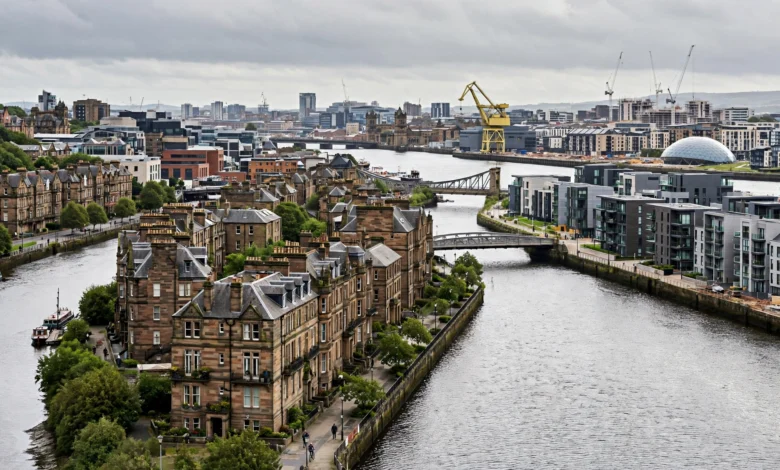
Glasgow property market conditions in 2026 sit at an unusual crossroads. Price growth has cooled to a modest pace compared to the sharper gains seen in recent years, yet rental demand keeps climbing, and investors from outside Scotland continue treating the city as one of the more compelling value plays in the UK. That combination, steady prices alongside strong rents, is exactly the kind of setup that draws close attention from anyone weighing where to put capital this year.
What makes Glasgow worth watching isn’t a single headline statistic. It’s the way several trends are converging at once. Mortgage rates remain elevated enough to keep buyers cautious, even as the Bank of England eases gradually. New rent control legislation is reshaping how landlords approach the lettings market. And within the city itself, performance is diverging sharply by property type and neighborhood, with family homes outperforming city-centre flats by a wide margin.
This article walks through the key trends shaping the Glasgow property market this year, drawing on the latest price data, rental statistics, and neighborhood-level forecasts. Whether you’re a first-time property investor evaluating Scotland for the first time or an existing landlord reassessing your portfolio, you’ll come away with a clear, current picture of where the opportunities and risks actually sit.
Glasgow Property Market: The Current Baseline
Before diving into specific trends, it’s worth establishing where the Glasgow property market actually stands right now. Residential prices across the city increased by roughly 1.2% over the twelve months to March 2026, putting average property values around £191,000. That’s steady growth rather than a speculative spike, and it reflects a market that’s found a more stable footing after the sharper swings of the post-pandemic years.

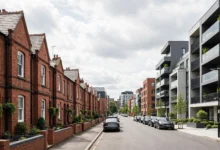
A few baseline figures worth knowing:
- Average property price: approximately £191,000 citywide
- Annual price growth: around 1.2%, with meaningful variation by property type
- Average monthly rent: approximately £1,260 across Greater Glasgow
- Bank of England base rate: 3.75% as of early 2026, easing gradually from prior highs
- Sale-to-asking ratio: roughly 101% to 103% of Home Report valuation for strong listings
This baseline sets up the more interesting story underneath the headline numbers, which is where the real signals for investors are showing up.
Trend 1: Family Homes Are Outperforming City-Centre Flats
One of the clearest patterns in the current Glasgow property market is the widening gap between family housing and city-centre apartments. Over the past year, semi-detached houses rose by roughly 3.8% in value, while flats across the city were nearly flat by comparison.
This divergence reflects a broader shift in buyer priorities:
- Buyers increasingly want more space, but still want to remain near transport links, schools, and established neighborhoods
- City-centre modern flats, particularly those with high service charges, building safety concerns, or heavy investor ownership, are facing more buyer hesitancy
- Family-sized properties in accessible, well-connected areas are absorbing most of the demand that used to spread more evenly across property types
For investors, this trend suggests that portfolio composition matters more than it did a few years ago. A strategy built entirely around city-centre flats is facing headwinds that a more diversified approach, including family homes in commuter-friendly neighborhoods, may not.
Trend 2: Rental Demand Continues to Outpace Supply
The lettings side of the Glasgow property market tells a notably different story than the sales side. Rents across Greater Glasgow have been rising by around 6% annually, driven by demand that continues to outstrip new rental supply.
Several forces are feeding this imbalance:
- Student demand, with the University of Glasgow and University of Strathclyde together attracting thousands of new students each year, many of whom require private rental housing due to limited on-campus capacity
- Population growth, with the city’s population reaching approximately 650,300 in recent counts and growing faster than Scotland as a whole
- Constrained new supply, as new rental listings recover only slowly from several years of decline
- Renters unable to buy, as higher mortgage rates keep some would-be buyers in the rental market longer than they’d prefer
This combination has made the Glasgow rental market one of the more attractive components of the broader picture for investors focused on yield rather than short-term capital appreciation.
Trend 3: Regulatory Change Is Reshaping Landlord Behavior
Investors in 2026 can’t evaluate the Glasgow property market without accounting for the Housing (Scotland) Act 2025, which introduced new rent control mechanisms and additional compliance requirements for landlords. This legislative shift has had a measurable effect on investor behavior:
- New entrants to the lettings market have slowed, as some prospective landlords weigh the added regulatory complexity against expected returns
- Existing landlords are becoming more analytical, assessing yield, compliance cost, and long-term capital resilience with greater scrutiny than in previous cycles
- Some landlords are shifting strategy, including a documented move among Glasgow landlords away from short-term lets like Airbnb and toward long-term rental arrangements
This regulatory backdrop doesn’t eliminate the appeal of the Glasgow rental market, but it does mean returns need to be underwritten more carefully, factoring in compliance costs and rent control mechanics that weren’t part of the equation a few years ago.
Trend 4: Certain Neighborhoods Are Positioned for Faster Growth
Not every part of Glasgow is moving at the same pace, and investors paying attention to neighborhood-level data are finding meaningful differences. Areas expected to see comparatively faster price growth in 2026 include:
- Dennistoun, projected for growth in the range of 4% to 6%, benefiting from its proximity to the city centre and ongoing gentrification
- Govan, also projected around 4% growth, supported by regeneration investment along the Clyde
- Shawlands, drawing continued interest from buyers seeking established Southside character with strong transport links
Beyond these, areas tied to regeneration projects, including Tradeston, Bridgeton and Dalmarnock near the Clyde Gateway, and Pollokshields and Strathbungo, are frequently cited as longer-term growth candidates as infrastructure and public realm improvements continue to roll out.
Trend 5: The West End Remains a Defensive Long-Term Play
For investors prioritizing stability over speculative upside, Glasgow’s West End continues to stand out. The area benefits from consistent demand from buyers relocating from outside Glasgow, drawn by its value proposition compared to London, the South East of England, and even parts of Edinburgh.
Key characteristics of the West End market include:
- Persistent undersupply in the lettings market, with rental demand consistently exceeding available stock
- A steady inflow of external buyers, which acts as a buffer against broader national softness in the housing market
- A shift toward data-driven acquisition decisions, with investors relying less on speculation and more on detailed yield and compliance analysis before committing capital
This combination of resilient demand and increasingly disciplined investor behavior is part of why the West End is frequently described as one of Scotland’s more defensible long-term property locations.
Trend 6: Mortgage Market Shifts Are Changing Buyer Behavior
The mortgage landscape feeding into the Glasgow property market has evolved noticeably heading into 2026. Fixed-rate deals remain dominant, accounting for more than 85% of new mortgages, but a few other shifts are worth noting:
- Green mortgages and other niche products are gaining traction, particularly for self-employed borrowers and company directors
- Interest-only mortgages are making a comeback after years of decline, typically among higher earners with significant existing equity
- Remortgaging activity is expected to surge, with an estimated 1.8 million UK homeowners reaching the end of fixed-rate terms in 2026, many of whom could see meaningful monthly savings by switching to new deals as rates ease
For investors, these shifts matter because they influence how much borrowing capacity buyers actually have, which in turn shapes demand across different price bands and property types throughout the year.
Trend 7: Interest Rates Remain the Biggest Swing Factor
With the Bank of England base rate sitting at 3.75%, mortgage affordability continues to act as the primary constraint on faster price growth in Glasgow, more so than any lack of underlying demand. According to the Bank of England’s official monetary policy updates, the base rate has been easing gradually rather than dropping sharply, which shapes expectations for how quickly Glasgow mortgage rates might follow.
This matters for investors because it defines the realistic range of outcomes for the year ahead. Most current forecasts suggest Glasgow property prices could move anywhere from a slight 2% dip to a roughly 5% gain over the next twelve months, with a flat-to-modestly-rising outcome viewed as the most likely scenario. A sharp, unexpected rise in interest rates remains the single biggest factor that could push conditions toward the softer end of that range.
What This Means for Property Investors
Pulling these trends together, here’s how investors are approaching the Glasgow property market heading further into 2026:
- Favor family-sized homes over city-centre flats where possible, given the clear divergence in price performance between the two segments
- Underwrite rental returns with compliance costs in mind, factoring in the Housing (Scotland) Act 2025 rather than relying on pre-regulation yield assumptions
- Focus on undersupplied rental submarkets, particularly the West End, Finnieston, and Shawlands, where renter demand consistently exceeds available stock
- Watch regeneration-linked neighborhoods, including Dennistoun, Govan, Tradeston, and the Clyde Gateway area, for longer-term capital growth potential
- Track mortgage rate movement closely, since further easing or an unexpected increase would meaningfully shift the realistic price growth range for the year
For deeper neighborhood-level data and forecasting methodology behind these trends, resources like Registers of Scotland’s official property price statistics provide the underlying transaction data that most local market analyses, including this one, are ultimately built on.
Common Questions From Investors
Is now a good time to invest in the Glasgow property market?
Current data suggests low likelihood of a significant price decline over the next year, supported by strong rental demand and limited forced-selling pressure, though mortgage rate movement remains the key variable to watch.
Which Glasgow neighborhoods offer the strongest growth potential?
Dennistoun, Govan, and Shawlands are frequently cited for near-term price growth, while Tradeston and the Clyde Gateway area are considered longer-term regeneration plays.
How has rent control legislation affected Glasgow landlords?
The Housing (Scotland) Act 2025 has slowed the pace of new landlord entrants and pushed existing landlords toward more analytical, compliance-conscious strategies, including a shift away from short-term lets toward long-term tenancies in some cases.
Are city-centre flats still a good investment in Glasgow?
City-centre flats have underperformed family homes over the past year, particularly where service charges or heavy investor ownership create buyer hesitancy, making them a less straightforward choice than in previous cycles.
Conclusion
The Glasgow property market in 2026 rewards a more discerning approach than it may have required a few years ago. Steady but modest citywide price growth is masking sharper divergence underneath, with family homes outperforming city-centre flats, rental demand consistently outpacing supply, and new regulatory requirements reshaping how landlords evaluate returns. Neighborhood-level opportunity remains real, particularly in regeneration-linked areas like Dennistoun, Govan, and the Clyde Gateway, alongside the more defensive, consistently undersupplied West End. For investors willing to look past the headline growth figure and examine property type, location, and regulatory exposure individually, Glasgow continues to offer one of the more balanced risk-and-return profiles among major UK cities heading through the rest of 2026.