Boston Housing Supply 2026: Massachusetts Faces a Critical Shortage of Homes
Boston housing supply news: Massachusetts confronts a critical inventory shortage in 2026, with permits down and prices climbing across Greater Boston.

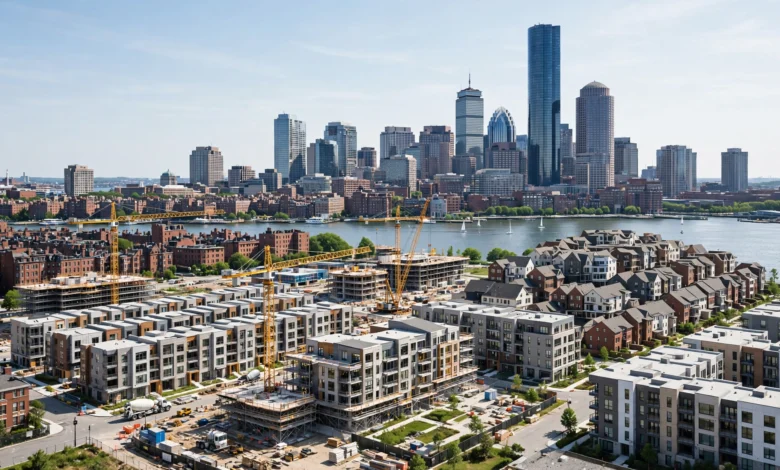
The Boston housing supply problem isn’t new, but 2026 is the year it’s finally being called what it is: a structural shortage, not a temporary blip. Greater Boston Association of Realtors data shows single-family supply in the metro dropped to just 1.8 months in early 2026, a fraction of the six months typically considered a balanced market. Meanwhile, new housing permits statewide have fallen 44% since 2021, and the state is staring down a projected shortfall of more than 220,000 housing units by 2030.
If you’ve tried to buy a home in Newton, Brookline, or Belmont recently, or watched rent climb in Allston or East Boston, you already know this isn’t an abstract statistic. It’s the reason your search keeps coming up empty, or the reason a decent listing gets five offers within a week. This article walks through what’s actually causing the shortage, what the current inventory and pricing numbers look like across Greater Boston, and what it means whether you’re trying to buy, sell, rent, or invest here.
We’ll also look at where the state’s housing production law and local zoning reforms, like the MBTA Communities Act, fit into the picture, and whether there’s any realistic timeline for supply catching up with demand. As with any housing market conversation, the goal here is to separate what the data actually shows from the noise, so you can make decisions based on facts rather than headlines.
Understanding the Boston Housing Supply Shortage
Before getting into the numbers, it helps to understand why Boston’s housing shortage behaves differently than a normal market cycle. Most housing shortages ease once interest rates drop or builders catch up. Boston’s doesn’t work that way, and local experts have been fairly blunt about it.
Why This Is a Structural Problem, Not a Cyclical One
Todd Denman, founder of a Boston-based real estate brokerage, put it plainly: Boston’s constraints come from how old the city is, how little vacant land remains, and how restrictive local zoning continues to be. Those three factors combine to create a ceiling on new construction that doesn’t move much even when demand or interest rates change. HousingWire named Boston the hottest large metro market entering 2026 for exactly this reason, citing chronic supply shortages, fast sales, and a job base that keeps outpacing the national average (HousingWire).
The Permit Collapse Behind the Shortage
The clearest evidence of the supply problem shows up in construction permit data. New housing permits statewide were down 44% in July 2025 compared to July 2021 levels, according to the Housing Report Card cited by the Boston Globe. High interest rates over the past few years didn’t just discourage buyers, they froze developers in place, since the math on new construction stopped working when borrowing costs climbed. That pause in building is now showing up as a real supply cliff heading into 2026 and 2027 (Boston Globe).
On top of that, statewide building permits actually fell again in 2025. Massachusetts authorized 12,096 new private housing units in 2025, down 15.6% from the 14,338 units authorized in 2024. That’s a shortage getting worse in the near term even as policymakers push new production targets.
Current Massachusetts Housing Inventory Numbers
Here’s where the shortage becomes concrete. The numbers vary a bit depending on the source and the exact geography, but they all point the same direction.
Statewide Inventory
- The Massachusetts Housing Finance Agency reported the state was sitting at roughly 2.1 months of housing supply in early 2026, far below the six-month benchmark for a balanced market
- Active statewide listings were down about 12% year over year during the same period
- A separate market report counted 16,978 homes listed statewide, a 4.3% year-over-year drop in inventory
Greater Boston Specifically
- Single-family homes across the Greater Boston metro dropped to 1.8 months of supply in March 2026, a 15% decline from the previous quarter
- Boston proper showed 2,860 active listings as of June 2026, translating to roughly 6.9 months of supply citywide on a list-price basis, a notable loosening from the extreme shortages of 2021 and 2022
- Condominium inventory in premium neighborhoods like Back Bay and South End remains especially tight, with waitlists persisting despite high asking prices
Days on Market and Absorption
Even with more listings appearing in some categories, well-priced homes are still moving quickly:
- Redfin’s three-month average for Boston puts days on market at around 26 days
- GBAR reported single-family days on market at 37 days in April 2026, with condos at 51 days, up 18.5% year over year
- Statewide, the average property stays listed around 56 days with about two months of supply
- Listings are being absorbed roughly 17.5% faster than the prior year, showing the market processes new inventory quickly rather than letting it pile up
The takeaway here is important: inventory numbers look slightly better than they did a few years ago, but “slightly better than historically awful” is still a shortage. A 6.9-month supply in the city center sounds close to balanced, but that figure masks how tight things remain in specific high-demand neighborhoods and price bands.
What’s Driving Demand Against a Limited Boston Housing Supply
Supply is only half the equation. The Boston housing supply shortage would matter less if demand were weak, but it isn’t.
Job Growth and High-Skilled Workers
Boston’s economy continues to attract high-skilled workers in healthcare, biotech, education, and finance at a pace that outstrips most other major metros. That steady influx of well-paid professionals keeps competition for a limited number of homes intense, particularly in neighborhoods with strong schools and shorter commutes.
Persistent In-Migration
Even with the cost of living challenges Massachusetts is known for, the region keeps drawing people in rather than losing them, driven by its universities, hospital systems, and expanding tech and life sciences sectors. Hybrid work arrangements have also widened the radius of acceptable commuting distance, pushing demand outward into suburbs that previously flew under the radar.
Rate-Sensitive Buyers Re-Entering the Market
Mortgage rates staying below roughly 6.64%, aided by improved mortgage spreads, have kept buyer demand firm even as affordability remains a real strain. Weekly pending home sales nationally have been outperforming the prior year’s pace, and Boston’s tight inventory means even modest upticks in buyer activity translate into fast-moving listings and continued upward price pressure.
Home Prices Across the Boston Housing Market
None of this shortage discussion means much without looking at what it’s doing to prices.
Median and Average Prices
The average home price in Boston is currently hovering between $875,000 and $900,000, a figure that reflects both the shortage and the metro’s high-income buyer pool. That’s dramatically higher than national medians and even above many other expensive coastal metros, underscoring how severe the supply-demand imbalance really is here.
Sales Volume Is Actually Down
Interestingly, sales volume has slipped even as prices climb. Massachusetts single-family home sales were down more than 10% to start 2026, with some measures pointing to a 15.6% year-over-year decline. Condo sales fell more than 10.5% over the same period. This isn’t a sign of weak demand. It’s a sign that there simply aren’t enough homes changing hands to satisfy the buyers who want them, which keeps prices rising even as transaction counts fall.
A Two-Tier Market
Boston’s housing market in 2026 behaves almost like two separate markets running side by side:
- Well-priced, move-in-ready homes in desirable neighborhoods still generate competitive offers and close quickly, often within the first three weeks of listing
- Overpriced or dated listings sit on the market considerably longer, since buyers now have enough options to be selective rather than desperate
The first three weeks on market have effectively become the deciding window for whether a home closes near asking price or has to chase the market downward with price cuts.
Neighborhoods and Suburbs Feeling the Shortage Most
The Boston housing supply crunch isn’t distributed evenly. Some areas are dramatically tighter than others.
Where the Shortage Is Worst
- Newton, Brookline, and Belmont – Structural shortages of single-family inventory here keep prices firmly supported regardless of broader market softening elsewhere
- Cambridge and Somerville – Urban core communities where inventory levels sit near historic lows
- Back Bay and South End – Luxury condo markets where waitlists persist even at premium price points
Where Buyers Have More Options
- Brighton, Allston, and East Boston – First-time buyers are more likely to find competitive, though still active, condo listings in these neighborhoods
- Waltham, Watertown, Quincy, and Medford – Entry-level single-family inventory here offers relatively more accessible price points compared to the urban core
- Western Massachusetts – Suburban and rural markets further from Boston show a more balanced supply-demand ratio than the capital region
Policy Responses to the Massachusetts Housing Shortage
State and local governments haven’t ignored the problem, even if results are slow to materialize.
The 2024 Housing Production Law
Massachusetts passed a housing production law aimed at chipping away at the state’s projected 220,000-plus unit shortfall by 2030. Governor Maura Healey said in December 2025 that the state has “started or built 100,000 homes” toward that goal, though it’s worth noting that figure includes projects at various stages, not just completed units ready for occupancy.
The MBTA Communities Act
At least 165 cities and towns across Massachusetts have created zoning allowances for multifamily housing under the MBTA Communities Act, a state law requiring municipalities near transit lines to permit denser housing development. These reforms could gradually add meaningful supply over time, but the effect on actual inventory will take years to show up in listing counts given how long permitting, financing, and construction typically take.
Local Resistance and Rent Control Debates
Not every policy conversation is pushing in the same direction. Ongoing debate over rent control in Boston has some developers looking at other states for new projects, worried that added regulation will make Massachusetts less attractive for new housing investment. Industry voices have argued that supply-side solutions, more permitting, more zoning flexibility, more construction incentives, will do more for affordability than regulations that could discourage new development in the first place.
What the Housing Shortage Means for Buyers
If you’re actively searching in this market, a few practical realities apply:
- Expect competition concentrated in specific neighborhoods. Newton, Brookline, and Belmont remain tight regardless of citywide inventory trends, so widening your search radius into Waltham, Watertown, or Quincy may open up realistic options
- Move fast on well-priced listings. With absorption rates outpacing last year’s pace, hesitating on a fairly priced home in a desirable area often means losing it
- Don’t assume higher citywide inventory means easier buying. A 6.9-month citywide supply figure can mask brutal competition in the specific price range and neighborhood you actually want
- Get pre-approved and stay ready. Rate-sensitive demand means buyer activity can pick up quickly whenever mortgage rates dip even slightly
What the Housing Shortage Means for Sellers
Sellers in most of Greater Boston remain in a strong position, though not an unconditional one:
- Homes priced accurately for their neighborhood and condition are still closing within roughly three to five weeks
- Overpricing carries real consequences now that buyers have more comparison points than they did during the extreme shortages of 2021 and 2022
- The average Boston home price near $875,000 to $900,000 reflects genuine scarcity value, particularly for single-family homes in transit-accessible suburbs
What the Housing Shortage Means for Investors and Renters
For investors, the persistent Boston housing supply shortage supports long-term rental demand, particularly in neighborhoods near universities and hospital systems where vacancy rates remain historically low. Rental markets have shown a slight loosening, with days on market for apartments stretching about five days longer than the prior year, and vacancy rates approaching levels not seen since before the pandemic. That’s a meaningful shift after four consecutive years of vacancy increases, but it still doesn’t amount to a renter’s market by national standards. For renters, this means slightly more negotiating room than a few years ago, though rents remain elevated relative to most of the country given how constrained the overall housing stock is.
Forecast: Will the Boston Housing Supply Shortage Improve?
Most analysts expect gradual, not dramatic, improvement through the rest of 2026 and into 2027. Deliveries of new units already in the construction pipeline are expected to stay above the five-year average in the near term, even as new permitting activity has slowed considerably. That combination suggests a temporary bump in available inventory as current projects finish, followed by a potential renewed tightening once that pipeline runs dry, since new permits simply aren’t being filed at a pace that replaces it. The MBTA Communities Act and the state’s housing production law represent the most credible long-term levers for adding supply, but given typical development timelines, meaningful relief is more likely a late-2020s story than something that resolves within the next year or two.
Conclusion
The Boston housing supply shortage heading into 2026 isn’t a passing market quirk. It’s the product of decades of restrictive zoning, limited buildable land, and a recent collapse in new construction permitting, layered on top of some of the strongest job and population growth of any major U.S. metro. Statewide inventory sitting near two months of supply, single-family listings in Greater Boston at 1.8 months, and permits down 44% from 2021 levels all point to the same conclusion: demand isn’t the problem here, supply is. Buyers face real competition in specific neighborhoods even as citywide numbers look modestly better, sellers in most areas remain well positioned, and policy efforts like the MBTA Communities Act offer a real but slow path toward relief. Anyone navigating this market in 2026, whether buying, selling, renting, or investing, should plan around a shortage that’s structural in nature and likely to persist for years rather than months.