Nashville Housing Market 2026: 5 Surprising Signs It Has Flipped From a Seller’s to a Buyer’s Market
Nashville housing market data for 2026 shows a real shift, with rising inventory, longer sale times, and more room to negotiate.

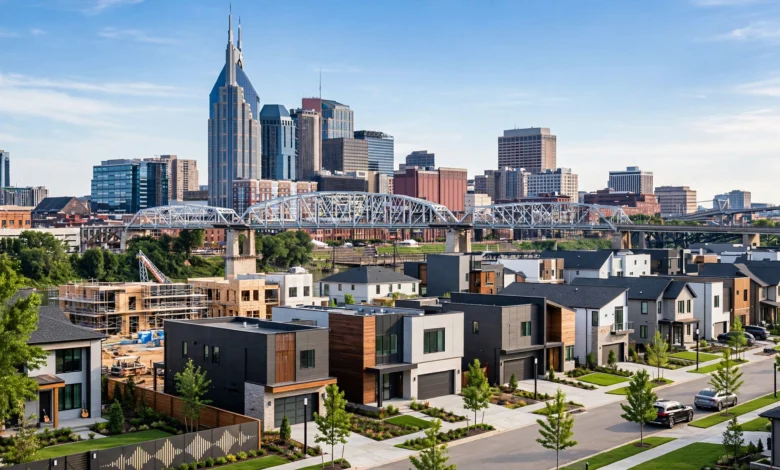
Nashville housing market watchers who still assume this is a seller’s paradise are working off outdated information. For years, that assumption was fair. Homes sold in days, bidding wars were routine, and sellers barely had to lift a finger to get above-asking offers. But the data coming out of 2026 tells a different story, and it’s worth correcting the record before making any decisions based on a market that no longer exists in the same form.
Nashville has moved into buyer’s market territory, according to recent analysis, with sellers now significantly outnumbering buyers across the metro area. Homes are taking longer to sell, inventory has climbed, and negotiating leverage has shifted noticeably in the buyer’s direction. This doesn’t mean Nashville is crashing or that sellers can’t get solid results. It means the frantic, sprint-to-the-closing-table dynamic of 2020 through 2022 has given way to something slower and more measured.
This article breaks down exactly what’s changed in the Nashville housing market, using the latest inventory, pricing, and days-on-market figures, along with how conditions differ across Davidson, Williamson, and surrounding counties. Whether you’re buying, selling, or just trying to understand Tennessee housing trends heading into the rest of 2026, this gives you a grounded, current picture rather than a headline that stopped being accurate months ago.
Tennessee Housing Trends: The Bigger Picture
Before zooming into Nashville specifically, it helps to look at the broader Tennessee housing trends shaping the state. Middle Tennessee has been one of the fastest-growing regions in the country for the better part of a decade, driven by corporate relocations, a strong healthcare and music industry base, and steady population inflows from higher-cost states.

That growth hasn’t stopped, but it has slowed to a more sustainable pace. A few statewide patterns worth noting:
- Population growth continues, but at a more measured rate than the peak relocation years of 2020 to 2022
- New construction has expanded supply, particularly in suburban counties around Nashville
- Affordability pressure remains real, as home prices climbed faster than wages over the past several years
- Mortgage rates are easing slightly, with 30-year fixed rates hovering in the low 6% range in early 2026, down from roughly 6.9% a year earlier
These statewide trends set the stage for what’s happening in Nashville specifically, where the effects of rising inventory and cooling urgency have shown up most clearly.
Sign 1: Nashville Now Has More Sellers Than Buyers
The clearest evidence that Nashville has moved out of seller’s market territory comes from recent buyer-to-seller ratio data. Redfin’s analysis found that Nashville had roughly 130% more sellers than buyers in May 2026, the largest gap among the major metro areas the firm tracked, ahead of cities like Austin and Miami. That figure had actually grown from about 114% the previous month, marking one of the sharpest shifts toward buyer leverage of any market in the country.
Redfin generally defines a buyer’s market as one with at least 10% more sellers than buyers, which makes Nashville’s gap far beyond the threshold, not just a borderline case. In practical terms, this means:
- Buyers have significantly more properties to choose from
- Sellers face more competition from other listings in their price range
- Offers are less likely to be rushed, and buyers have more room to negotiate on price, repairs, and closing terms
This single data point is probably the most important correction to make for anyone still operating under the assumption that Nashville sellers hold all the cards.
Sign 2: Homes Are Sitting on the Market Longer
Days on market is one of the most reliable indicators of how competitive a market really is, and Nashville’s numbers have moved meaningfully. Recent data shows homes in Nashville selling after an average of 61 days on market, up from 57 days the year before. Other regional analysis places the broader range even higher, between 51 and 70 days depending on the submarket and price point.
For context, during the peak of Nashville’s seller’s market in 2021 and 2022, well-priced homes were often going under contract within days, sometimes hours. A jump into the 50-to-70-day range represents a fundamentally different pace, one where sellers need to plan for a longer timeline and buyers have more breathing room to make thoughtful decisions rather than rushed offers.
Sign 3: Inventory Has Climbed Significantly
Rising inventory is the mechanical driver behind most of these other shifts. The Nashville region ended 2025 with an estimated 11,400 active listings, up roughly 13% year over year, translating to about 3.5 to 4 months of available supply.
To put that in perspective:
- 1 to 2 months of supply is generally considered a strong seller’s market, which is roughly where Nashville sat during 2021 and 2022
- 3.5 to 4 months of supply reflects a market that has shifted meaningfully toward buyers, even if it hasn’t yet reached the 5 to 6 months typically associated with a fully balanced market
- 5 to 6+ months of supply is the traditional benchmark for a balanced or buyer-favoring market overall
Nashville sitting at 3.5 to 4 months puts it clearly past the extreme seller conditions of a few years ago, even though it hasn’t fully crossed into deeply buyer-favored territory on this metric alone. Combined with the buyer-to-seller ratio data above, the overall picture leans firmly toward buyers having the upper hand right now.
Sign 4: Sellers Are Offering More Incentives
When a market shifts, seller behavior tends to shift right along with it, and that’s exactly what’s happening in Nashville. With homes taking longer to sell, sellers and builders have increasingly turned to incentives to keep deals moving. Common concessions showing up in Nashville contracts include:
- Closing cost assistance, where sellers contribute cash toward a buyer’s title fees and taxes
- Mortgage rate buydowns, temporary or permanent reductions that lower a buyer’s monthly payment, particularly valuable in the first years of a loan
- Repair credits, offered more frequently as buyers negotiate harder after inspections
- Price reductions after extended time on market, especially for homes that were initially listed at aspirational prices
These incentives weren’t a regular feature of the Nashville market during its peak seller’s years. Their return is a direct sign that sellers are adjusting to a more competitive listing environment.
Sign 5: The Market Is Fragmenting by Submarket and Price Point
Perhaps the most important nuance in the current data is that “the Nashville housing market” is no longer one unified story. Conditions vary noticeably depending on location and price segment:
- Davidson County is showing more negotiation pressure in middle-tier price segments, where affordability constraints hit hardest
- Williamson County and other higher-income suburban areas have generally held up better on pricing, supported by stronger buyer demand at higher price points
- The luxury segment ($1M+) has seen inventory increase and days on market extend significantly, giving high-end buyers more negotiating power than they’ve had in years
- Growing secondary markets like Columbia and Gallatin are seeing ownership costs become increasingly comparable to high-end rentals, which is drawing buyer interest even as the core Nashville market cools
This fragmentation means broad statements about Nashville real estate are becoming less reliable on their own. A home in a desirable East Nashville neighborhood, well-priced and well-presented, can still sell quickly. A comparable but less distinctive property in a competitive price bracket may sit for weeks.
What This Means for Sellers in 2026
For sellers, the shift toward buyer leverage doesn’t mean it’s impossible to sell, but it does mean the strategy needs to adjust. Based on current market data, sellers should focus on:
- Accurate pricing from the start, since overpricing in a slower market leads to extended time on market and eventual price cuts rather than quick offers
- Strong presentation, including staging and professional photography, since buyers are now comparing more options before committing
- Flexibility on concessions, expecting requests for closing cost help or repair credits as a normal part of negotiations
- Realistic timeline expectations, planning for weeks rather than days between listing and accepted offer
According to Greater Nashville REALTORS®, sellers who understand today’s market dynamics and price their homes correctly from the outset are still achieving strong results, even as the overall environment has become more measured and less frantic than in previous years.
What This Means for Buyers in 2026
Buyers, on the other hand, are in a noticeably stronger position than they’ve been in years. Practical takeaways for anyone house hunting in Nashville right now include:
- More inventory to choose from, reducing the pressure to make snap decisions on the first available option
- Increased negotiating leverage, particularly on price, repairs, and closing costs
- Access to seller and builder incentives, including rate buydowns that can meaningfully lower monthly payments
- More time to conduct due diligence, including inspections and neighborhood research, without the fear of losing the home to a same-day competing offer
The trade-off is that mortgage rates, while easing slightly, remain higher than the historic lows buyers saw a few years ago, which continues to affect overall affordability and monthly payment calculations even as home prices moderate.
Nashville Home Prices: Where Things Stand
Despite the shift in market dynamics, Nashville home prices haven’t collapsed, they’ve simply stopped accelerating at the pace seen in prior years. Recent data from Redfin’s Nashville housing market page shows a median sale price around $480,000 over a recent three-month period, up about 1% year over year, alongside a median price per square foot of roughly $275, also up modestly from the prior year.
That kind of modest, single-digit price growth is a meaningful departure from the double-digit annual gains Nashville saw during its hottest years, but it’s also far from the sharp price declines some buyers might be hoping for. The more accurate description of Nashville home prices in 2026 is stabilization rather than either a boom or a correction.
Frequently Asked Questions
Is Nashville still a seller’s market in 2026?
No. Recent data shows Nashville has shifted into buyer’s market territory, with significantly more sellers than buyers active in the market and rising inventory giving buyers more leverage than they’ve had in several years.
Are Nashville home prices dropping?
Prices have largely stabilized rather than dropped sharply, with modest year-over-year gains in the low single digits rather than the steep appreciation seen in prior years.
How long does it take to sell a home in Nashville right now?
Homes are currently taking an average of around 60 days to sell, up from under 60 days the previous year, with some submarkets and price points seeing even longer timelines.
Is now a good time to buy a home in Nashville?
Buyers currently have more negotiating power, more inventory, and access to seller incentives than in recent years, though mortgage rates remain a key factor in overall affordability.
Conclusion
The Nashville housing market has clearly moved past the seller-dominated conditions that defined the early 2020s, and the current data leaves little ambiguity about it. Sellers now significantly outnumber buyers, homes are sitting on the market longer, inventory has grown, and incentives like closing cost assistance and rate buydowns have become a regular part of negotiations again. None of this means Nashville real estate is struggling. Prices have held largely steady, population growth continues, and well-priced homes in desirable areas are still selling. What it does mean is that anyone relying on an outdated “Nashville is a seller’s market” narrative is working from information that no longer matches conditions on the ground, and both buyers and sellers will get better outcomes by planning around the market that actually exists in 2026 rather than the one that existed a few years ago.