Brisbane Real Estate News 2026: Queensland’s Explosive Housing Boom Continues
Brisbane real estate news on Queensland's 2026 housing boom, covering price growth, population drivers, and the outlook for buyers and investors.

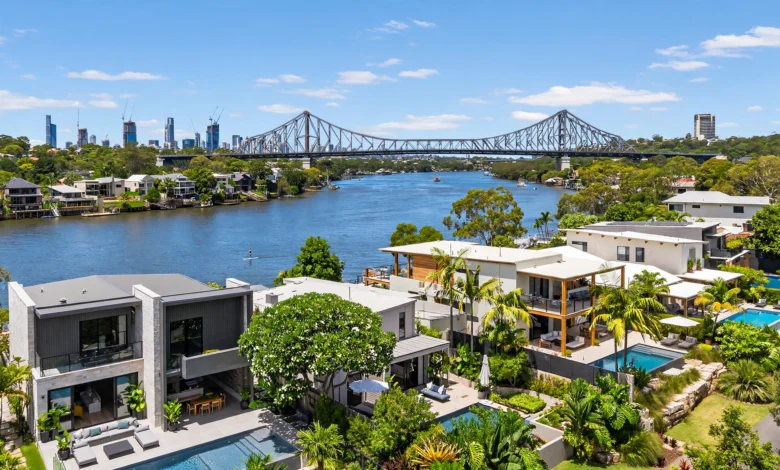
Brisbane real estate news in 2026 keeps circling back to the same headline: Queensland’s capital just won’t slow down. After five years of outrunning the national average, Brisbane has pushed past the $1 million median dwelling value and, depending on which index you check, is sitting somewhere between 12% and 19% higher than it was just twelve months ago. For a city that used to be considered the affordable alternative to Sydney and Melbourne, that label is starting to look increasingly outdated.
What makes Brisbane’s run different from a typical local price spike is how many structural forces are pulling in the same direction at once. Queensland is absorbing interstate migration at the fastest rate in the country, construction hasn’t kept pace with demand, and the city is now gearing up for infrastructure spending tied to the 2032 Olympics, the kind of investment that has historically fueled long-term property growth in past host cities. Investor sentiment surveys still rank Queensland as the most attractive state in the country for property investment over the next year.
This article breaks down exactly where Brisbane and Queensland’s housing market stand right now, what’s actually driving the continued boom, how houses and units are performing differently, which suburbs and regions are seeing the strongest growth, and what forecasters expect through the rest of 2026 and into 2027. Whether you’re a buyer trying to time your entry or an investor weighing Brisbane against other capital cities, here’s what the current data actually shows.
Brisbane Real Estate News: Current Price Data
Brisbane’s Median Values in 2026
Price figures vary somewhat depending on the data provider and exactly how “Brisbane” is defined, city LGA versus Greater Brisbane, but the overall picture is consistent. According to Cotality’s Home Value Index, Brisbane’s dwelling median reached $1,104,094 as of July 2026, up 14.8% over the year, even as monthly and quarterly figures showed a slight easing of -0.6%, suggesting the market may have peaked around May 2026 before pulling back modestly.
Other reporting shows even steeper annual growth. One index put Brisbane’s median house value at $1,222,906 in April 2026, representing annual growth of +19.1%, with units posting an even sharper +22.6% annual increase to a median of $876,474.
The Real Estate Institute of Queensland’s March 2026 quarterly data adds further detail: Brisbane’s median house price rose 3.18% over the quarter to $1.46 million within the city LGA specifically, while Greater Brisbane’s median house price increased 5.75% over the quarter to $1.15 million, up 15.5% year-on-year.
Units Are Outperforming Houses
One of the more notable shifts in Brisbane’s 2026 housing story is how strongly the unit market has performed relative to houses. Across Greater Brisbane, unit prices rose 5.74% over the March quarter to $837,500, while some indices show annual unit growth exceeding 22%, outpacing the house segment. This reflects growing demand for more affordable entry points as house prices climb further out of reach for many buyers, along with the compounding effect of investors chasing stronger rental yields in the unit market.
Statewide Queensland Trends
Queensland’s housing market overall continues its upward trajectory, though at a somewhat more measured pace than the sharpest years of the recent boom. The statewide median house price rose 4.21% over the March 2026 quarter to $990,000, up 15.7% over the year. Statewide unit prices increased 4.81% over the quarter to $817,500, up 17.19% annually.
What’s Driving Queensland’s Continued Housing Boom?
Population Growth and Interstate Migration
Queensland is currently attracting interstate migrants at the fastest rate of any Australian state, with estimates suggesting around 150,000 interstate migrants arrive annually, and Brisbane absorbing roughly 60% of that inflow. Much of this movement comes from Sydney and Melbourne, where buyers are seeking relative affordability, lifestyle appeal, and often remote work flexibility that no longer ties them to those higher-cost cities.
The 2032 Olympics Infrastructure Pipeline
Brisbane’s selection to host the 2032 Olympic Games has become a significant structural tailwind for the region’s property market. Olympic host cities have historically experienced sustained long-term property growth tied to major infrastructure investment, transport upgrades, and international exposure. With construction and planning already ramping up years ahead of the Games, this pipeline is expected to continue supporting property values well beyond the immediate pre-Games period.
A Persistent Housing Supply Shortage
Despite strong demand, Brisbane’s housing supply has struggled to keep pace. New construction has faced ongoing challenges, including:
- Elevated construction costs limiting the pace of new housing delivery
- Labor shortages in the building and trades sector
- Planning and approval delays affecting how quickly new supply reaches the market
- Land availability constraints, particularly in inner and middle-ring suburbs where demand is strongest
This combination of tight supply and sustained population inflow is the primary reason forecasters continue to expect price growth even as affordability pressures mount.
Strong and Sustained Investor Demand
Investor confidence in Queensland remains notably strong. According to recent sentiment surveys, Queensland continues to rank as the most attractive state in Australia for property investment over the coming 12 months, with around 69% of surveyed investors intending to buy in the state. While houses remain the clear preference, rising interest in townhouses, villas, and even commercial property suggests investors are increasingly searching for value across a broader range of property types as pure house prices climb further.
Brisbane vs Sydney and Melbourne: How Does It Compare?
Brisbane’s property market has continued to outperform Australia’s two largest capital cities on several key measures:
- Stronger capital growth — Brisbane’s annual growth rates have consistently outpaced both Sydney and Melbourne through the recent cycle
- Higher rental yields — inner-Brisbane suburbs are achieving rental yields between 4.8% and 5.2%, compared to Sydney’s more modest 3.2% to 3.8% range
- Faster-moving market — days on market have compressed to roughly 18 to 24 days across inner-city Brisbane suburbs, reflecting strong ongoing buyer competition
- More balanced supply-demand dynamics — unlike Sydney’s severely constrained supply or Melbourne’s oversupply concerns in certain segments, Brisbane has maintained a more sustainable equilibrium between construction activity and population inflow
This combination of stronger growth and healthier yields is a big part of why Brisbane continues to attract both interstate owner-occupiers and property investors from across the country.
Which Brisbane Suburbs and Regions Are Leading Growth?
Growth across Greater Brisbane hasn’t been uniform. Among the major local government areas tracked by REIQ in the most recent quarter:
- Moreton Bay recorded the strongest quarterly house price growth, up 5.3% to a median of $1.053 million
- Ipswich led quarterly growth in the unit segment specifically
- Inner-city and middle-ring suburbs continue to command the highest absolute prices, though outer growth corridors are increasingly popular with buyers priced out of inner areas
- Premium suburbs are generally forecast to outperform more affordable middle-ring areas through the remainder of 2026, according to several bank and industry forecasts
What Analysts and Major Banks Are Forecasting
Forecasts for Brisbane’s property market through the rest of 2026 and into 2027 remain broadly positive, though with meaningful variation depending on the source:
- KPMG’s residential property outlook forecasts Brisbane house prices to rise 10.9% in 2026 and a further 8.9% in 2027, positioning Brisbane as the second-strongest performing capital city behind Perth. Unit prices are projected to grow 7.8% in 2026 and 4.9% the following year.
- Louis Christopher’s Boom & Bust 2025 report projects Brisbane dwelling prices to rise across all modeled scenarios in 2026, with growth estimates ranging from 8% to 18% depending on economic conditions.
- Major banks including CBA, Westpac, and NAB have each published Queensland forecasts pointing in the same general direction, continued growth, though they differ meaningfully on the expected pace, reflecting genuine uncertainty about how much further the current cycle has to run.
Headwinds That Could Moderate Growth
Despite the broadly bullish outlook, several factors are being watched closely as potential moderating forces:
- Affordability constraints — with median values well above $1 million in many areas, the pool of buyers able to enter the market without significant existing equity continues to shrink
- Interest rate movements — while conditions have generally supported buyer activity, any tightening could dampen demand meaningfully given how leveraged the current growth cycle has become
- Tax reform discussions — ongoing policy conversations around property taxation at state and federal levels add a layer of uncertainty for both owner-occupiers and investors
- Weakening consumer sentiment — some recent data points to softening confidence even as prices continue climbing, a divergence worth watching closely
For a deeper look at the bank and industry forecasts driving expectations through 2027, this ABC News report on KPMG’s Brisbane price projections covers the methodology and city-by-city comparisons in detail. For the latest official quarterly sales data across Queensland, the REIQ media release on Queensland property prices provides the full breakdown by region and property type.
What This Means for Buyers and Investors
For anyone weighing a move into the Brisbane or wider Queensland market in 2026, the current data suggests a few practical takeaways:
- Owner-occupiers should expect continued competition for well-located properties, particularly in inner and middle-ring suburbs where supply remains tightest
- Investors are likely to find stronger yields in Brisbane than in Sydney or Melbourne, though entry prices have risen substantially from just a few years ago
- Unit buyers may find relatively better value and yield potential than the house market currently offers, given the sharper recent growth in unit prices reflecting genuine demand rather than speculation alone
- Timing decisions should account for the genuine uncertainty among major forecasters about how much growth remains in the current cycle, rather than assuming double-digit annual gains will continue indefinitely
Conclusion
Brisbane real estate news in 2026 continues to tell a consistent story: Queensland’s capital remains one of the strongest-performing property markets in Australia, driven by a powerful combination of interstate migration, a persistent housing supply shortage, and infrastructure investment tied to the 2032 Olympics. Median dwelling values have pushed past $1 million by most measures, with annual growth ranging from roughly 12% to nearly 20% depending on the index and property type, and units have increasingly outpaced houses as buyers and investors search for value. While major banks and forecasters broadly agree the boom has further to run through 2026 and into 2027, they diverge meaningfully on pace, and real affordability pressures, interest rate sensitivity, and shifting consumer sentiment all suggest the easiest gains of this cycle may already be behind the market. For buyers and investors alike, Brisbane remains a market worth watching closely rather than assuming the current trajectory is guaranteed to continue unchecked.