Dublin Housing Shortage: 7 Alarming Signs the Crisis Has Reached a Breaking Point
Dublin housing shortage data for 2026 shows record-low rental supply, soaring rents, and a construction gap with no quick fix in sight.

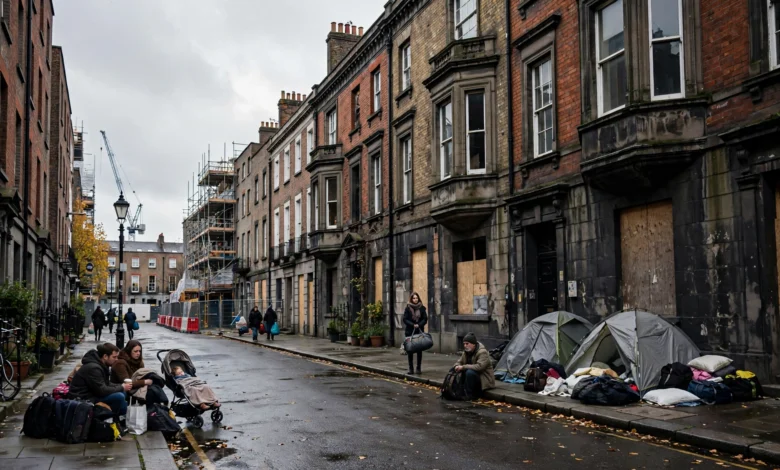
Dublin housing shortage conditions have moved from a persistent problem into something closer to a full-blown emergency in 2026. Rental listings across the capital have hit their lowest levels since records began, average rents have climbed past €2,400 for a two-bedroom apartment, and the gap between how many homes Ireland needs and how many actually get built each year keeps widening rather than closing.
This isn’t a new story for anyone who’s spent the last decade trying to rent or buy in Dublin, but the latest figures from Daft.ie, the Central Statistics Office, and housing researchers at Trinity College paint a picture that’s noticeably worse than even a year or two ago. Fewer than 1,800 rental homes were listed nationally in early February 2026, the lowest February figure on record, and Dublin accounted for a disproportionate share of that collapse, with listings down more than a third year-over-year.
This article walks through what’s actually driving the Dublin housing shortage, breaks down the latest rental and purchase price data, explains the structural construction gap behind it, and looks at what policy responses are attempting to do about it. Whether you’re currently searching for a place to live in Dublin or just trying to understand how the city got here, this covers the numbers and the forces behind them in detail.
Just How Bad Is the Dublin Housing Shortage Right Now?
The scale of the current shortage becomes clear once you look past headline rent figures and into the underlying supply numbers.


Rental Supply Has Hit Record Lows
On February 1, 2026, just days before new national rent-control measures took effect, fewer than 1,800 homes were listed for rent across all of Ireland, a 22% drop from the same date the previous year and the lowest February figure since records began in 2006. Dublin bore the brunt of this collapse, with listings falling by more than a third year-over-year as landlords held back properties amid uncertainty over the incoming rent rules.
Average Rents Have Climbed Sharply
By the second quarter of 2026, the average monthly market rent for a two-bedroom apartment in Dublin reached roughly €2,634, well above every other major Irish city. For comparison:
- Galway: approximately €2,336 per month
- Limerick: approximately €2,244 per month
- Cork: approximately €2,168 per month
- Waterford: approximately €1,637 per month
A one-bedroom apartment in Dublin’s city center now commonly runs between €1,700 and €2,500 per month, depending on the neighborhood, pushing the total cost of independent living well beyond what many single earners can comfortably manage.
The Affordability Math No Longer Works for Many Renters
Using the standard affordability benchmark of spending no more than 30% of net income on housing, a single person renting a modest one-bedroom apartment in Dublin at current prices would need to earn somewhere in the region of €61,000 net annually, which translates to a gross salary well above €100,000. That threshold puts independent renting out of reach for a large share of workers, including many in professions the city depends on directly.
For detailed, continuously updated figures on national rental trends, Daft.ie’s Rental Report is the most widely cited source tracking supply and pricing across Ireland on a quarterly basis.
What’s Driving the Dublin Housing Shortage
The Dublin housing shortage isn’t the result of a single cause. It’s the product of several compounding pressures that have built up over more than a decade.
1. A Persistent Construction Deficit
Housing researchers generally agree Ireland needs to build somewhere around 50,000 new homes per year to meet demand from population growth, household formation, and replacing aging stock. Actual completions have consistently fallen short of that figure, landing closer to 25,000 to 30,000 homes annually in recent years, roughly half of what’s actually required.
Dublin’s share of national completions has hovered around 32% in early 2026 data, meaning even as the capital absorbs the largest share of new construction, it still isn’t close to meeting local demand given how much of the country’s population and employment growth concentrates there.
2. Landlords Exiting the Rental Market
Uncertainty around new rent-control legislation appears to have accelerated an existing trend of smaller landlords selling their rental properties rather than continuing to let them. When individual landlords who own one or two properties exit the market, those units often convert to owner-occupied housing rather than staying in the rental pool, shrinking the available rental stock even when overall housing supply doesn’t change.
3. Strong, Concentrated Employment Growth
Dublin remains Ireland’s dominant hub for multinational employers, particularly in technology, finance, and pharmaceuticals. This concentration of well-paying jobs continues to draw both domestic migration from other parts of Ireland and significant numbers of international workers into the capital, adding sustained demand pressure that construction has never kept pace with.
4. Rising Construction Costs and Delays
Elevated material costs, labor shortages in the construction sector, and lengthy planning approval processes have all contributed to slower delivery timelines for new developments. Projects that might have taken two to three years to move from approval to completion a decade ago often face longer timelines today, delaying the addition of new supply even when planning permission has already been granted.
5. Growing Demand for Social and Supported Housing
The waiting list for social housing in Ireland stands at close to 60,000 households, with an additional roughly 53,500 households in active Housing Assistance Payment (HAP) tenancies still waiting for permanent accommodation. This places enormous pressure not just on the private rental market, but on the broader housing system’s capacity to absorb households that can’t compete in the open market at current price levels.
The Human Impact Behind the Numbers
Statistics only tell part of the story. Behind the rental figures and completion targets are real consequences playing out across the city.
- Monthly homelessness figures across Ireland have exceeded 16,000 people, including both adults and children, throughout the past year, a significant share of whom are working families unable to secure or afford stable housing.
- Teachers, nurses, and other essential workers have increasingly reported living in emergency accommodation or commuting long distances because housing near their workplace is financially out of reach.
- House-sharing has become the default option rather than a temporary stepping stone for many young professionals, with individual room prices in shared houses commonly ranging from €800 to €1,200 per month.
- Rental applications in high-demand Dublin postcodes frequently require a previous landlord reference and an employer letter just to be considered, adding barriers for newcomers to the city, including international workers and recent graduates.
Dublin Property Prices Aren’t Cooling Off Either
While rental figures dominate most headlines, the sales market tells a similarly tight story.
Current Purchase Prices
The median housing price in Dublin in 2026 sits at approximately €500,000, a figure that offers a more realistic buyer benchmark than the average price, since luxury transactions tend to skew average figures upward. New-build homes typically cost 10% to 18% more than comparable existing properties, reflecting better energy ratings and lower expected repair costs.
Where Growth Is Concentrated
Neighborhoods further from the city center, including areas like Inchicore, Ballyfermot, Crumlin, Finglas, and Tallaght, have seen some of the strongest recent price growth as buyers priced out of prime districts search for relative value. These outer areas are projected to see continued price growth in the 5% to 8% range through 2026 as demand spreads outward from increasingly unaffordable central postcodes.
Longer-Term Forecasts Remain Upward
Central forecasts suggest Dublin residential property prices could rise by roughly 22% to 30% in nominal terms over the next five years, assuming stable employment, no sharp mortgage rate increases, and gradual, incomplete improvement in housing supply. Even the more conservative scenario points to continued price growth rather than any meaningful correction, underscoring how structurally embedded the current shortage has become.
What’s Being Done to Address the Dublin Housing Shortage
Government and industry responses have focused on a mix of regulatory and supply-side measures, though most housing analysts caution that meaningful relief will take years rather than months to materialize.
Rent Control Adjustments
New national rent-control measures took effect in March 2026, aimed at providing tenants with greater predictability around rent increases during a tenancy. However, the period immediately preceding implementation saw a further reduction in available rental stock, as some landlords appeared to hold properties off the market while adjusting to the new rules, at least temporarily worsening the exact shortage the policy aims to address.
Cost Rental and Affordable Housing Schemes
Cost Rental schemes, which offer below-market rents on new developments in exchange for income eligibility limits, have expanded modestly, offering savings of €500 to €700 per month for successful applicants compared to open-market rates. Demand for these units significantly outstrips supply, and most schemes operate through lottery-style allocation given the volume of applicants relative to available units.
Tax Relief for Renters
The Rent Tax Credit, currently worth up to €1,000 per year for eligible renters, offers modest relief and can be claimed retroactively for up to four years by renters who haven’t previously filed for it. While helpful, most housing advocates view it as a partial offset rather than a meaningful solution to the underlying affordability gap.
Increased Housing Completion Targets
Government housing targets continue to emphasize increasing annual completions toward the estimated 50,000-unit benchmark needed to meet demand, though actual delivery has consistently trailed these targets. For official, continuously updated data on national housing completions and planning statistics, the Central Statistics Office’s housing and planning releases provide the most authoritative government source tracking Ireland’s progress against these goals.
Practical Options for People Navigating the Dublin Market Right Now
For anyone currently searching for housing in Dublin, a few practical strategies can help manage the current environment:
- Look beyond Dublin and Cork. Rents in Limerick, Waterford, and midland towns run 30% to 40% lower, and remote or hybrid work arrangements can make relocation financially compelling for some renters.
- Apply for Cost Rental housing. Despite long odds given demand, the potential savings make it worth applying even with lottery-style allocation systems.
- Claim the Rent Tax Credit. It’s a modest amount, but retroactive claims for up to four years can add up to a meaningful one-time benefit.
- Understand your rights under current tenancy law. The Residential Tenancies Board (RTB) provides a formal dispute resolution process for renters facing non-compliant landlords, and the recent rent-control changes have strengthened certain tenant protections.
- Move quickly on well-priced listings. In high-demand postcodes, competitive apartments frequently receive serious applications within 7 to 14 days of listing, so having reference letters and documentation ready in advance matters.
Frequently Asked Questions
Why is the Dublin housing shortage so severe compared to other Irish cities?
Dublin combines the country’s highest concentration of well-paying employment with a construction pace that has never kept up with demand, creating a supply-demand imbalance more extreme than in Cork, Galway, or Limerick, all of which have lower average rents and slightly better relative supply.
Will Dublin rents come down anytime soon?
Most forecasts suggest continued rent growth rather than a decline, with estimates pointing to further increases of 4% to 7% in 2026 alone, driven by persistently low supply and steady demand from both domestic and international workers.
How many homes does Ireland need to build to solve the shortage?
Most housing economists estimate Ireland needs approximately 50,000 new homes per year to meet demand, roughly double the current completion rate of around 25,000 to 30,000 homes annually.
Conclusion
The Dublin housing shortage has reached a point where record-low rental listings, rents exceeding €2,600 for a typical two-bedroom apartment, and a construction gap running at roughly half of estimated need have combined into one of the most severe housing imbalances in Europe. The causes run deep, spanning years of underbuilding, landlords exiting the rental market, concentrated employment growth, and planning delays that slow new supply even once projects are approved. Government responses, from rent controls to Cost Rental schemes and tax credits, offer partial relief, but most housing researchers agree meaningful improvement will take sustained increases in construction over several years rather than any single policy change. For now, anyone navigating Dublin’s housing market faces a landscape defined by scarcity, rising costs, and very little room for negotiation.