Las Vegas Home Pricing Strategy: Best Proven Ways to Sell Smart in Nevada
Las Vegas home pricing strategy tips for Nevada sellers who want a faster sale and stronger offers in today's shifting market.

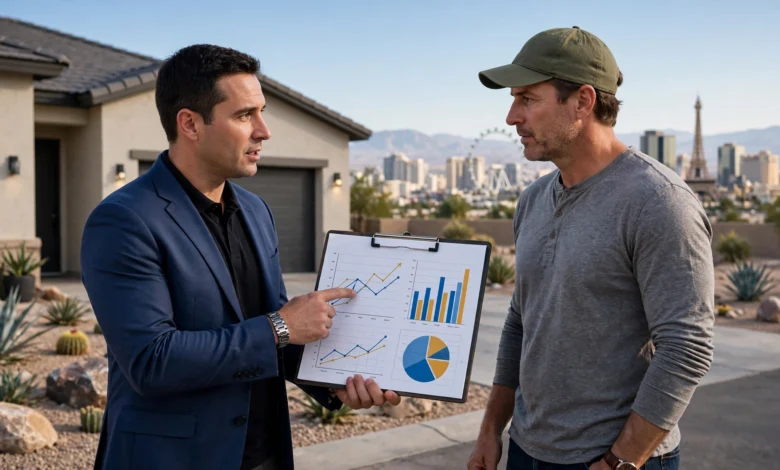
Las Vegas home pricing strategy decisions make or break a sale long before the first showing happens. Price a house too high and it sits on the market, picking up a reputation as “stale.” Price it too low and you leave money on the table that could have gone toward your next down payment. For homeowners preparing to sell in southern Nevada, getting the number right from day one is arguably the single biggest factor in how quickly and profitably a home moves.
The Las Vegas market has its own personality. It doesn’t behave like Phoenix, Denver, or Southern California, even though buyers frequently arrive from those exact places. Water rights, HOA structures, master-planned community premiums, and a housing stock that mixes 1990s ranch homes with brand-new builds in Summerlin and Henderson all play into how a property should be priced.
This guide walks through how Nevada home selling works from a pricing perspective, what local agents and appraisers actually look at, and the specific steps you can take to land on a number that attracts serious buyers without underselling your equity. Whether you’re selling a starter home near Sunrise Manor or a luxury property in The Ridges, the fundamentals below apply, just at different price points and with different buyer expectations.
Why Pricing Strategy Matters More in Las Vegas Than You Might Think
Las Vegas real estate moves in cycles tied closely to tourism, construction pipelines, and out-of-state migration. When more people move here than homes get built, prices climb fast. When new construction floods a submarket, resale sellers suddenly find themselves competing with builders offering rate buydowns and closing cost credits.


This means a pricing strategy that worked six months ago might already be outdated. Sellers who rely on old comps or a neighbor’s asking price from last year often end up chasing the market down, dropping the price repeatedly instead of nailing it the first time.
A few reasons pricing carries extra weight in this specific market:
- Investor and cash-buyer activity remains higher in Las Vegas than the national average, and these buyers are quick to walk away from anything that looks overpriced.
- New home competition from builders in Summerlin, Cadence, and Skye Canyon directly affects resale pricing in nearby zip codes.
- Seasonal buyer patterns shift with the weather and the convention calendar, so timing and pricing often need to move together.
- HOA fees and community amenities can add or subtract real dollars from a buyer’s perceived value, something a straight square-footage comparison misses.
Step 1: Understand Current Las Vegas Market Conditions
Before you land on a number, you need an honest read of where the market sits right now. This isn’t about vibes or what a friend sold their house for two years ago. It’s about active data.
Check Absorption Rate and Inventory Levels
The absorption rate tells you how many months it would take to sell all current inventory at the present sales pace. In a balanced Las Vegas housing market, that number typically sits around four to six months. Below that, sellers have more leverage. Above it, buyers do.
Local agents pull this data from the Greater Las Vegas Association of Realtors (GLVAR), and it’s worth asking your agent for the current figure specific to your zip code, not just the valley-wide average. Summerlin, Henderson, and North Las Vegas can each be telling very different stories at the same time.
Look at Days on Market (DOM) Trends
Rising DOM numbers usually signal a market cooling off or a segment that’s overbuilt. If similar homes in your neighborhood are sitting for 45+ days, that’s a signal to price competitively rather than aspirationally.
Step 2: Get a Real Comparative Market Analysis (CMA)
A comparative market analysis is the backbone of any solid pricing strategy, and it goes well beyond pulling three “sold” listings that sort of look like your house.
A properly built CMA for a Las Vegas property should include:
- Sold comps within the last 90 days, ideally within a one-mile radius or the same subdivision.
- Active listings you’ll be competing against right now.
- Pending sales, which often reflect the most current pricing reality since they haven’t closed yet but reflect what buyers just agreed to pay.
- Expired or withdrawn listings, which tell you what didn’t work.
- Price per square foot adjustments for lot size, upgrades, pool presence, and garage count, all of which move the needle significantly in Las Vegas due to the emphasis on outdoor living and heat mitigation features.
Agents typically weight recently sold comps most heavily, but in a fast-moving market, pending sales sometimes matter more because they capture what buyers are agreeing to pay today rather than 60 days ago.
Why HOA and Master-Planned Communities Change the Math
Las Vegas has an unusually high concentration of HOA-governed communities compared to many other metro areas. A home in Summerlin or Mountain’s Edge often commands a premium over an otherwise identical home outside those boundaries, simply because of amenities, gated security, and community upkeep standards. When building your CMA, make sure comps are pulled from within the same community or a genuinely comparable one, not just a similar-looking house three miles away in a different HOA.
Step 3: Choose Between Pricing Strategies
Once you understand the data, you have to pick an actual approach. There isn’t one universal right answer here. It depends on your timeline, your equity position, and how competitive your specific segment is.
Competitive Pricing (Pricing At or Slightly Below Market Value)
This approach works well in a market with steady or rising demand. Pricing at or just under fair market value often creates multiple offer situations, especially for well-presented homes in desirable Las Vegas zip codes like 89135 or 89052. The goal is to generate urgency and, ideally, drive the final sale price above the original listing through buyer competition.
Premium Pricing (Pricing Above Market Value)
This can work for truly unique properties, custom homes, or those with rare features like acreage, mountain views, or a detached casita. But it’s a riskier play in most standard resale situations. Overpriced homes in Las Vegas tend to sit, and buyers who see a long DOM assume something is wrong, even when the issue is simply the price.
Value-Range Pricing
Some sellers price a home slightly below what a strict CMA suggests to intentionally create bidding activity. This works especially well for homes needing minor updates that would otherwise sit in a “matched but not exciting” price bracket. It’s a psychological pricing tactic more than a data-driven one, but it’s proven effective in the Las Vegas resale market, particularly for homes under $500,000 where buyer competition tends to be highest.
Step 4: Factor In Seasonal Timing
Nevada home selling patterns follow a fairly predictable seasonal rhythm, and pricing strategy should account for it.
- Spring (March through May) tends to bring the most buyer traffic and the strongest pricing power for sellers.
- Summer slows slightly due to extreme heat discouraging in-person showings, though relocation buyers tied to school schedules still show up.
- Fall often sees a secondary wave of serious buyers looking to close before year-end.
- Winter, particularly around the holidays, brings less foot traffic but often more motivated buyers who are less likely to negotiate hard on price.
If you’re listing during a slower season, pricing slightly more conservatively can help offset lower buyer volume and keep your home from becoming stale inventory.
Step 5: Understand Appraisal Risk
Even if a buyer agrees to your asking price, the deal isn’t done until the appraisal supports that number. This is one of the most common places Las Vegas transactions fall apart, especially when a property is priced above recent comps in a rapidly shifting market.
A few practical steps to reduce appraisal risk:
- Provide your agent with a list of recent upgrades and improvements, ideally with receipts, so they can build an appraisal support packet.
- Avoid pricing more than 3-5% above your strongest comps unless there’s a clear, defensible reason (view lot, custom finish level, larger lot size).
- Ask your agent to meet the appraiser at the property when possible, which is standard practice among experienced local agents and can meaningfully affect outcomes on borderline valuations.
Step 6: Price for the Buyer Pool You Actually Have
Different price bands attract different buyers, and understanding who’s shopping in your range shapes how you should present and price the home.
Under $400,000
This segment sees heavy competition from first-time buyers and investors. Pricing sharply and presenting the home in move-in-ready condition matters more here than in any other bracket, since buyers at this level are often stretched on budget and less willing to take on renovation projects.
$400,000 to $800,000
This is the broadest segment of the Las Vegas market and includes much of Henderson, Summerlin, and the northwest valley. Buyers here are more likely to be move-up families or relocating professionals, and they respond well to homes priced competitively with strong photography and staging.
$800,000 and Above
Luxury buyers in communities like The Ridges, MacDonald Highlands, or Ascaya move more slowly and weigh unique features heavily. Pricing strategy here relies less on strict per-square-foot comps and more on a narrative around lifestyle, views, and exclusivity. According to the National Association of Realtors, luxury inventory nationally tends to carry longer average days on market, and Las Vegas is no exception, so patience and precise positioning matter more than urgency tactics at this level.
Step 7: Revisit Your Price If the Market Tells You To
A pricing strategy isn’t a “set it and forget it” decision. If a listing generates minimal showings in the first two weeks, that’s a strong signal the price is out of step with buyer expectations, not that you simply need to wait longer.
Signs it’s time to adjust:
- Fewer than five showings in the first 10-14 days
- No offers despite consistent showing activity
- Buyer feedback repeatedly mentioning price as a concern
- Comparable homes nearby going under contract while yours sits
A modest, well-timed price adjustment early in the listing period almost always performs better than a series of small cuts spread out over months. Buyers watching a listing’s price history can sense hesitation, and it tends to work against the seller.
Working With a Local Agent Versus Pricing on Your Own
Some sellers, particularly those considering a For Sale By Owner approach, try to price a home using online estimator tools alone. These tools, including automated valuation models from major listing sites, are useful for a rough starting point but often miss the nuance of Las Vegas-specific factors like HOA tiers, view premiums, and recent renovation quality. The Consumer Financial Protection Bureau has noted that automated valuations can vary significantly from an appraiser’s in-person assessment, which is exactly why they work best as one data point rather than the final word.
A local agent who actively works your specific submarket brings something an algorithm can’t: direct knowledge of what buyers are actually saying in showings, what recently fell through and why, and how upcoming new construction might affect your pricing window.
Final Thoughts on Nevada Home Selling and Pricing Strategy
Getting your Las Vegas home pricing strategy right isn’t about finding a magic number. It’s a process: reading current market data honestly, building a real comparative analysis, choosing a pricing approach that fits your specific situation and timeline, and staying willing to adjust if the market pushes back. Sellers who treat pricing as a one-time decision made at listing tend to lose leverage over time, while those who watch showing activity, buyer feedback, and comp movement closely tend to sell faster and closer to top dollar. Nevada home selling rewards preparation and realistic pricing far more than it rewards optimism, and in a market as dynamic as Las Vegas, that discipline is what separates a smooth sale from a long, frustrating one.