North Carolina Housing News 2026: Charlotte’s Explosive Growth Sparks Concern
North Carolina housing news on Charlotte's rapid population growth, home prices, and what's driving the city's 2026 housing boom.

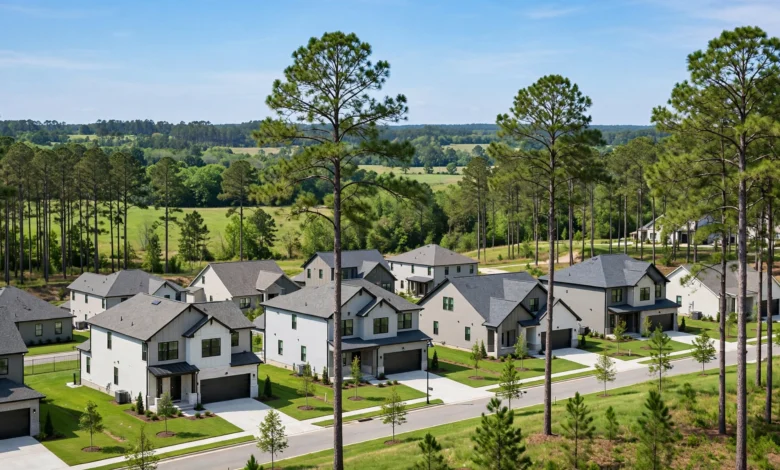
North Carolina housing news out of Charlotte has been dominated by one story for the better part of a year: the city can’t stop growing, and its housing market is scrambling to keep up. Charlotte added more people than any other city in the country between mid-2024 and mid-2025, and the ripple effects are visible everywhere, in traffic on I-485, in cranes reshaping the skyline, and in a local catchphrase residents keep repeating: “We’re full.”
The numbers back up what people are feeling on the ground. Charlotte’s population crossed 964,784 residents this year, putting it within striking distance of overtaking San Jose as the 13th-largest city in the country. That growth isn’t random. It’s tied directly to job creation from major employers, corporate relocations chasing lower costs than coastal markets, and a housing market that, until recently, still looked affordable compared to cities like Austin, Denver, or Nashville.
This article breaks down what’s actually driving Charlotte’s rapid growth, how it’s reshaping home prices and inventory across the region, and what it means for buyers, sellers, and current residents watching their city change in real time. Whether you’re considering a move to Charlotte or just trying to understand why your commute keeps getting longer, this is the North Carolina housing story worth understanding in 2026.
Charlotte’s Population Boom by the Numbers
The scale of Charlotte’s growth is genuinely unusual for a large American city. According to newly released Census Bureau data, Charlotte was ranked the number one fastest-growing city in America, adding 20,731 people between July 2024 and July 2025 alone. That single year of growth pushed the city’s population past 964,784 residents.


Zooming out further:
- Charlotte added roughly 69,000 residents in one recent multi-year Census reporting period, the fourth-largest numeric population increase of any city in the nation
- The Charlotte region has consistently ranked among the top cities nationally for population growth since 2020
- Nearby Fort Mill, just 20 miles from Uptown Charlotte, is currently the fastest-growing area in the country by percentage, with population jumping 6.8%
- International migration into the broader Charlotte metro added approximately 18,240 residents between 2024 and 2025
This isn’t a short-term spike. Charlotte has ranked among the fastest-growing large metros for most of the past decade, and city planners widely expect the population to cross the 1 million mark within the next few years.
What’s Driving Charlotte’s Rapid Growth?
Job Growth and Corporate Relocation
Charlotte’s growth story starts with jobs. The region added nearly 40,000 net new jobs over a recent 12-month period, one of the fastest job growth rates among large US metros. Charlotte’s economy has historically centered on banking, with Bank of America and Wells Fargo both headquartered or heavily concentrated in the city, but the job base has diversified considerably:
- Financial services and fintech — Charlotte remains the second-largest banking center in the US after New York
- Healthcare — Atrium Health anchors one of the Carolinas’ largest medical districts
- Energy — Duke Energy’s corporate presence supports thousands of regional jobs
- Manufacturing and logistics — Honeywell and an airport-anchored logistics base continue expanding
- Technology — a growing tech sector has added momentum to the city’s employment diversity
Charlotte also ranks #2 nationally on Site Selection magazine’s survey of top locations for corporate headquarters deals, a sign that companies continue choosing the city for relocations and expansions rather than just organic local hiring.
Relative Affordability Compared to Other Growth Markets
For years, Charlotte built its reputation as an escape valve from more expensive, more crowded cities. Compared to coastal metros or even other Sun Belt boomtowns, Charlotte housing has remained comparatively affordable, even as prices have climbed. North Carolina’s property tax burden also remains meaningfully lower than in many peer growth states, adding to the city’s appeal for both individual movers and corporate relocations.
That affordability gap is shrinking, though. Long-time residents increasingly note the irony: many moved to Charlotte specifically to escape the traffic and housing costs of cities like Atlanta or New York, only to watch similar patterns emerge locally as growth accelerates.
Quality of Life and Climate
Charlotte’s appeal isn’t purely economic. A relatively mild climate, an increasingly notable food and culture scene (Charlotte has recent James Beard Award recognition), and outdoor recreation access continue to draw remote workers, retirees, and young professionals who could technically live anywhere but choose Charlotte for lifestyle reasons.
How Charlotte’s Growth Is Reshaping the Housing Market
Home Prices in 2026
Charlotte housing prices have continued rising, though the pace has moderated significantly compared to the aggressive appreciation seen from 2021 through 2023. As of 2026:
- The median home price in the Charlotte region sits at approximately $414,000 to $420,000
- Year-over-year price growth has slowed to a more sustainable 3.9%, down sharply from pandemic-era double-digit increases
- Some individual data sources show median values closer to $397,000, reflecting differences in how “Charlotte” is measured (city proper versus broader metro)
Inventory Is Finally Loosening
One of the more notable shifts in the Charlotte housing market this year is the meaningful rebound in available inventory. Active residential listings in the Charlotte-Concord-Gastonia metro climbed to approximately 10,632 units in early 2026, a 19.2% increase compared to the same period the previous year.
This matters because it’s changing the buying experience considerably:
- Buyers now have noticeably more negotiating leverage than during the peak seller’s market years of 2021–2023
- Seller concessions, inspection repairs, and closing cost credits are back on the table in many price ranges
- Bidding wars, while still present in popular neighborhoods, are far less universal across the market than they were just a few years ago
- Homes are taking longer to sell, with some reports showing over 70 days on market in certain price segments, compared to under 30 days at the height of the boom
Which Neighborhoods Are Absorbing the Growth?
Growth isn’t distributed evenly across Charlotte. Certain neighborhoods and submarkets are seeing far more construction and demand than others:
- South Charlotte and Ballantyne — newer housing inventory is expanding fastest here, drawing families and professionals seeking newer construction
- Myers Park, Eastover, and Dilworth — continue to anchor the city’s luxury housing segment
- South End and NoDa — popular with younger buyers and renters drawn to walkability and nightlife
- Fort Mill and surrounding South Carolina suburbs — absorbing significant overflow growth as buyers look just outside city limits for more space and lower costs
Growing Pains: The Other Side of Charlotte’s Boom
Rapid growth isn’t universally welcomed, and Charlotte’s housing story in 2026 increasingly includes real friction alongside the economic success narrative.
Traffic and Infrastructure Strain
Charlotte’s road infrastructure has struggled to keep pace with population growth. Residents frequently describe traffic on highways like I-485 as comparable to what they specifically left larger metros to avoid. Construction cranes have become a near-permanent feature of the skyline, and commute times have lengthened noticeably across the region.
Rising Local Frustration
The phrase “we’re full” has become something of an informal rallying cry among longtime Charlotte residents, reflecting real anxiety that the affordability and small-city charm that drew people here originally is eroding. Concerns commonly raised include:
- New apartment developments changing neighborhood character
- Rising resentment toward out-of-state license plates and visible signs of rapid transplant growth
- Fear that continued growth will eventually recreate the cost-of-living pressures many residents specifically moved to Charlotte to escape
Rental Market Pressure
Rental costs have also climbed alongside home prices. The average two-bedroom rental in the Charlotte area now runs approximately $1,700 per month, reflecting steady demand from both new residents and existing renters who haven’t yet transitioned to homeownership amid still-elevated mortgage rates.
What’s Next for the Charlotte Housing Market?
Looking ahead, most housing analysts expect Charlotte’s growth trajectory to continue, though at a somewhat more measured pace than the sharpest years of the pandemic-era boom. Key trends to watch:
- Mortgage rates settling near 6.5% are expected to shape affordability and buyer behavior through the rest of 2026
- Continued modest price appreciation of roughly 3–5% annually is the widely expected baseline, rather than the double-digit jumps of previous years
- Population growth is expected to continue into 2027 and 2028, keeping long-term housing demand elevated even as short-term market conditions stabilize
- Charlotte remains ranked among the most buyer-friendly large housing markets by some national rankings, a notable shift from its seller-dominated reputation of just a few years ago
For readers tracking the underlying population data driving this story, the Census Bureau’s population estimates program offers the original source data behind Charlotte’s recent growth rankings. For ongoing coverage of how this growth is affecting home prices and inventory specifically, Axios Charlotte’s reporting on the city’s approach to 1 million residents provides useful on-the-ground context beyond the raw statistics.
Conclusion
Charlotte’s position at the center of North Carolina housing news in 2026 comes down to a straightforward but powerful combination: strong job growth from established employers like Bank of America and Atrium Health, continued corporate relocation activity, and a housing market that, despite rising prices, has remained more affordable than many comparable growth cities. The city added more residents than anywhere else in the country over the past year, and that population surge is now colliding with the practical realities of infrastructure strain, rising rents, and growing local frustration over how quickly the city’s character is changing. Home prices have moderated to a more sustainable pace, and rising inventory is finally giving buyers real negotiating power again, but the underlying growth engine, jobs, migration, and relative affordability, shows little sign of slowing down. For anyone watching the North Carolina housing market, Charlotte remains the story to follow.